

Quaid-e-Azam’s Moral Statesmanship and Professor Khurshid Ahmad’s Message to the Youth
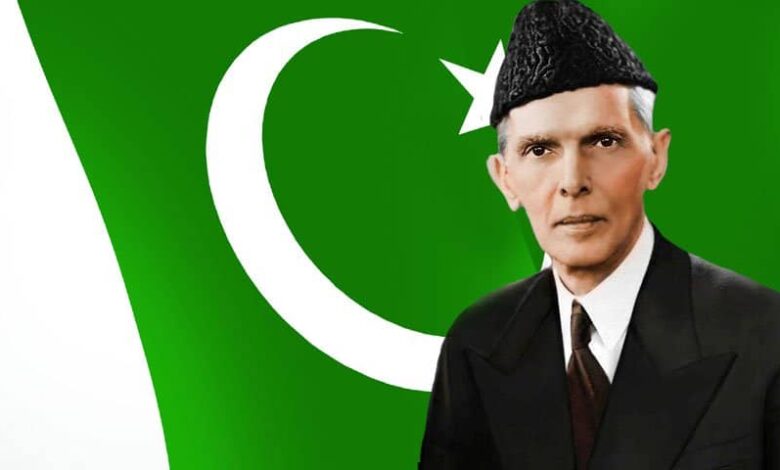
Quaid Day is not a ceremonial remembrance, but a renewal of commitment. Today’s youth must recognize themselves as custodians of the Quaid’s mission—responsible for preserving Pakistan’s ideological identity, upholding Islamic values, and striving for excellence with integrity.
Quaid-e-Azam Muhammad Ali Jinnah was not merely the founder of Pakistan, but the most outstanding political leader of the Muslim Ummah in the twentieth century. His leadership combined constitutional brilliance, moral integrity, and an unwavering commitment to Islamic values. Pakistan, as he envisioned it, was not a state born of expediency but a moral project rooted in faith, justice, and human dignity.
Professor Khurshid Ahmad, in his reflections—particularly in “Pakistan’s Economy — The Quaid’s Vision”—reiterates that Quaid-e-Azam’s message holds special significance for the youth of Pakistan. His remarks on Quaid Day are a call to moral responsibility, ideological clarity, and purposeful action.
Pakistan Movement: A Moral and Civilizational Awakening
As Professor Khurshid Ahmad consistently argues, the Pakistan Movement was not merely a struggle for territory or power, but a civilizational and ideological awakening. While thinkers such as Afghani, Abduh, and Allama Iqbal provided intellectual inspiration, it was Jinnah’s statesmanship that translated vision into reality.
He stands, therefore, as the practical architect of Muslim independence—a leader who fused political realism with moral purpose.
Freedom and Ideology: An Inseparable Vision
Professor Khurshid Ahmad highlights that for Quaid-e-Azam, freedom and Islamic ideology were inseparable. Recalling Jinnah’s message to the Frontier Muslim Students Federation on 18 June 1945, he quotes:
“Pakistan not only means freedom and independence but the Muslim ideology, which has to be preserved, which has come to us as a precious gift and treasure…”
Professor Ahmad emphasizes that this message was directed explicitly to the youth—the students who formed the vanguard of the Pakistan Movement. It was a clear mandate: Pakistan was not to be safeguarded merely as a political state, but as an ideological and moral trust.
Religion, Culture, and Ideals as the Driving Force
Quaid-e-Azam was unequivocal about the moral energy behind the freedom struggle. As cited by Professor Khurshid Ahmad, Jinnah declared:
“Our religion, our culture and our Islamic ideals are our driving force to achieve independence.”
Professor Ahmad explains that these words define the ethical动力 (driving force) of the Pakistan Movement. For today’s youth, they remain equally relevant—not as slogans, but as guiding principles for national reconstruction, ethical governance, and social justice.
The Moral Foundation of Pakistan
In his address to the officers of the Pakistan Government in October 1947, Quaid-e-Azam clarified the purpose of the new state:
“The creation of a state of our own was a means to an end… where principles of Islamic social justice could find fair play.”
Professor Khurshid Ahmad interprets this statement as the philosophical foundation of Pakistan. Independence was not the destination; it was the instrument to establish a just social order. For the youth, this implies that progress in education, economy, and politics must be measured against justice, compassion, integrity, and service.
Islam as the Source of Social Regeneration
Professor Ahmad further recalls Jinnah’s Eid message of 1945, in which he stated that the Qur’an is not confined to ritual or belief alone, but is a “general code of the Muslims” governing all aspects of life.
He reinforces this holistic understanding of Islam through Jinnah’s profound words:
“All social regeneration and political freedom must finally depend on something that has a deeper meaning in life… and that, if you will allow me to say so, is Islam and Islamic spirit.”
For Professor Khurshid Ahmad, this is the core message for Pakistan’s youth: lasting reform cannot emerge from imitation or material progress alone, but from moral renewal grounded in Islamic values.
A Call to the Youth of Pakistan
For Professor Khurshid Ahmad, Quaid Day is not a ceremonial remembrance, but a renewal of commitment. Today’s youth must recognize themselves as custodians of the Quaid’s mission—responsible for preserving Pakistan’s ideological identity, upholding Islamic values, and striving for excellence with integrity.
The true tribute to Quaid-e-Azam, he reminds us, lies not in speeches or slogans, but in living by the principles of faith, discipline, and unity.
Read More at https://client.ips.org.pk/shared/694a40b2574132ad7529acbd