
Professor Khurshid Ahmed’s Views on Conflict in Mali
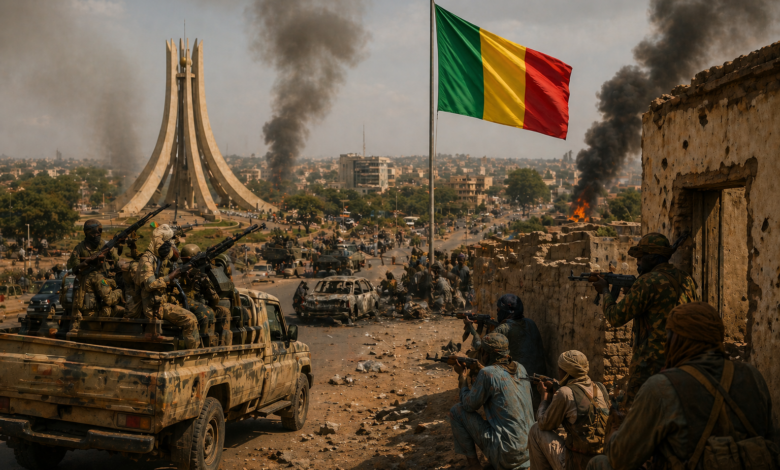
In the eyes of Professor Khurshid Ahmad, the crisis in Mali is a symptom of a broken global order. The withdrawal of European forces and the internal search for a new governance model represent a struggle for self-determination. However, he would caution Malian leaders that true liberation is not found in changing masters (from West to East), but in establishing a domestic order based on divine law, social justice, and the rejection of all forms of exploitation. Mali has seen a rise in armed groups claiming religious legitimacy, as well as military juntas seizing power to “overthrow tyrannical or ineffective regimes.” Professor Khurshid Ahmad’s perspective suggests that the instability in Mali is not merely a “local jihadist insurgency” but a product of the moral vacuum left by colonialism.
The Full Article
1. The Roots of the Malian Crisis: Colonial Legacy and Economic Injustice
Professor Ahmad’s perspective suggests that the instability in Mali is not merely a “local jihadist insurgency” but a product of the moral vacuum left by colonialism.
- Structural Inequality: The marginalization of northern populations (such as the Tuareg) and the economic exploitation of Mali’s gold and mineral resources fit Professor Ahmad’s critique of “historical injustices.”
- Resource Sharing: In the context of Mali, he would argue that the “flashpoints” in the Sahel can only be managed if the modern world moves away from exploitative extraction and toward “historically organized economic modes of cooperation.” Peace in Mali depends on whether the wealth of the land benefits its people rather than global power structures.
2. The Dilemma of Violence and the Quest for Liberation
Mali has seen a rise in armed groups claiming religious legitimacy, as well as military juntas seizing power to “overthrow tyrannical or ineffective regimes.”
- Sympathy vs. Strategy: While Professor Ahmad might acknowledge the motivations of those seeking to end corruption or foreign dependency, he would firmly reject the violence and “ethnic cleansing” tactics used by various factions.
- The Moral Path: He argues that the military transitions in Bamako must lead to moral and political reform guided by ethical principles, rather than perpetual martial rule. For Ahmad, violence cannot be the foundation of the new Malian social order; only justice-based governance can.
3. Critiquing Western Intervention and Double Standards
The situation in Mali is a prime example of what Ahmad describes as the “double standards of Western powers.”
- Failure of Intervention: The shift in Mali, from welcoming French forces (Operation Serval/Bakhane) to demanding their departure, aligns with Professor Ahmad’s view that Western powers often manipulate conflicts for strategic interests.
- The Hypocrisy of “Democracy”: Professor Ahmad would point out the inconsistency where Western powers condemn coups in Mali while supporting or ignoring similar undemocratic shifts elsewhere when they suit geopolitical interests. He argues that Mali’s move toward “self-assertion” and sovereignty is a natural response to this perceived hypocrisy.
4. Mali’s Role in a Just Islamic and Global Order
Professor Ahmad envisions Islam as a tool for reconstructing international relations.
Beyond Military Solutions: In the Malian context, where the conflict is often viewed through a narrow “War on Terror” lens, Professor Ahmad advocates for a solution grounded in justice, compassion, and negotiation.
Inter-African Cooperation: He would likely support Mali’s efforts to seek regional partnerships that respect national sovereignty, emphasizing that “international amity” cannot be achieved through external domination or coercion.
5. Conclusion: The Path Toward Sustainable Peace in Mali
To achieve true stability, Professor Ahmad’s framework suggests that Mali must move beyond the “security-first” approach.
- Moral Renewal: The solution lies in the moral renewal of Malian society and its leadership, ensuring that the state serves the collective good.
- Justice-Based Peace: Peace will remain elusive as long as there is economic or cultural exploitation. As Professor Ahmad asserts, the “path forward” for Mali is through economic cooperation and mutual respect, ensuring that the Tuareg, the Bambara, and all ethnic groups are integrated into a fair and just national framework.
Summary for the Current Context: In the eyes of Professor Khurshid Ahmad, the crisis in Mali is a symptom of a broken global order. The withdrawal of European forces and the internal search for a new governance model represent a struggle for self-determination. However, he would caution Malian leaders that true liberation is not found in changing masters (from West to East), but in establishing a domestic order based on divine law, social justice, and th