
Professor Khurshid Ahmad’s View on the Gulf States and Their Role in the Muslim World
The Strategic and Moral Centrality of the Gulf States
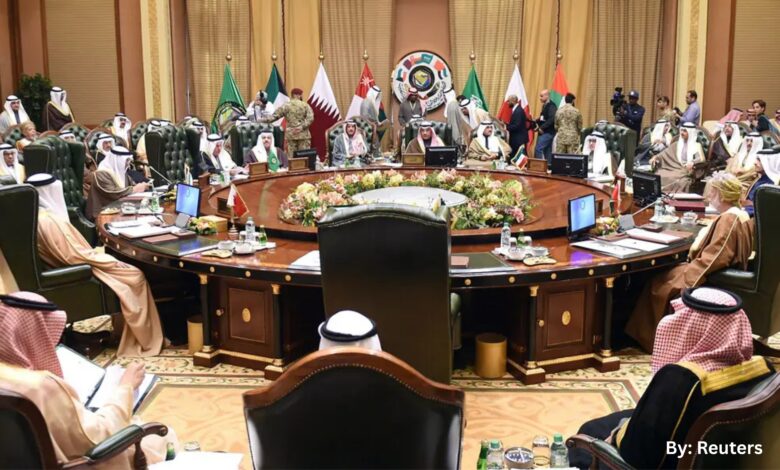
Professor Khurshid Ahmad viewed the Gulf states as strategically central to the Muslim world due to their economic strength, religious significance, and geopolitical position. The Gulf region, being home to the two holiest cities of Islam, Makkah and Madinah, naturally occupies a spiritual leadership role within the Muslim Ummah. Beyond this religious centrality, Professor Ahmad recognized that the Gulf’s economic resources, particularly oil wealth, endowed it with the potential to support the broader development and unity of the Muslim world.
His engagement with institutions such as the International Centre for Research in Islamic Economics in Saudi Arabia and his participation in the First International Conference on Islamic Economics in Mecca reflect his conviction that the Gulf states could play a pioneering role in shaping an Islamic economic order that would strengthen the Ummah.
Cooperation as the Foundation of Muslim Unity
Professor Ahmad consistently emphasized that cooperation among Muslim nations, especially between the resource-rich Gulf states and the developing Muslim countries, was essential for the revival and solidarity of the Ummah. He argued that such cooperation must be based on equality and mutual respect, not on domination or dependency.
In his writings, he warned that if cooperation between nations was grounded merely in “assimilation of Western culture and rejection of Islam as we understand it, then there is no ground for any meeting”, but if it was “achieved on equal footing, then it is most welcomed”. This principle applied not only to relations between the Muslim world and the West but also within the Muslim world itself, particularly between the Gulf states and other Muslim nations.
Gulf States as Catalysts for Islamic Economic Renewal
Professor Ahmad’s pioneering work in Islamic economics positioned the Gulf states as potential leaders in developing a just and ethical economic system. He viewed their wealth as a trust (amanah) that should be used to uplift the entire Ummah, aligning with the Islamic concept of khilāfah (trusteeship), “the unique Islamic concept of man’s trusteeship in moral, political, and economic terms”.
Through his involvement in Gulf-based institutions and conferences, Professor Ahmad sought to institutionalize Islamic economic thought and promote cooperation that would reduce dependence on Western economic models. He believed that the Gulf states, by investing in Islamic education, research, and development, could lead the transformation of the Muslim world into a self-reliant and morally grounded community.
Necessity of Gulf Cooperation for the Muslim Ummah
For Professor Ahmad, the unity and cooperation of the Gulf states were indispensable for the strength and revival of the Muslim Ummah. He saw the fragmentation of the Muslim world as a major obstacle to progress and believed that the Gulf’s leadership, both moral and material, could help overcome this disunity.
He envisioned a cooperative framework where the Gulf states would not act as isolated economic powers but as partners in a shared mission to reconstruct Muslim societies on Islamic principles. This cooperation, in his view, was not only a political or economic necessity but a religious and moral obligation rooted in the Qur’anic ideal of brotherhood (ukhuwwah) and collective responsibility.
Balanced Relationship with the West
While advocating for Gulf-led cooperation within the Muslim world, Professor Ahmad also called for a redefinition of relations between the Muslim world and the West. He argued that the relationship should shift from one of “master-servant to that of equal partners”, enabling coexistence without “domination and assimilation”.
This balanced approach underscored his belief that the Gulf states, by strengthening intra-Muslim cooperation, could also negotiate with the West from a position of dignity and equality, thereby contributing to global peace and justice.
Conclusion
In summary, Professor Khurshid Ahmad regarded the Gulf states as moral, economic, and strategic pillars of the Muslim world. Their cooperation, guided by Islamic values and economic justice, was essential for the unity, independence, and moral renewal of the Muslim Ummah. He envisioned a future where the Gulf’s wealth and influence would serve not narrow national interests but the collective advancement of the global Muslim community.