
Professor Khurshid Ahmad’s View on Indo-Pak Wars, Asymmetry, and the Future Outlook of Relations
Centrality of the Kashmir Issue
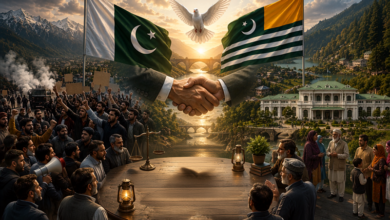
In Professor Khurshid’s view, the wars and continuing tensions between Pakistan and India stem fundamentally from the unresolved issue of Jammu and Kashmir. He has consistently maintained that “the relationship between India and Pakistan cannot be normalized unless the issue of Jammu and Kashmir is resolved on the basis of justice, earlier commitments, and the wishes of the people of Jammu and Kashmir who have suffered and sacrificed most.”
The Kashmir dispute is not merely a territorial question but a moral and political one, rooted in the right of self-determination. Without addressing this core issue, any attempt at normalization or peace will remain superficial and unstable. Professor Ahmed, therefore, argues that peace in South Asia depends on a just settlement of Kashmir and on containing Indian hegemonistic designs in the region.
Asymmetry Between the Two States
The asymmetry between Pakistan and India is both structural and strategic. India, as the larger state, has often sought to impose its will on the region, while Pakistan’s position has been one of resistance and defense of its sovereignty and ideological identity. Concerns have been raised that India’s hegemonic ambitions—political, economic, and military—must be “contained and countered” if a balance of power and genuine peace are to be achieved.
In his critique of certain Pakistani leaders’ approaches, Professor Ahmed noted that talks of“mutual dependencies”between India and Pakistan were unrealistic when the fundamental disputes remain unresolved. He stated that “without progress for the resolution of the Kashmir issue, and India reciprocating Pakistan’s flexibility, peace cannot be established in the region, nor could relations between Pakistan and India be found on stable grounds.”
This asymmetry is further aggravated by India’s reluctance to engage sincerely in dialogue, while Pakistan has repeatedly shown flexibility and goodwill. Confidence Building Measures (CBMs) have largely been “one-sided – i.e., Pakistan doing all, while the Indian attitude towards Pakistan and the major issues, particularly Kashmir, remains unchanged.”
Wars and Their Lessons
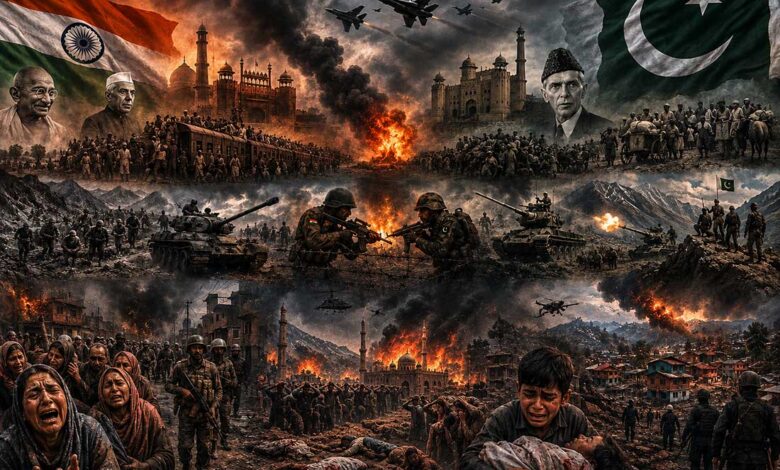
The wars between Pakistan and India—in 1948, 1965, and 1971—reflect the tragic consequences of unresolved disputes and mistrust. Each conflict has reinforced the need for a principled and just approach rather than expedient diplomacy. In his writings, the Professor has emphasized that military confrontation cannot yield lasting peace; only a settlement based on justice and self-determination can.
Moreover, Pakistan’s foreign policy must remain rooted in its ideological foundations, safeguarding sovereignty and dignity while pursuing peace through strength and principle. As one resolution stated, Pakistan must “continue to express solidarity with the Muslims of Jammu and Kashmir in their struggle for self-determination” and mobilize international support for its principled stance.
Future Outlook: Justice, Balance, and Dialogue
Looking forward, the future of Indo-Pak relations must rest on three pillars:
- Justice and Self-Determination: The Kashmir issue must be resolved in accordance with the aspirations of its people and the commitments made under international law.
- Balance of Power: Pakistan must maintain strategic and political balance in the region to prevent domination by any single power.
- Principled Dialogue: Engagement with India should continue, but not at the cost of Pakistan’s core interests or ideological integrity.
He cautioned against policies that prioritize economic interdependence or trade normalization without addressing the root causes of conflict. Such approaches, he argued, are “detrimental to the resolution of Indo-Pakistan conflicts” and undermine Pakistan’s vision as an “independent, self-reliant state, bringing dignity to the Muslim world and ensuring balance of power in the region.”
Conclusion
In essence, Professor Khurshid’s perspective is that peace between Pakistan and India is possible but conditional, conditional upon justice in Kashmir, mutual respect for sovereignty, and the rejection of hegemonic ambitions. The asymmetry between the two states can only be managed through principled diplomacy, national strength, and adherence to moral and ideological convictions