

TERRORISM: POINT TO PONDER
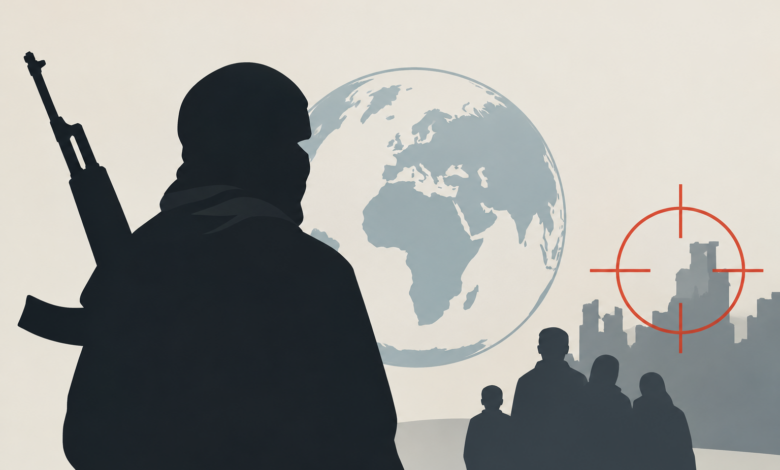
- Terrorism, however obnoxious and revolting, is not a NEW phenomenon. It is an unfortunate fact that there have been serious episodes of terrorism/terrorisms in almost all parts of the world and all periods of history. This phenomenon has not been specific to any society, culture, religion, political dispensation and historical period, ancient, medieval, modern. Similarly, terrorism has not articulated itself in anyone shape and form. There have been a variety of expressions, hence my preference for the plural: terrorisms.Even suicide missions are not a contemporary innovation. Recorded history of terrorism and terrorist groups goes back to at least the advent of the Christian era. Beginning with the first century Zealot’s and Sicarits struggle to liberate Judea from the Roman occupation; the blood-stained dagger play of the Assassin’s in the eleventh and twelfth centuries, through the Jacobit’s blood-bath in the eighteenth century, Russia’s Narodnays Volyel (People’s Will) and Europe’s anarchists in the nineteenth century, to the twentieth century havoc- wreaking violent outbursts of the Armenian Secret Army for ‘the Liberation of Armenia (ASALA), the Zionist armed brigades of Irgun, Stern and Haganah Gangs, Ethnik’s Organosis Kyprion Agoniston (EOKA) of Cyprus, Mau or the Land and Freedom Army in Kenya, Bader-Meinhof, Red Army Factors, and the June Movement of Germany, Euzkadi tes Akantasone (ETA) of Spain, Strategy of Tension and Red Brigades of Italy, Marighda of Brazil, IRA and Protestant Volunteer Force of Ireland, November 17 of Greece, Ku Klux Klan (KKK), Free Speech Movement of Berkley, Whether Underground, Christian Identity (Elohim City, Oklahoma), Anti-Abortionists (Rev. Michael Bray) of USA, Lords’ Resistance Army and Holy Spirit Mobile Forces (HSMF) of Uganda, Sendero Luminoso in Peru, FARC in Columbia, LITE in Sri Lanka, PKK in Turkey, George Habbash’s Popular Front for the Liberation of Palestine, PLO, Hamas, Islamic Jehad of Palestine, Fidayeen of Iran, Nexalites and a host of others in India etc. etc. bear testimony to the strong presence as well as diversity and spread, both horizontal and vertical, of the phenomenon of terrorism.
Al-Qaeda may be the current symbol of terrorism, but terrorism is a political reality whose presence can be seen in all times and climes. Exclusive obsession with one actor is bound to falsify the whole matrix of perception, analysis, diagnosis and prescription. It is important to look into the entire spectrum of terrorisms and not merely a particular candidate of our choice, if we really want to understand the complex and diverse phenomena that is terrorism.
- Terrorism, despite being an awesome reality, has by and large remained at the conceptual level, elusive and nebulous. Dictionary of International Affairs (Penguin, 1998) captures this situation in the following words:
- “The issue of terrorism has not so far produced a specific prohibitive treaty mainly because of definitional problems associated with political preference. One man’s terrorist is another man’s ‘freedom fighter’ and so international law has not thus far been able to encompass the phenomenon.”
Shimid lists over one hundred different definitions of the term. The UN General Assembly has not been able to arrive at a consensus definition till now. While there is some general agreement ‘that all acts of deliberate violence against innocent civilians and other non-combatants directed towards achieving specific political objectives belong to the genre of terrorism’, there remain serious differences in respect of violent reactions and resistant movements that emerge in situations where processes of peaceful resolution of political conflicts are denied and people are forced to struggle against repression, occupation or aggression. That is why people’s struggle against foreign occupation, even if violent, could not be bracketed with terrorism in any consensus document. The question of state terrorism also remains a bone of contention. There is no reason why the concept should be confined to individual and group behaviour, to the exclusion of state’s use of arbitrary force against its own people and in respect of other nations and peoples. The authority of the state to use force is conditional by legitimacy of actions. As such the exclusion of state terrorism from any conceptualization of terrorism is unacceptable. When there is a situation of foreign occupation, the legitimacy of people’s struggle to seek their right to self-determination and independence cannot be equated with other forms of political violence. Military repression by state authorities in such situations is as much a species of terror. Similarly state actions against its own people that amount to ‘war crimes’ or ‘acts of genocide’ or ‘indiscriminate violence against civilians’ including bombardment of towns and villages and collective punishment and targeted killings and executions cannot be treated as legitimate uses of state power.
Aggression against other states and nations (i.e. actions not covered by the U.N. Charter) must also be treated as acts of state terrorism. Respect for the UN Charter and the principles established by the Nuremburg Trials define the corner stone’s of legitimate state behaviour. A high level UN Panel has in 2004 warned against stretching Article 51 too far. It affirms:
- “Article 51 needs neither extension nor restriction of its long-understood scope… In a world full of perceived potential threats the risk to the global order and the norms of non-intervention on which it continues to be based is simply too great for the legality of unilateral preventive actions as distinct from collectively endorsed action, to be accepted. Allowing one to so act is to allow all” (emphasis added).
The Nuremburg Tribunal clearly stated that aggression is “the supreme international crime differing only from other war crimes in that it contains within itself the accumulated evil of the whole”.
Justice Robert Jackson of the US Supreme Court who was the U.S. Attorney to the Tribunal is reported to have pleaded before the Tribunal as follows:
- “If certain acts of violation of treaties are crimes, they are crimes whether the United States does them or whether Germany does them, and we are not prepared to lay down a rule of criminal conduct against others which we would not be willing to have invoked against us. We must never forget that the record on which we judge these defendants is the record on which history will judge us tomorrow. To pass these defendants a poisoned chalice is to put it to our own lips as well.”
The principles established at Nuremburg Tribunal that make it binding on state authority to avoid crimes against humanity, violations of fundamental rights, and aggression against other states are more relevant today than they were in mid-twentieth century. Terrorism’s scope cannot be confined to actions of individuals and groups. State’s actions are to be judged on the same touch-stone.
- Another lesson from history is not difficult to draw. While there have been episodes of terrorism in all ages and all regions it deserves to be noted that every episode had its limited life. This means that terrorism is neither uncontainable nor uncontrollable. Every expression of this phenomenon has to be understood in its socio-historical context and appropriate strategies worked out to contain, control or eliminate it.
In the last analysis in most of cases terrorism is the end product of the failure of the processes of crisis-management and conflict- resolution in a society. Tit-for-tat strategy has very limited relevance and is rather very costly. It is only by addressing the issue in all its complexity that an affective, acceptable and least-cost pack of strategies can be worked out for its solution. Reactions based on vendetta, arrogance of power and any one- dimensional approach are bound to fail, even prove counter-productive. That is why an increasing number of intellectuals, analysts and strategists are expressing very strong reservations about the U.S. piloted global ‘war against terrorism’, unleashed after the catastrophe of 9/11. It is time to prepare an objective balance sheet of what has been achieved through this strategy and what costs are being inflicted as a result thereof on people in the United States and the rest of the world.
- It deserves to be noted that the Muslim people in general and leading Muslim scholars and leaderships of Islamic Movements in particular have from day one unequivocally condemned all acts of real terrorism including the 9/11 outrage against humanity. But they, and many others in the world including the United States and Europe, have strong reservations about the global game played in the name of ”War against Terrorism”. They regard much of what is being done as no less a crime, resulting in the death of innocent men, women and children in hundreds of thousands. They openly ask the question: Can terrorism be fought by a war, as is being done by the present U.S. leadership? Or does it need a very different and multi-faceted strategy? Is it possible to fight terrorism without clearly defining what constitutes terrorism? One cannot fight terrorism without clearly identifying the object; otherwise one would be chasing only shadows adding to intellectual confusion and political anarchy, producing scenarios of greater insecurity. Terrorism and every form of resort to force are not synonymous. Ware under international law is one example, so are genuine liberation struggles. Indiscriminately equating them with terrorism, as is being done in the case of the Palestinian resistance, to give only one example, is not only flawed but counter-productive. To concede to such an outlandish premise would call for re-writing of all history. Even George Washington and Nelson Mandela, would have to be placed in the category of “terrorists”!
Similarly all acts of “so-called” terrorism are not to be put at par. They differ in their nature, context, objectives, and dynamics. It would be a blunder to target terrorisms without addressing to the contexts that have led to their emergence, the causes that characterize them and the injustices and oppressions that have forced the weak to rise. Asymmetry of power and denial of genuine processes of conflict-resolution can be ignored only at our peril. The nature and the extent of a peoples’ agony that prompts them to revolt cannot be ignored; nor do the causes and factors that drive some people to use methods that involve violence to achieve their political objectives.
It has to be acknowledged that there is nothing like terrorism per se. Terrorism is a complex phenomenon and any one-dimensional strategy to combat it is foredoomed to failure. It may even aggravate the situation, as it seems to be our present predicament.
- Terrorism is primarily a tactic and a means, and not an end. It would terribly confuse the issue if it is looked upon as an ideology in itself, as is being done by certain quarters. There is no denying that there have been treatises devoted to justifications for the use of such tactics. These works have come from diverse backgrounds, philosophical, political, even moral and religious. From Cicero who is stated to have said “if is a virtue to kill’ through philosophic discourses of the anarchists in Europe, the revolutionaries of the left in Russia (John Host’s Revolutionary War Science (1885) to Revered Michael Bray’s Time to Kill (USA-1980) there is no dearth of literature of this brand. Yet the fact remains that in the final analysis even this diabolical literature in defence of terrorism does not visualize it as more than a tactic it is not suggested as an end in itself, as an ideology.
In the current debate the perpetrators of so-called ‘war on terrorism’ are trying to confuse and obfuscate by presenting terrorism as an ideology and not a tactic. They try to trace its roots in some “twisted religious concepts.” This may have serious consequences as it may divert the focus of attention from the real causes of terrorism and from the policy parameters that constitute a decisive factor in generating terrorism, to some imaginary concoctions of conflict of values and clash of civilizations.
Some interesting light has been thrown on the phenomena of suicide-bombing, a sub-set of terrorism, in a research study by Prof. Robert A Pape of the University of Chicago: Dying to win, a study based on data relating to all suicide attacks reported between 1980-2003. He states that “the presumed connection between suicide terrorism and Islamic fundamentalism is misleading”. The picture as it emerges from an analysis of the data-profiles built by Prof. Pape is somewhat like this:
- “The data shows that there is little connection between suicide terrorism and Islamic fundamentalism, or any one of the world’s religions. In fact, the leading instigators of suicide attacks are the Tamil Tigers in Sri Lanka — a Marxist-Leninist group whose members are from Hindu families but who are adamantly opposed to religion. This group committed 76 of the 315 incidents, more suicide attacks than HAMAS.
“Rather, what nearly all suicide terrorist attacks have in common is a specific secular and strategic goal; to compel modern democracies to withdraw military force from territory that the terrorists consider to be their homeland. Religion is rarely the root cause, although it is often used as a tool by terrorist organizations in recruiting and in other efforts in service of the broader strategic objective.”
While it is useful to study the phenomena of terrorism in all its dimensions including the psychological and even pathological aspects of the individual actor, it would be unrealistic not to focus on the political, strategic and contextual aspects. Motivational and bottom-up factors must be studied and analyzed but reductionism that emphasis out of all proportion the ‘pathological’ or ‘economic’ situations, would be flawed, deceptive and unhelpful. Ignoring the core issues and causes that lead to upsurge in violence would be fatal to any realistic understanding of the phenomenon and developing strategies to combat it. Let us face the real issues – they relate to political injustices and sets of policies that have so enraged the people that they prefer death to a life of servitude, ignominy, humiliation and helplessness. Unless this focus changes it is feared “terrorisms” and “wars against terrorisms” both may continue ad nauseam.
The theories of jihad and concept of martyrdom along with the institutions of mosque and madrasah have always been there. Even some “extremist” or “twisted” interpretations have always surfaced in history as is the case with almost all religions, ideologies and socio-political systems. After all, it deserves to be explored as to what is it that leads to the emergence and escalation of the phenomenon of terrorism in the contemporary world, in contra-distinction to rather very long periods of peace, amity and co-existence, despite the availability of these very “texts” and “institutions”?
- It is also imperative to look into the conceptual, political and humanitarian costs of the present U.S. ‘War against Terrorism’. How many innocent civilians have been the victims of the terrorists’ attacks and how many have been killed as a result of this war against terrorists and in the name of terrorists?
Has the war to eliminate terrorists succeeded in weeding them out or has it actually resulted in the production of larger and larger number of “terrorists”? Has America won the confidence, love and respect of the people of the world? How is it looked upon even in the countries it has attacked to destroy alleged terrorists and give their people the gifts of “regime- change” and “nation-building”? Or, has it only led to increase, even explosive increase, in discontent and hatred against America the world over, and made the world on the whole a much more insecure place to live in? What was localized has it not been globalized? Vast political landscapes that were otherwise peaceful have been turned into fertile grounds for the emergence of terrorisms. What was limited to a few orbits of discontentment has been made into a global phenomenon.
- Some more fundamental issues are agitating the minds of the thinking people all over the world, including the United States of America. What is happening to human rights particularly the right of privacy, freedom from detention, saves through due process of law, right to be treated “innocent” till proved “guilty”, right to defend oneself through lawyers of one’s own choice? How many people have been arrested and detained without trial after 9/11? What is the percentage of those convicted by any court of law? How many have been formally charged from amongst those arrested on mere suspicion? Has this not eroded the whole fabric of the rule of law and damaged the fortress of constitutionalism in a number of countries, including the United States? What is happening in the name of “Patriotism” and “National Security” to the civil liberties of the common man and women in general and some targeted religious and ethnic groups in particular in America and a number of other countries belonging to this ‘coalition of the willing’? What new threats are being posed to the values of dignity of man equality of all human beings and their right to be treated according to the law, within the framework of civilized behaviour? Guantanamo Bay, Abu Ghuraib and Bagram are not the only festering soars. It is not a fact that “rendition” and “coercive interrogation” have plagued many parts of the civilized world. Huxley’s, Orwell’s and Solzenetsyn’s nightmares of the ”Brave new World”, ”1984″ and the ”Gulag” are now haunting the havens of the Free World?
It is also feared that whatever has been achieved over the centuries in the fields of international law and consensus-building on a set of norms of civilized conduct in war and peace is at stake. Basic precepts of law and international law are being rewritten, at least as far as the practice goes, and in a unilateral and arbitrary manner. The powerful are trying to bully and bulldoze others only because they are weak and powerless. Shadows of imperialism and hegemonism are looming on world horizons. National sovereignty no longer seems to be sacrosanct. International borders can be violated with impunity. The U.N. is becoming more and more irrelevant. Mr. Bolton, the U.S. representative at the UN has the audacity to say that the United States has a right to invade Iran whether the UN concurs or not. Unilateral interventions and forced or manipulated regime changes are being sanctified. The very concept of self-defense is being redefined to suite the interests and ambitions of the powerful. Peace and global equilibrium are being increasingly threatened. Prospects of greater and more violent confrontations are on the rise.
Minorities in many parts of the world are being subjected to greater state-repression. ‘War on Terrorism’ is being used by more than one country to suppress their own people. The real list of ‘collateral damages’ of this ‘War’ is assuming menacing proportions.
- A fundamental question that must be squarely faced relates to the limits of military strategy in the alleged fight against terrorism. Is it really possible to bring terrorism to an end by resort to military force alone? Can this stateless and faceless enemy be chained down in that manner? Is it not time to reflect on alternate strategies addressing to the causes and the factors that breed terrorism? How long are we going to fight the branches while ignoring the roots of the problem? Resistance to OCCUPATION, OPPRESSION and INJUSTICE, is not the real problem – the real problem is OCCUPATION, OPPRESSION and INJUSTICE, which cannot but generate result in resistance. If we target the resistance without targeting the causes, how can we succeed? Focusing on resistance and ignoring the gruesome realities that give rise to struggles for freedom and justice could well prove an exercise in futility. In fact it could be a recipe for promoting terrorism and hatred. It is time to change the focus and address the real issues in a forthright manner. Paradigm change and not marginal changes within the paradigm is the crying need. Logic and not rhetoric should guide our policies. Only then the world may become a more peaceful place for all of us.
- Finally we cannot afford to ignore another fundamental question relating to the restoration of the rule of law and establishment of a global system based on justice and fair opportunities for all. Conflict-resolution through peaceful means and in accordance with universally accepted processes is a pre-requisite for peace and global amity. In this context the critical issues of globalization and the so-called clash of civilizations too cannot be side stepped. Plurality of faiths, ideologies, cultures and civilizations is a reality. It is a reality as old as history. Co-existence, co-operation, and competition between ideas, ideologies and civilizations is natural, even a healthy factor promoting human progress. It becomes a source for discord, conflict, confrontation and war when plurality is not regarded as authentic. Instead, one particular ideology, civilization or political and economic system is forced upon others. If values are imposed on others by virtue of superior power and their resources are aggrandized by manipulation, control or interference this is bound to generate strife, conflict and confrontation. If a hegemonistic order is flaunted on other nations, subjugating other countries and people, this is bound to sow seeds of rebellion, leading to insecurity, destabilization, confrontation, warfare and a spate of terrorism and retaliations.
In the wider context, all men of goodwill should realize that in the current phase of globalization it is only through honest acceptance of each other, respect for plurality of systems, religions and cultures and safeguarding the world from all hegemonistic and colonial adventures that real peace and security can be established on the globe.
Samuel Huntington is credited with the current debate on clash of civilizations. His book is definitely an invitation to such a clash. Yet, there are a few revealing observations in this study which deserve serious reflection. “Terrorism”, he says, “historically is the weapon of the weak, that is, of those who do not possess conventional military power”. The message is clear. If the strong are not prepared to respect the rules of law, justice and resolution of conflicts by negotiation and dialogue, terrorism cannot be ruled out. About the alleged clash between Islam and the West he claims:
- “The underlying problem in the West is not Islamic fundamentalism. It is Islam, a different civilization where people are convinced of the superiority of their culture and are obsessed with the inferiority of their power. The problem for Islam is not the CIA or the US Department of Defense. It is the West, a different civilization whose people is convinced of the universality of their culture and believes that their superior, if declining, power imposes on them the obligation to extend that culture throughout the world. These are the basic ingredients that fueled the conflict between Islam and the West.”
Huntington is only party right. Islam and the West do represent two distinct civilizations. He is terribly wrong that the two must clash with a view to overwhelm or annihilate each other. Clash is not the natural demand of being different. Conflict and clash arise because the more powerful believe and regard it is their right, an imperative, to use their overwhelming power to impose their values and their rule over others. It is this alleged “obligation to extend that culture throughout the world” that gives rise to clash, not mere fact of diversity and plurality. It is this cultural terrorism that is at the root of current crisis and confusion pushing mankind towards war, terrorisms and bloodshed. If genuine plurality is accepted as the norm, then co-existence, cooperation and healthy competition amongst civilizations could become the hallmark of humanity. Operationalization of this vision, the paradigm of pluralism and not hegemonism, can ensure a world order of peace and justice. Then the clouds of clash of civilizations may disappear, and the phantom of terrorism laid to rest. Then only the road to peace, security and prosperity for all can be successfully paved. Has the time not come to think and strive for moving Beyond Terrorism? Can mankind afford to ignore this alternative?