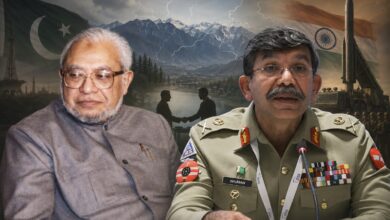

Professor Khurshid Ahmad’s Views on Elections and Electoral Integrity
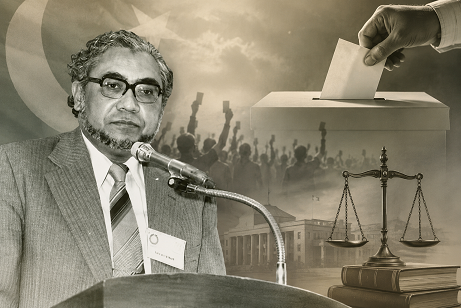
General Views on Elections and Their Conduct
Professor Khurshid Ahmad consistently emphasized that elections are the cornerstone of a democratic order and must be conducted with impartiality, transparency, and constitutional integrity. In his public statements and writings, Professor Khurshid urged political parties to ensure that the political process remains uninterrupted and that fresh national and provincial elections are held promptly and fairly. He viewed elections not merely as a procedural exercise but as a moral and constitutional obligation that sustains the legitimacy of governance in Pakistan.
In his article “Electoral System: Joint or Separate”, Professor Khurshid described Pakistan’s democratic origins as rooted in a “conscious, popular and democratic struggle” of the Muslims of the subcontinent. This historical consciousness, according to Professor Khurshid, demands that elections in Pakistan must reflect the same spirit of public participation, justice, and accountability that inspired the creation of the state. He considered the Objectives Resolution and the vision of Quaid-e-Azam Muhammad Ali Jinnah as guiding principles for ensuring that elections remain a reflection of the people’s will, conducted within the framework of Islamic ethics and constitutional propriety.
Standards for Fair Electoral Practice
Professor Khurshid Ahmad argued that elections must be free from governmental interference and that public office holders should not exploit their positions to influence electoral outcomes. In a 2005 press release, Professor Khurshid condemned the participation of sitting Ministers, MNAs, Senators, and MPAs in local government elections without first resigning from their official posts. He described such actions as “the highest form of dishonesty”, asserting that they compromise the fairness of elections and erode public trust.
Professor Khurshid further warned that if the government wished to maintain even the “semblance of impartiality and transparency”, all ministers and parliamentarians seeking to contest elections must resign beforehand. Otherwise, the process would amount to “a blatant effort at election rigging and direct interference by the Government”, leading to a loss of credibility in the entire electoral exercise.
Elections in Azad Kashmir
Khurshid’s broader political stance and his emphasis on constitutional non-interference and transparent governance clearly extend to all electoral contexts within Pakistan and its administered territories. His consistent criticism of executive overreach—such as the President’s interference in provincial and local bodies’ affairs—reflects his belief that no authority should manipulate or influence elections for political gain. This principle would naturally apply to elections in Azad Kashmir, where issues of autonomy and fair representation have historically been sensitive.
Professor Khurshid Ahmad’s Condemnation of Rigging
Professor Khurshid Ahmad regarded rigging as a moral and political crime that undermines the very foundation of democracy. He linked electoral manipulation to constitutional violations and erosion of public confidence in state institutions. In his critique of the government’s handling of local elections, Professor Khurshid highlighted that “major re-demarcations of constituencies and transfers of public servants and police personnel” were deliberate tactics to influence outcomes—actions he described as direct interference and rigging.
For Professor Khurshid, rigging was not merely a technical flaw but a betrayal of the democratic trust that the people place in their leaders. He believed that genuine democracy could only flourish when elections are conducted free from coercion, manipulation, and misuse of state machinery.
Conclusion
In summary, Professor Khurshid Ahmad viewed elections as a sacred democratic trust that must be conducted with integrity, transparency, and adherence to constitutional principles. He called for:
- Immediate and fair elections to preserve democratic continuity.
- Resignation of public office holders before contesting elections to prevent conflicts of interest.
- Complete non-interference by the executive, including the President, in electoral processes۔
- Zero tolerance for rigging, which he saw as a direct assault on democracy and public morality۔
Professor Khurshid’s overarching philosophy clearly supports free, fair, and constitutionally grounded elections across all regions under Pakistan’s governance.