
Secularism and Islam: Essence and Implications
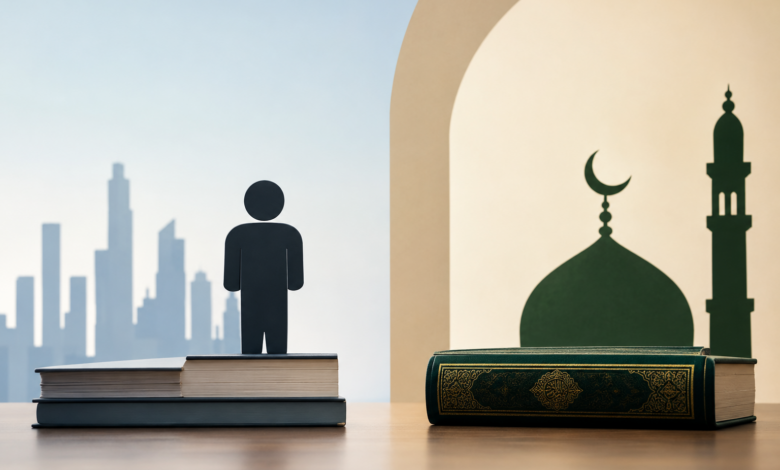
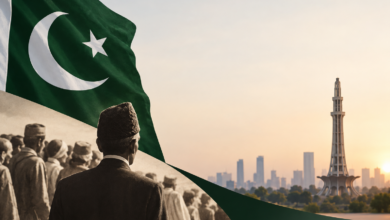
I have no problem in making an outright confession that despite the heroic struggle for Pakistan in the name of Islam and forty-seven years of our sovereign existence, we are still plagued with the question of how to fashion our future, and what should be the source of our inspiration. Also, I admit that although by definition a Muslim society is based on religious ideology (ad-din), the issue of our identity is being repeatedly agitated in the liberal media.
Again, it is a confession that despite long strides made during the last five centuries toward a “new brave world,” and our two hundred years of intimacy with liberalism, and about seventy-seven years of experience in socialism and its other variants, we are still grappling with the ideological future of mankind. This is the national and global context in which we will be examining Islam’s challenge to secularism and vice versa.
I would define secularism as an approach toward life and its problems, in which source other than human experience is rejected as guide. In other words, secularism takes man as the only real source for guidance contrary to a revelation-based alternative, which looks upon man in the context of the divine scheme of creation and its relation to the Creator. Of course, when we go into details, we will find that the secular approach has also produced a number of doctrines, ideologies, systems as well as worldviews. It is in this context, I submit, that the secular approach has its roots in antiquity. But for the sake of clarity, it would be helpful not to go that far back and instead concentrate on the pre-modern phase of history.
Secularism arose against the Western backdrop of the medieval religious-political state in which secular powers of the kings and the religious authority of the Church converged to create a certain kind of sociopolitical order. Here it would be interesting to note that secularism, as a starter was not the product of a godless mind. In fact, these were the religious movements in the form of the Calvinist revolt, which questioned the doctrine of pre-destination, and the rise of the Protestant movement, which disputed the authority of the Church and sought God’s guidance directly that implanted the vision of a man-centered world on the social scene. Starting with a new cosmology the world, once assumed to be the center of the universe, was reduced to just another satellite. The differentiation between natural and supernatural, physical and metaphysical was stretched even into the realms of technology, social and political structures. But the watershed remains the Westphalia treaty of 1648, which inaugurated the disintegration of the Florentine Empire, and the corresponding emergence of the nation-state. Both these developments had antecedents in the thoughts crystallized during the eighteenth and nineteenth centuries.
According to this new intellectual horizon, human affairs, particularly their socioeconomic and political aspects, had to be freed from religious interference. Man was elevated as the measure of all things: his thoughts, his experiences became the nexus of a lifestyle in which reason was the new guiding star. From then onward—whether it was liberalism, secular democracy, nationalism, capitalism, socialism or communism—everything was to be guided by reason alone.
But before I go further, let me clarify that like religion, which it sought to replace, secularism as a historical process had a totalic sweep. Its easy ascendance in the West was not accidental. The West’s makeup from the beginning was reconciled to the separation of religion and state. In fact, Christianity has to take much of the blame for it. The Lutheran revolt and the Protestant movement are a much later manifestation of a mindset shaped under the impact of the Enlightenment in the fifteenth century. I would thus go to the genesis of Christianity as developed under the influence of Saint Paul and later thinkers, including heavy weights, like Thomas Aquinas, who made an easy compromise with the idea of two realms of authority—spiritual and material. I call it easy because from the very beginning, Christianity had tried to disengage itself form the legal tradition of Moses and Jesus (upon them be peace). Even in Catholicism, one comes across the concept of a secular abbey for worldly affairs. The evolution of a secular society carries thus the religious stamp of approval, though it was with the growth of technology and its application in industrialization and urbanization, from seventeenth century onward, that the secular movement came of age. Unceasing efforts were made to free all institutions and socioeconomic processes from direct and indirect religious influences.
Evolution of social sciences also went along the same route. So much so that ethics which used to be the master discipline influencing all other social disciplines was now made to recede into almost anonymity. Whether it was sociology developed by Auguste Comte and Emile Durkheim or economics from the physiocrats and Adam Smith, or political thoughts of Locke, Hobbes, and Mill—one finds secularism making inroads substituting ethics with expediency. The emergence of the Evolutionary theory and its universal application followed by scientific socialism of Karl Marx swept away whatever was left of religion and its influence. So, I look at the secularization process in this context.
In the political realm, the issue was clear, as the Church had distanced itself from the State. The real objective was to free politics from any value framework, or influence of a religious source.
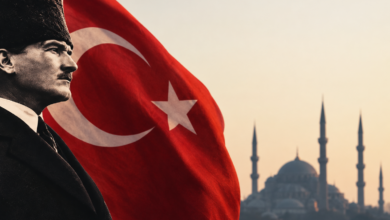
At the same time, it would be unfair to say that within secularism there had been only one model. From open hostility to pushing religion into a corner, the secular paradigm has generated a whole lot of models. The principal model of secularism has arrogated to itself the whole social matrix, from economopolitical and cultural dimensions to the interaction between individual and institutions, and between nations and states. The second model though sets the tone of everything it embraces it still differentiates between individual and collective actions. For practical considerations and because of the importance family has in community-building, it allows family to be governed by non-secular values, though its attitude could be described as irreligious or nonreligious but not anti-religious. In the third model, like communism, we find a clearly pronounced antireligious stance, despite its lip service to religious freedom and the right to worship. Communism, however, is not the exception. In many parts of the world, secularism did develop this antireligious approach with different combinations and permutations. Even the Muslim World is no exception. The Kemalist model is not religious neutral: it is hostile to religion and its manifestations.
Having said that, we have to realize that not everything is bad with secularism: it was successful in giving birth to many liberation movements, particularly against the tyranny of the Church and religious classes. Efforts were also made to improve human condition by bringing about economic development through liberalizing economy, maximizing production, creating jobs, and developing law. But we also find that this creative period coincided with the rise of imperialism and vast slave trade whose main venues were Africa, America, and Europe partially. We find how those who stood for individual rights were reluctant to concede them to others, or those who used to say man is the measure of everything were withholding humanity from others. Surprisingly, this was not something in the vein of nationalistic, cultural chauvinism, expediency or human failing: the West firmly believed in white man’s supremacy as a philosophy. To actualize it, they used biology as well as sociology. The secular perspective is blotched by these stark realities.
But this was not all to it. Secularism generated conflicts between nationalities and ethnic groups. Worse, systematic efforts were made to eliminate the nonconformists not merely through inquisition and religious wars (e.g., 50 million people migrated from Europe) but also through economic warfare and racial strife.
Equally horrible was the cultural strife in Europe under the umbrella of secular nation-state. The numbers of petitions sent by different cultural groups to the League of Nations, catalogued by one of the secretaries of the Committee on Minorities, are an index of the brutality, of the divisions and rivalries that secularism stamped on human soul. How savagely did the secularist spill the innocent blood? What happened to the Jews? These are not tales from a distant past; rather, it happened in the daylight of the twentieth-century secular humanism.
At the intellectual level, secularism could not provide a coherent theory of man, nor of his place in the universe, or his destiny. What we find is a jumble of conflicting attitudes; people reduced to skepticism and cut off from their historical, moral roots with nothing to support them. Nationalism could only sustain them for a while and that also to an extent. Again, we find deep divisions in society rife with new rivalries, tensions, and conflicts. The record of the nation-state itself is at best murky—deadly wars of unceasing conflicts. The human and nonhuman toll of the last two world wars far exceeds the sum total of past casualties in history.
Added to this, the state of secular man is marked by a grievous sense of insecurity. Disintegration of family, ascendance of suicide and crime rates, and poverty amid affluence have rattled him beyond words. The secular society in general suffers from imbalances. On the one hand, there are thousands of substitutes for certain consumer goods; on the other, there is not enough bread to feed human beings. Again, on the one hand, there are famines and hunger; on the other, we have mountains of unwanted products. In Cairo, we are having population control conferences; in Europe we are having parleys on how to dispose of surplus goods. The disposal of millions of tons of butter, which European community has accumulated for itself, is an unending source of discussion.
Again, though secularism guaranteed a degree of freedom on European continent, the rest of the world was subjected to political dominance, economic dependence, and intellectual servitude. Thus, the human experiences of secularism are not similar, or even predominantly beneficial.
We also find that secularism represented a negative and not a positive ideology, which denied religious tradition, moral values and even the existence of God. With religious influence receded, secularism sought company in liberalism and nationalism. The societal vision of a society in the cultural and intellectual context was of individualism. In the economic sense, it culminated into laissez faire; in the political sense, it turned into a utilitarian state of the kind John Stuart Mill envisaged. But soon it was realized that man needs ideology as well. This was sought in the welfare state into socialism and transforming of secularism communism. The latter became the harbinger of a new age. With the fall of communism, we are now face to face with another vacuum. A similar vacuum was there in the mid nineteen century when secularism had displaced the religious tradition.
Secularism and the Muslim world
As far as the Muslim world goes, we had been at the receiving end of the “blessings” of secularism. True, Muslims made a weak society—a declining people, at the verge of being swallowed. The Western attack on the Muslim society was felt on all fronts. The Muslim state was disbanded, the first to fell was its legal system followed by education and economic systems. On the religious front, the West pursued a pro-Christianity stance. The same political leadership that had rebelled against the Church was promoting evangelical missions in Africa and Asia, giving all possible patronage to the Christian clergy. The family—the bastion of Muslim society was the last target. Muslims, however, soon realized that they have to fight not merely political servitude but also the whole civilizational onslaught. So critical was the civilizational aspect that it began to stir Muslim intelligentsia everywhere. For example, in his historic 1930 address, Iqbal came out with the idea of centralizing Muslim power in a limited region, despite the fact that the Muslims had ruled over India for a thousand years. In principle, Muslims should have been the succeeding power subsequent to the British exit from South Asia, but as a realist and more so as one who knew the British well, he did not expect the return of the empire to the Muslims. He thus contented himself with the idea of shrinkage, the right to an exclusive territory where we could carve out a future for ourselves according to our own vision. It is, however, very important to know Iqbal’s motivating force or the vision for change. “The proposition that religion is a private individual experience,” he says, “is not surprising on the lips of a European. In Europe the conception of Christianity as a monastic order, renouncing the world of matter and fixing its gaze entirely on the world of spirit led by a logical process of thought to the view embodied in this proposition. The nature of the prophetic experience, as disclosed in the Qur’an, however, is wholly different: it is not merely an experience in the sense of a purely biological event of the experient and necessitating no reaction on his social environment.” It is to Iqbal’s credit that he spelled out the organic linkage between Islam’s religious ideal and the social order it creates:
“It is individual experience creative of a social order. Its immediate outcome is the fundamentals of a polity with its legal concepts, whose civic significance cannot be belittled merely because their origin is revelation. The religious ideal of Islam, therefore, is organically related to the social order, which it has created. The rejection of the one will eventually involve the rejection of the other.”
As may be seen from Iqbal’s address, Islam represents a totally different approach, antithetical to the secular approach in the West. First in Islam, there has never been a dichotomy between secular and sacred. Secular is as much part of our religious life as is spiritual. The Prophet (‘alayhi as-salām) has declared the entire world a masjid for the Muslim. In one of his Persian couplets, Iqbal says it dolefully:
Mumina rā gūft aan Sultān-i din
masjid-i man iyn hama rū-ay zamin
alama az gardash-i nahu asmän
masjid-i mümin badast digäran
sakht kushad banda-i pakiza kaysh
ta ba-girad masjid-I mula-i khuwaysh
Said the sovereign of Islam to the believers:
the entire planetary earth is my masjid.
But woe to the vicissitude of life caused by the nine heavens,
the believers’ masjid has fallen into other’s hands [secular lords].
Only the righteous Muslim by his supreme striving
can regain the [control] of Allah’s masjid. (translation ours)
So, secular and religious, spiritual and material are not two different categories—they are two sides of the same coin, fully integrated in Islam. A Muslim seeks success in akhira (life hereafter) while restructuring the secular realm in the moral context.
Second, in Islam loyalty belongs to Allah and His prophet. A Muslim by definition is one who volitionally accepts Allah as his Rab (Creator, Sustainer, Sovereign and Law-giver), Prophet Muhammad (‘alayhi as-salām) as his guide, the Qur’an and the Sunnah as his source of guidance. The volitional part is important for there is no compulsion in Islam. We may not accept Allah as our Creator and Sovereign. But once we have used our choice and accepted a value framework and an action plan, our freedom is lost. After accepting Islam, one cannot tag any conditionality to it. As the Prophet has said, the parable of a Muslim is that of a horse tied to a pillar. His freedom of movement is within the range of the area, allowed by the rope that holds him.
Third, Islamic approach to state and its problems is not theocratic. Doubtless, it is Islam’s revolutionary contribution that it builds a direct relationship between man and God. Allah has guided mankind in the form of His Book—unsoiled by human hand, pure and simple through the prophetic medium of Muhammad Rasul Allah. In this sense the finality of prophethood is a charter for human freedom, since none can ascribe to himself the right to speak on God’s behalf or create a new guidance for himself after the Prophet. Islam gives humanity the distinction of direct access to these sources to understand the divine will and implement it. There is no class of intermediaries: priesthood or arbitrary power. The rule of law is the bedrock of this state.
And fourth, Islam is not a rigid, monolithic system. It has built-in possibilities of change to face new challenges. Islam is absolute for it comes from the Absolute, who is not subject to the constraints of time and space. We can benefit from it provided we approach it with knowledge, understanding, and above all faith. If someone thinks that without knowing its message, language and methodology, he still has the right to make judgment on it, then he is not only naive but smells of rebellion. On the other hand, anyone who has its knowledge and strives to internalize it, even if he makes a mistake, he has the right to have a dialogue with the Qur’an. He can build up a case based upon his understanding of its injunctions, and convince others of his views. If not, his view would remain one among many. In short, this is an open process of understanding, dialogue, and dissent through which consensus (ijma’) emerges.
Doubtless, the Qur’an has not been left in a vacuum. There is continuity, though there are certain areas where gaps have occurred over the years, creating new issues and problems. First, there is the unfortunate 400 to 500 years of our own period of decline, followed by 200 years of colonial rule all these have to be made up. Yet it is loyalty to the sources, faith and conviction that matters. Islam has its own liberalism, and conservatism, which one can seek in view of the exigencies of a given situation. And in that respect, short of breaking or destroying the system, there can be many ways to go to the heart of the message. The Qur’an clearly says:
“O you who believe, obey Allah, and obey the Messenger, and those charged with authority among you. If you differ in anything among yourselves, then refer it to Allah and His Messenger, if you believe in Allah and the Last Day. That is best and most suitable for final determination.”
Secularism is a product of a given historical situation distinct to the Christian West when in concert with other ideologies and institutions it was able to mold the world after its image. But after having played a role in developing the ethos of post-Renaissance Western civilization, it is now fast becoming an historical obsolete. Ironic as it may be, hardly eight years ago, the West was jubilant on the fall of communism and had described the event, in the word of Frances Fukuyama, as the end of history marked by “an un-abashed victory of economic and political liberalism.” Five years later, the West is eating its own words. The World Bank reports as well as the latest report of the Club of Rome confirm it. Their pundits of economy are now saying that liberalism cannot deliver the good, and that state will have to play a positive role. Voters are once again veering toward anti-capitalism slogans and programs. They even go to the extent of saying that moral and spiritual values will have to be rediscovered. Interestingly, the Club of Rome’s report quotes surah al-‘Asr, that is: “By the token of time, man is in loss except those who do righteous deeds and are steadfast.”
This being the current thinking, we have to ask ourselves which way we want to go. What should be our future? We must discuss this with an open mind.