

SPEECH AT 2ND INTERNATIONAL SEMINAR ON AFGHANISTAN
Tehran
2-4 October 1989
Prof. Khurshid Ahmad
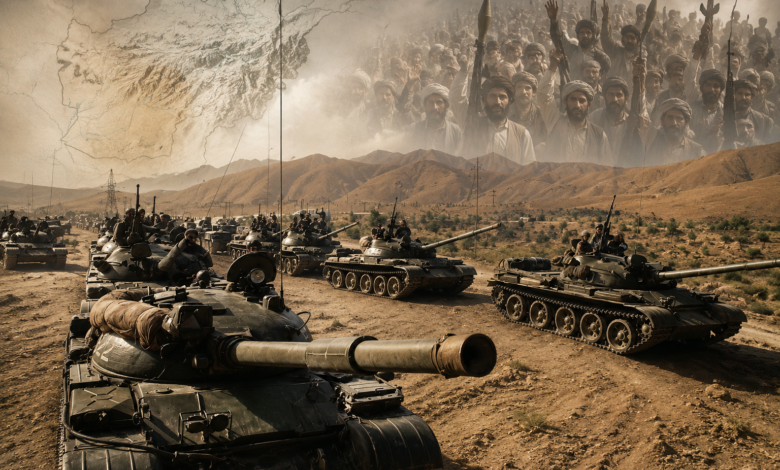
Afghanistan is passing through a very critical and crucial phase. Four important developments have taken place during the last one year which deserves to be taken note of. While we are examining the present state of the Afghan problem and the prospects of its solution, Russian forces are being claimed to have been withdrawn from Afghanistan. Although this claim deserves to be examined yet this formal withdrawal represents an important development on the Afghanistan front.
Secondly there have been major changes in the political leadership of Pakistan. Gen. Zia ul Haq was pursuing an active Afghan policy keeping in view the geo-political situation of the region and the strategic of Pakistan and the Muslim World. The crash of 17th August 1988 remains a mystery. There are strong indicators to suggest that it was not an accident but part of a plan to eliminate Zia, who had become something of an obstacle to the implementation of the post-Geneva Accord policies of the big powers. There is a strong suspicion in Pakistan that even America played an important role in removing Zia from the political scene, paving the way for the emergence, of a regime which could be much more dependent on America and more emanable to its influence.
Thirdly, change has also taken place in the political leadership of Iran, a major neighbor of Afghanistan, The death of Imam Khomenei and the emergence of a new religious and state leadership represents another important development. I am happy to note that this transition has been peaceful and the political system seems to have attained a new equilibrium and stability. Yet the emergence of the new regime and the cessation of Iran-Iraq war represents developments which are bound to have their on the future of Afghanistan.
Finally, the international climate on the question of Afghanistan also seems to be registering a slow but significant change. The commitment to the Afghanistan cause is weakening and the support for Jihad has! Begun to man. Western powers are more interested in withdrawal of Russian forces and now the western media is projecting some of the weaknesses of the resistance shows that attitudes in the West have begun to change. What was ignored or condoned in the past is insignificant as a tolerable field of a tribal society is now projecting it as a threat to Afghan resistance. Internal divisions are being projected out of proportion and talk about division of Afghanistan is gaining more and more support. It is very clear that there is divergence in the strategically concerns of the Afghanistan resistance, Pakistan and Iran on the one hand and Russian and West on the other.
The current situation in Afghanistan and the bottlenecks of its solution in the future have to be considered in the context of this changed scenario.
Let us be very clear about the essential nature of the Afghan issue and the critical questions involved therein. What happened in Afghanistation was intervention of the armed forces of a super-power in an independent, sovereign country on the plea that its interests were at stake. Russia has begun to see Afghanistan as its area of influence and unfortunately this was by and large accepted by the West. When things began to change in the 70’s a military coup was engineered with the active support of Russia and involvement of India, Dawood was removed and Tarraki came. However, in December 1979, Russian forces, who directly intervened on the plea that the revolution was in danger and that one group of the PDPA headed by; Karmal who did not represent the Government and was actually hiding in Russia invited the Russian forces to stable his government. The Russian action was in pursuance of the Breznev’s doctorine, yet the central issue which emerged from this action of a super-power, which was challenged by Pakistan, the Muslim World and most of the nations of the world, was the alleged “right” of a mighty state to arbitrarily intervene militarily in another sovereign and independent country to topple the government of that country and install support and sustain a political regime of its own choice. This is what happened in Russia and this constitutes a threat to nations of all over the world. While formal withdraw! of Russian forces represents steps in the right direction it has to be realized that despite this formal withdrawal Russia continues to be militarily involved in Afghanistan in a number of substantive ways. There are Russian advisers who are stationed in Afghanistan and who are engaged in activities which cannot be described as “advisory”. Russian supply of armament continues unabated. In fact Russia is building larger quantities of arms of a more sophisticated nature. The volume of these arms supplies is reported to be to the tune of 250 million per month. This is far more than the supply of arms that was made by the Russians during the period of its direct occupation. The most important point, however, is that Russian military intervention in Afghanistan and the installation of a regime of its own choice in Afghanistan represents two sides of the same coin. Russian withdrawal would remain incomplete till the regime planted by the Russian forces and held in power by its support and manipulation also goes. The two cannot be taken as different political realities. That is why mere qualitative change in the Afghanistan situation. That is why Geneva Accord was a-inherently faulty and defective agreement which did not address itself, formal withdrawal of Russian forces does not bring about any substantive to the fundamental issue of Afghanistan and turn out to be an agreement to continue war and not to bring an end to the hostility and the blood-shed. The Afghan resistance has to continue till the symbol of Russian occupation that is a government installed, support it and sustain by Russia since December 1979 (whatever be the internal changes) is removed and the sovereign, independent, Islamic and non-aligned character of Afghanistan is restored and conditions are created for honorable peaceful return of over 5 million refugees living in Pakistan and Iran.
Secondly, it has to be understood that the Afghan Jihad has been fought by Afghans and Afghans alone. There have been two combatant forces the Russian forces of occupation, their communist collaborators from within Afghanistan and the Afghan Mujahideen. There have been two affected countries, Pakistan and Iran, yet they were involved directly in the conflict and never claimed such a role. Whatever support was extended to the Afghan resistance by Pakistan, Iran and the Muslim World and the Western countries, was on the basis of the United Nations Charter which ensures not only humanitarian aid but aid to those who are fighting for their right of self-determination against foreign occupation. Naturally U.S.A. and Western and European countries tried to politically exploit this situation in their diplomatic struggle against Russia and its allies. So does USA in respect of issues where America has bungled (Grenada, Nicaragua, Panama, Hundras, etc.). But to project the Afghan Jihad as primarily the USA and USSR confrontation is totally incorrect and represents a deliberate effort to falsify the heroic struggle of the Afghan people as long as there was convergence of interests-between the U.S.A. and the Mujahideen. USA and the West was supporting the Afghan Jihad during the last two years, divergence of interests, has become more pronounced and the current diplomatic situation reflects it. It is therefore very important to be clear that Afghan Jihad is primarily an Afghan phenomena and the real conflict is between the popular resistance of the Afghan people and Russia and its collaborators who still hold power in Kabul and certain cities of Afghanistan.
Thirdly, Afghan resistance is based on Islam and can be understood only in an Islamic framework. While Afghanistan has always been an Islamic country, has taken place during the last two decades.
The Islamic identity of Afghanistan has become more and more pronounced and the resistance to Russian occupation forces and their communist collaborators has strengthened as well as deepened the Islamic identity of Afghanistan. Now Islam represents the destiny of Afghanistan.
The Afghan resistance has also set a model for mankind in general and the Russian in particular. If the peaceful political struggle for freedom of the Indo-Pakistan subcontinent can emerge as a model for the countries of Asia and conflict in the 40’s and 50’s and if the Algerian resistance can become pace settler in the 60’s Afghanistan resistance has become a model in the 80’s and 80’s. This is a unique contribution of the Afghanistan Jihad and would have far reaching consequences for future not only of the Middle East but also of Central Asia.
The geo-political position of the Russia, as in view of the earlier points discussed, change to such an extent that the question, of revival of status-quo ante is out of the question in Afghanistan. The fabric of society, the nature of relationship between tribes and linguistic groups, the role of traditional leadership and elite groups, emergence of a new revolutionary leadership have so changed the ground situation that revival of the monarchy or imposition of a compromised government in Afghanistan is impossible. It is only the Afghan people who have the right, in the light of these fundamental changes, to choose their leadership for their future.
Sixthly the establishment of the Afghanistan interim government is a remarkable achievement and a step in the right direction to resolve the problems in the way of Afghan struggle. The Government is yet in the early stages and has to prepare itself to meet the real challenges in their fullness. During the last few months there seems to be slow progress towards the next stages of the Government. There is even a folly of stalemateship, political as well as military. Political credibility of the new government also has to be established. An infrastructure of the government has yet to be realized. Need for greater unity within the Mujahideen groups cannot be over-emphasized. Although they need to expand the pace of the government is realized at all hands. The interim government needs greater support from outside world. It has to undertake a transition to become an alternate government, partly in effective operation and partly a government in waiting. This is a challenge the Afghan Mujahideen have to face. They have proved from battle in arm resistance against a foreign power. They have yet to prove their political segacity to face the challenge that confront today.
What should be done to face this challenge? In my view there are five things, they are to be avoided and I would like to mention them:
First, continued stalemate could be fatal for the political solution of the problem. There is no duce that solution has to be political in the loss analysis but a political solution worth the name is possible only if the ground situation is strong and the Mujahideen are able to realize the objectives for which Jihad has | been weighed in the last ten years and over 1.2 million people laid their lives. No political solution can be imposed on Afghanistan only because that particular solution suits super-powers. Armed struggle and political negotiations are two aspects of the same process. Any effort to install Jihad and switch over to ethnic clash and the target in negotiations has to be fulfillment of those objectives for which the Jihad was weighed. The danger of losing on the political battle what was achieved in the battle field cannot possibly be ignored. Why the political solution is a must? A forced political solution or a hasty political solution not backed by the pressure of the resistance cannot solve the problem.
Secondly, the division of Afghanistan is totally out of the question. Four scenarios are being mooted in different quarters and I want to make it very clear that none of them can have any place in the future of Pakistan. One group is lobbying for a pro-Russian Afghanistan and an Islamic Afghanistan. Other talks in terms of re-demarcation of boundaries on ethnic grounds, whether in the form of North and South Afghanistan or in the form of Persian-speaking and Pashtoon speaking. There are yet others who are whispering in terms of Sunni Afghanistan and Shi’a Afghanistan. Certain world powers are trying to force Afghanistan towards some kind of a balkanization. The idea is that different and different Hizb wherever they are may enjoy effective power and through a kind of de-centralization of authority a number of similar “Khanates” may emerge in Afghanistan. All these four are roots of societies and represent efforts to defeat the purpose of Jihad in Afghanistan. All of them are to be avoided.
Scenario which is to be avoided is imposition of some kind of a nationalist’s quasi-liberal regime in Afghanistan as an umbrella under Zahir Shah or some other member of the old card. This is totally out of the of the political and military realities of Afghanistan.
Any effort in this direction will go in vain.
I would like to warn the Mujahideen that efforts would be made to Torne their great Jihad which they have fought in the cause of Islam and the Islamic Ummah and the sovereignty and integrity of their country may be made to degenerate into a kind of civil war between different Mujahideen groups. This is also an effort to sabotage and destroy the great lslamic Jihad movement of Afghanistan and we must safeguard against it.
Finally, there are efforts to internationalize the issue or turn it to a regional issue and thus take the decision-making power from the Mujahideen to destroy breakthrough. We have seen the results of internationalization in Palestine, Kashmir and others. A particular lobby is trying to give the issue a regional character and drag in India to play some role in Afghanistan. India is very eager in this respect but it must be remembered that India’s role in Afghanistan has been extremely dubious not only had that India tried to use Afghanistan against Pakistan ever since its establishment India had a finger ‘in ; the revolution that took place in 1978. India was the only major; non-aligned country which recognized the Karmal regime and tried to! Extend political support to Russian occupation of Afghanistan. Now I India has no credential to play any role in Afghanistan. I therefore submit that internationalization and regionalization of this issue must not be given any heed.
The time is on the side of the Mujahideen. They must not be i impatient. If we look to the war in Vietnam we find that after the Paris agreement when the American forces had actually withdrawn and had stopped all aids to the Saigon regime, it took two years for Saigon to fall. We should not expect miracles in Afghanistan where Russian forces and Russian arms are continuously supporting the Kabul regime.
In my view Pakistan and Iran should continue their unstinted support to the Afghan Jihad. There is no question of any negotiations with PDPA. We have no right to impose anything on the Afghan people. It is there sovereign right to talk to whomever they want. The real parties to the struggle are the Mujahideen and the Russians and we should make every effort to use our good offices in a mutually coordinated manner to see for an honorable political solution without in any way interfering in the internal affairs of the Mujahideen, Iran and Pakistan should show a kind of togetherness. Our policy should be to support and not intervene and both should remain above sectarian or Fiqhi considerations. This is a national struggle based on Islam and any effort to bring in Shi’a, Sunni, Wahabi or any other card would be a dis-service to the cause.
Finally to the Afghan Mujahideen, I would like to say that along with continuing their heroic Jihad they should initiate struggle thinking about war and its modalities particularly in view of the formal withdrawal of the bulk of Soviet forces and the challenge that comes from transition of guerrilla struggle to some kind of an international war. This calls for new strategies both of war and the way war is controlled and commanded. Secondly there is need for supplementing the armed resistance by political resistance within Afghanistan and popular up-rising in the cities of Afghanistan the stage has come where military struggle must be supplemented by political struggle to de-stabilize the occupation regime in Kabul.
Thirdly, the need for unity and consolidation of ranks within the Mujahideen was never as great as it is today. If unity cannot be: attained in its ideal form we must go for some kind of operational unity. We should also be prepared to rethink the basis of representing and to make it more realistic because quality of unequals cannot last long. Some kind of a realistic basis has to be discovered to consolidate and strengthen the unity amongst Mujahideen.
Fourthly, the need for combined command and coordination in operations has immensely increased. In view of the changed situation inside Afghanistan.
Fifthly, there is a pressing need for a diplomatic offensive all over the world to project the Afghan cause in its true colors and to convince the world that formal withdrawal of Russian forces have not qualitatively changed the nature of their struggle in Afghanistan. Proper planning to reach the world media is also needed and an effective and active policy in this direction is needed.
Sixthly, there is an urgent need to develop infrastructure of the interim government and also to arrange for facilities for training manpower and leadership for the future of Afghanistan at different levels.
The Afghan Mujahideen must realize that their struggle cannot sustain and even with a formal political solution of the problem, which I am sure will not take too long, if they can maintain their military pressure and unity in their ranks, would only open up a new phase of the struggle. After the political solution I can see foreign intervention of all different types. This would be in the form of penetration of international agencies. Western economy and other organizations to cost Afghanistan in the future. The multi-national organizations would come, the aid-giving agencies would come, all those representing in the forms of international intervention. While Afghanistan should cooperate with all this must be done on their own terms and in an Islamic framework and in a framework that is on their path values and tradition and not allow their country to be motomorphamous in the image of the West. For that, preparation is needed today. This challenge can be faced only through strategic planning, from careful manpower development and through proportion of plans for the development of Afghanistan and the in the light of the Islamic values and the strategic interests of Afghan people. I therefore suggest that strategic thinking about future of Afghanistan, its government, society and the reconstruction model are to be rigorously and meticulously done now. Time would not wait for us. We must rise to face this challenge.