
Eastern Europe: Fall of Communism II
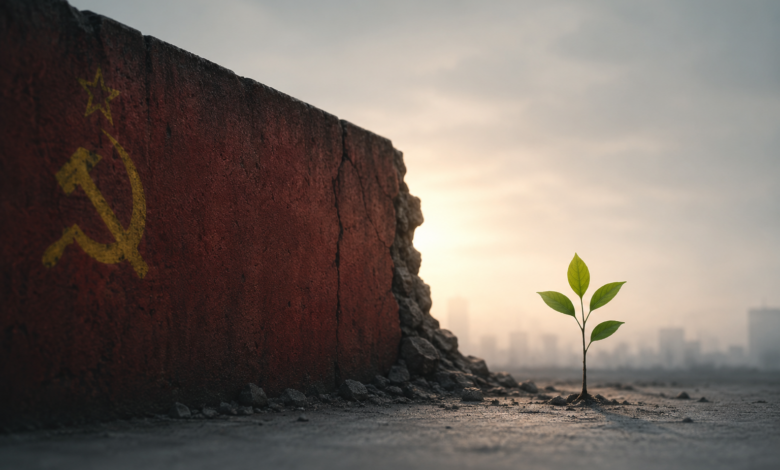
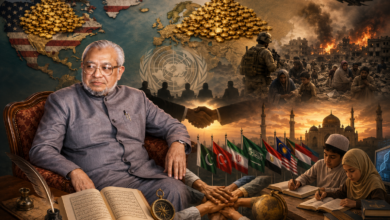
The political collapse of the Russian strategy in Afghanistan and the successes of the Mujahideen in throwing back the Russian forces of occupation from their homeland have also played a very important role in bringing about the changes that are now taking place in the Communist world, particularly in Eastern Europe.
It was the fear of the Russian war machine that kept the Communist world together for long. The failure of Russia in Afghanistan struck a mortal blow at Soviet prestige as a superpower and at its capability of holding others under its sway by military might. The withdrawal of the Russian forces from Afghanistan represents the beginning of the end of the Soviet empire. Countries of East Europe realized very soon that now is the time to seek freedom from Russian hegemony.
The international situation was such that the fear of Russian intervention in East Europe was minimal. As such the Jehad in Afghanistan has set the pace for historic development in the whole of the Eastern hemisphere. I further venture to surmise that what is happening is only a beginning. Fundamental changes would take place in the Soviet Union itself particularly in the Baltic region, Georgia and Muslim Central Asia.
In my view these are some of the major factors responsible for this change. While Mr. Gorbachev has played an important role in this process, he himself is a product of the forces responsible for change and not the sole architect of this process. The current leadership of Russia, it seems, has realized the historical forces that could not be resisted and has tried to harmonize its attitude and policies with them even where it meant bending back from communism. This streak of realism in their approach deserves to be appreciated. This has also made the transition less painful, although the full cost of the change is yet to be calculated.
Looking to the future, while the failure of Communism has become. more and more manifest it would be too unrealistic to assume that Communism is going to disappear from the face of the earth very soon. The Communist world is in crisis and is heading towards disintegration but the process of crisis and disintegration may last for decades. After all, one learns from history that civilizations do not necessarily collapse with a bang; it takes long periods of disintegration and decay before they finally collapse and disappear. The Roman Empire is one such example whose period of disintegration is spread over centuries.
The crisis has also to be seen in the context of the crisis of Western civilization as such. It is my considered opinion that those who are trying to project the failure of Communism as a victory for the liberal principle of capitalism and secular democracy are mistaken. The crisis of liberalism and secular democracy is also very much there, only presently it has been somewhat overshadowed by the more severe crisis of Communism. The coming years are going to be critical for mankind.
There is a spiritual and moral vacuum. Liberalization and secular democracy may have certain attractions for the Communism afflicted Eastern Europe, but they would not be able to solve the fundamental problems of the individual, the family and society in the eastern parts of Europe, as they have not been able to do so in their own main lands of Western Europe and the Americas. As such this crisis should not be seen as failure for the one and victory for the other. That would be a misreading of history.
I also do not see this as a signal that the world is to be ruled by one superpower in the future. That would be too grave a nightmare for mankind. Instead, I clearly see that the decline of Russia as a super power is destined to be followed by the gradual decline of America as a superpower, and the emergence of new poles of power in Europe and the Far-East. The Muslim World can also become one such pole of power if it is prepared to set its own house in order. History does not wait for people.
The Muslims must realize that they have a role to play as an ideological community and as an Ummah consisting of over a billion people, constituting about 20 per cent of the world population and having political control over about 23 per cent of the land area of the world and, most important, possessing an ideology that is capable of looking after the spiritual and material aspects of human life and society.
I also feel that man’s quest for spiritual sublimity and material welfare, for freedom and justice, for moral excellence and worldly prosperity and tranquility will continue. This would produce new conflicts as well as new experiments. In this process some of the contributions made by Socialism in the form of emphasizing the social dimensions of human life, need for planning, care for welfare and concern for equity shall continue to play a role, although the overall culture of Communism developed under Marxist influence has failed and I see little possibility of its revival.
The Muslim World and the Third World countries should also realize that there would be a huge diversion of resources from the developed countries of the world to Eastern Europe which would mean further reduction of resources available for the countries of Asia and Africa. While this would create hardships for the poorer people of the world I also see in it the possibility that the rest of the world may be able to see the hollowness of the Western civilization and its approach to problems of mankind.
This may awaken in these countries of the world a new realization of drawing back on their own spiritual and material resources and to pursue a path different from the one based on the western civilization and its socio-economic ideologies of capitalism and communism. As such I look towards the coming decades as a period that may be characterized by fundamental rethinking and review by mankind and a period of fundamental ideological and socio-economic change.
I am also struck by the fact that change in most of the parts of Eastern Europe has been rather peaceful, although I am not sure this trend will continue. Change in Romania has been soaked in blood. Tiananmen Square had had its own casualties. The scenario in Russia is haunted by blood-letting. Yet the East European transition has been far less painful than any of the earlier revolutionary episodes.
It is also becoming very clear that use of force for the imposition of ideas and ideologies has its limitations. Thoughts imposed by force are destined to be overthrown once the power behind that force weakens. Ideas that last are the ones that are based on conviction and nurtured by a faith which springs out of voluntary acceptance and deepened through understanding. Man, and his thoughts cannot be put under permanent shackles. Freedom is not an expediency; it is the very breath and soul of man. Only that social order would be able to last which is accepted by the people from the deepest recesses of their soul and which represents the flowering of their choice. This bears for the future of man a message of hope and I take pride in that.