
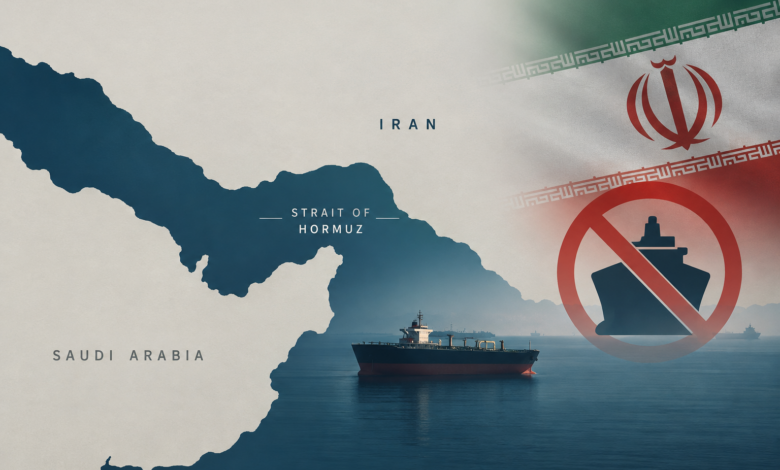
Iranian Blockade of Strait of Hormuz
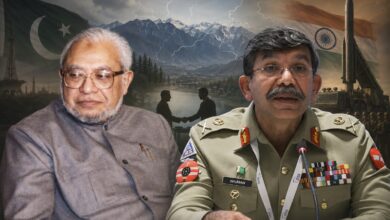
Professor Khurshid Ahmad’s perspective on an Iranian blockade of the Strait of Hormuz can be deduced by bridging his core theoretical principles, ethical economics, anti-imperialist sovereignty, and Islamic jurisprudence on collective harm.
He would view an Iranian blockade not as a simple tactical move, but through a dual, nuanced lens: ideologically sympathetic to resistance against Western economic hegemony, yet ethically critical of the severe collateral harm it inflicts on innocent populations and the wider Muslim world.
1. Rejection of Indiscriminate Harm
The foundational premise of Professor Khurshid Ahmad’s Islamic economics is that economic mechanisms must serve human welfare (Falah), justice (Adl), and the preservation of innocent life. In classical Islamic jurisprudence, the principle of “no harm and no reciprocating harm” strictly limits weapons or strategies that cause disproportionate, indiscriminate suffering.
- The Global Fallout: Shutting the Strait of Hormuz would choke roughly a fifth of the world’s petroleum transit, immediately triggering hyperinflation, energy shortages, and spikes in basic food and commodity costs globally.
- Ethical Assessment: Just as Professor Khurshid Ahmad criticized unilateral Western sanctions for impoverishing ordinary citizens rather than ruling elites, he would argue that weaponizing an international energy artery fails the Islamic ethical standard because its primary victims are ordinary, vulnerable populations worldwide.
2. Disruption of Muslim Fraternal Solidarity (Ummah Welfare)
Professor Khurshid Ahmad’s policy outlook, both in the Senate of Pakistan and through the Institute of Policy Studies (IPS), heavily prioritized regional stability and economic self-reliance among Muslim nations.
- A blockade in the Persian Gulf primarily destabilizes neighbouring Muslim-majority countries:
- Energy-importing Muslim nations (like Pakistan, Egypt, and Bangladesh) would face catastrophic balance-of-payments shocks, currency devaluations, and domestic unrest.
- Neighboring Gulf states (Saudi Arabia, UAE, Qatar, Kuwait, Iraq) would face direct economic paralysis, deepening sectarian and geopolitical fractures within the Ummah.
- From Professor Khurshid Ahmad’s pan-Islamic perspective, causing structural economic distress to neighboring brotherly nations violates the imperative for intra-Muslim cooperation and mutual support.
3. Understanding the Asymmetric Context (Anti-Hegemonic Leverage)
While condemning the humanitarian impact, Professor Khurshid Ahmad was also an outspoken critic of Western interventionism, unilateral dollar-based sanctions, and neo-colonial military dominance in the Middle East.
- He would likely frame Iran’s threat of a blockade as a symptom of an unjust global order, viewing it as an asymmetric countermeasure against Western economic siege warfare (sanctions, embargoes, and SWIFT cut-offs).
- In this context, he would point out the hypocrisy of global powers that normalize financial starvation of adversarial nations while expressing outrage only when retaliatory choke points endanger their own energy supplies.
4. His Prescribed Alternative: Collective Institutional Action
Rather than unilateral, high-risk militarized disruption of maritime corridors, Professor Khurshid Professor Khurshid Ahmad consistently advocated for structural and systemic solutions:
- De-dollarization & Independent Financial Mechanisms: Developing bilateral barter mechanisms, gold-backed trade, and independent clearing houses to render Western economic weapons obsolete without risking regional conflict.
- Diplomatic Crisis Management: Utilizing non-aligned Muslim middle powers (such as Pakistan or Turkey) as credible arbiters to negotiate de-escalation.
- Resource Sovereignty: Channeling energy resources into collective Muslim economic integration rather than using them as zero-sum wartime detonators.
Professor Khurshid Ahmad would view the blockade of Hormuz as an understandable, desperate reaction to systemic Western coercion, but ultimately an untenable and ethically flawed policy, one that undermines human welfare, punishes the weak, and destroys the economic foundations needed for true regional self-determination.