
NATIONAL POLICY IN THE CHANGED SCENARIO
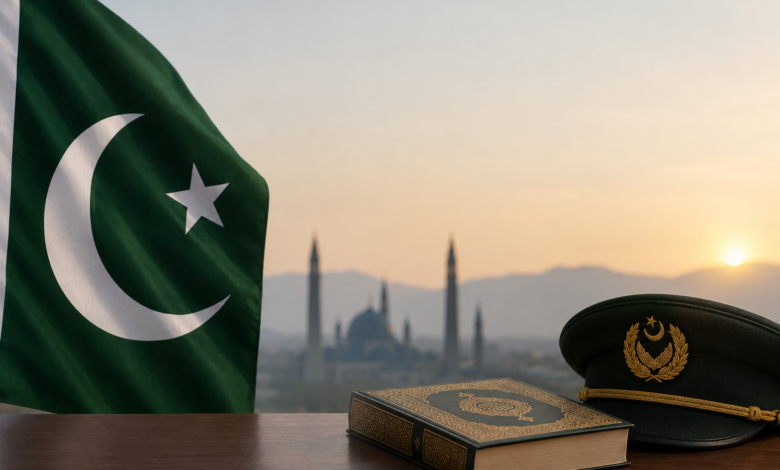
The country and its new leadership has to deal with three major pressures. One, the international political pressure which is a part of the US global aims and designs according to which it cannot allow Pakistan to emerge as a strong Islamic state equipped with nuclear power. Two, the economic pressure which has precipitated because of the wrong economic policies of the past and has greatly undermined country’s ability to withstand external pressures. Three, the lobbies, which are influential despite their being diminutive as well as in minority.
Working for narrow secular objectives or for foreign agencies against the faith, goals and aspirations of Muslim masses, these lobbies do not want to see the army of the country as a strong force espousing Islamic concept of Jehad. Their suggestions are such that acting upon them may lead to army’s abdication of its cherished motto of “Faith, Accountability Before Allah and Jehad in His Way”. They want to drive a wedge between the army and the people and to tarnish the existing harmony between the two.
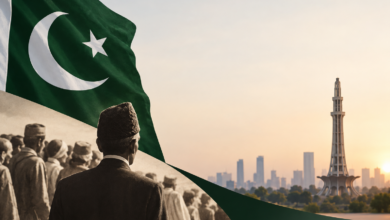
It is a matter of satisfaction that the new leadership has declared in clear terms that the Objectives Resolution remains the corner-stone of national integration, that the Holy Quran and Sunnah shall be the source for policy-making, and that Pakistan’s goals and targets shall be the same as were championed by Allama Iqbal and Quaid-i-Azam and the Muslims of the subcontinent had raised Pakistan for. Like the past, this remains the objective of the Muslims of today’s Pakistan.
There should be absolute unanimity and single-mindedness in this regard and the door for perverted and confused thinking, self-contradictory views and unfounded reservations should be closed once and for all. Within the bonds of Islam there is immense freedom for thinking and action. Islam provides guidance for the best consultative and welfare system. Muslim Ummah does not need any other system or ideology. Nor can the foreign ideologies find acceptance here. To attempt to start discussion afresh on this consensus-point is a sure recipe for anarchy and disaster.
Therefore, this trend of wayward discussions must end and the attention should be focused on the formation of policies and working on them with sincerity and painstakingly in accordance with the principles of Islam, and in the light of the pledges and assurances of Iqbal and Quaid-i-Azam to the nation.
Iqbal in his letter addressed to Quaid-i-Azam in 1937 wrote:
“After a deep study of Islamic laws I have reached the conclusion that if this law is thoroughly comprehended and acted upon, at least the right of everybody to the livelihood is secured. But the enforcement of Islamic Shariah is not possible without the establishment of a Muslim state”.
Quaid-i-Azam also had said in clear terms that the establishment of Pakistan was not the end in itself; the real objective was the enforcement of Islamic ideology. Not one but as many as 200 statements of Quaid-i-Azam, from 1937 to 1948, are on record wherein this has been stated in unequivocal terms. In an interview, Sharifuddin Pirzada has answered with compelling arguments the observations and suspicions in this regard and said unambiguously that Quaid-i-Azam remained steadfast to the stand till his last that Pakistan should be built in the light of the Islamic principles and that Pakistan should be an ideal not only for the Muslim world but also for the Third World deriving inspiration from the model of governance of Caliph Umar.
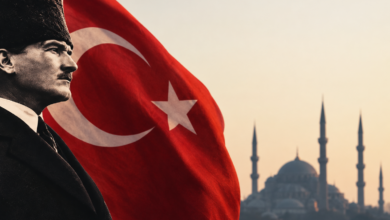
Quaid-i-Azam once quoted Mustafa Kemal before a Turk delegation as saying that Turkey was forced to accept secularism due to its weakness after the First World War. Moreover, before his death, while speaking about the efforts for the establishment of the state of Israel in Palestine, Mustafa Kamal said that if this happened, he would wage a war against it like Salahuddin Ayyubi.
Another important thing to note is that along with trust in Allah and gaining strength from Islam, the next preference is winning the people’s confidence giving due regard to their aspirations and feelings, respect for their wishes and desires, a resolve to solve their problems and difficulties and to organize and mobilize them.
In our view, the most important source of our strength in mundane terms is unity of the army and unity of Pakistani nation and harmony between the two. The secret of our progress and strength lies in maintaining this unity and harmony. The adversaries would try to create differences among the people and rifts within the army as well as to destroy harmony between the army and the people.
It is feared that some inexperienced individuals in the government may commit such blunders in this regard which may entangle the new leadership. It is time to underline the importance of the people’s confidence and harmony between the army and the people. This is possible only when people are trusted and consulted and their difficulties, problems, sentiments and feelings are understood and a contact is maintained with them.
To keep in contact with the nation is much more necessary than to visit foreign lands. There have been enough visits. This change in priorities is the need of the hour. The real field is Pakistan and its people are the real strength, success lies in achieving their pleasure and support and in their service.
For winning the support and cooperation of the people, it is essential to ensure that:
- The process of accountability is transparent and across the board. While injustice should not be done to any, it is also necessary that all those who are responsible for looting the country and under mining its foundations must be duly punished, however strong and cunning they may be. They should be brought to book within the shortest possible time. This is a popular desire.
- Oppression, injustice, lawlessness, exploitation and usurpation, rampant from top to bottom, is dealt with an iron-hand. Maximum force may be put to the strengthening of institutions and enforcing the writ of law. Thus the culture of accountability, good governance and service should be introduced. This process should begin from the top but eventually be made effective at every level. This needs a push to start, then it would continue on its own.
- The people’s rights, freedom of the press and of the electronic media, early devolution of power, provision of facilities of education, food and health is given due attention. The entire administrative machinery be engaged for the provision of these services so that people could feel the change.
- For the economy’s revival, self-reliance should be declared a cornerstone of economic policy. Such a decision needs lot of courage, and has to be made. Self-reliance has been much talked about but policy-making has been directed towards foreign aid, loans and attracting capital since 1955 and thus our economy has been chained down to an oppressive system of subjugation. Now this vicious circle must be broken.
- Electoral reforms are undertaken and fresh elections held under the new system.
It should be stressed that the present rulers should not get involved in amending the constitution. The objectives can be pursued and realized under the constitution. If any constitutional amendment is at all needed, this should be made by the people under the procedure for constitutional amendments after the elections. Opening the door for amending the constitution or attempting to create it anew prior to the elections would do great damage to the country. This must be avoided.
The third main issue that requires single-minded approach is about relations with and reliance on foreign powers. In the contemporary world, each country needs friends and none can withstand isolation for long. Obviously, Pakistan wants friendship with all but this friendship has to be with-in the framework of its security and interests.
Unfortunately, our foreign policy has been hostage to the US and its interests since long. Our economic policy was run in a fashion that the America’s grip tightened day by day on our economy as well as on foreign policy. Time has come for a fundamental decision. While confrontation or tension with any country is to be avoided, it is necessary that our foreign policy on the one hand is based on facts and on the other, protects our political, economic and cultural freedoms and safeguards national objectives and interests.
The negative attitude of the US, the Commonwealth and the European nations has provided us with a historic opportunity. Friends and foes now stand exposed. It is time to do away with illusions and unfounded perceptions. Pakistan is a nuclear country and if it gets the economy freed from foreign grip, there are enormous possibilities for framing and running the foreign policy independently.
Muslim masses are our real friends and Muslims even of those countries that are under external influences love Pakistan. If achieving the support of these people becomes a target of the foreign policy, then even the governments of these countries would not be able to ignore internal pressures. Unfortunately, the ‘clerks’ who have been entrusted with framing the foreign policy could not comprehend this revolutionary aspect of foreign politics. This was evident during General Musharraf’s recent visit to Turkey. The Turkish people are with us but our policy-makers commit blunders that frustrate the people’s expectations.
The editorial of the Turkish Daily News of Nov 10 and 11 and the report of its correspondent reveal the extent to which our diplomats are unaware of the ground realities and unacquainted with the feelings of the Ummah. Owing to their lack of touch with the reality, they are wasting golden opportunities. Without changing the direction of the foreign policy, we cannot hope to get rid of the new net of global slavery.
We need a clear thinking about the US. Though the American global objectives and our national objectives have never been identical and in harmony, as US has always used us for its ends, this has never been so clear as it is now. In the hour of trial, the US invariably undermined our interests and let us down. There is therefore, no alternative but to base our foreign relations on new footing.
The recently published The American Papers: Secret and Confidential-India, Pakistan, Bangladesh Documents 1965-1973, compiled by Roedad Khan, should serve as an eye-opener. It reveals that every American Secretary of State, from Dean Rusk to William Roger, reckoned India as the most important country for US interests and preferred India whenever faced with a situation to choose between Pakistan and India. Ironically, this was the time when we enjoyed a special relationship with the US. We were indispensable for them because of the cold war while India was Russia’s ally! Now the world scenario has entirely changed and the US preferences have become more clear.
India’s bigot and dogmatist government (of BJP) is considered liberal and democratic ally but Pakistan’s is condemned as a fundamentalist and a terrorism-sponsoring government. Despite all this, there is no fresh thinking for being free from the clutches of dependence on the US.
Now that the circumstances have changed, we have to formulate the foreign policy realistically. It should base on self-reliance, unity of Ummah, strengthening of regional systems, awakening of the people and their mobilization and collective self-reliance of Pakistan and the Ummah as against the Western globalization espousing its dominance. This is ripe time for devising foreign policy on new lines.
It should be very clearly understood that these goals cannot be achieved with a slavish mentality. Technocrats cannot do it. The cooperation and experience of technocrats is essential for policy making, but as two legs are required for walking, there’s need for having contact with the people and to comprehend their thinking, circumstances, trends, feelings, wishes, apprehensions and reservations in addition to the technical skill and experience.
At every level, the participation of those persons in policy-making is essential who are from amongst the people, who mix with them and who could gauge the policies’ impact on the public besides influencing policy-making in the light of their observations.