
ISLAMIC RESURGENCE: VARIOUS PHASES AND ASPECTS
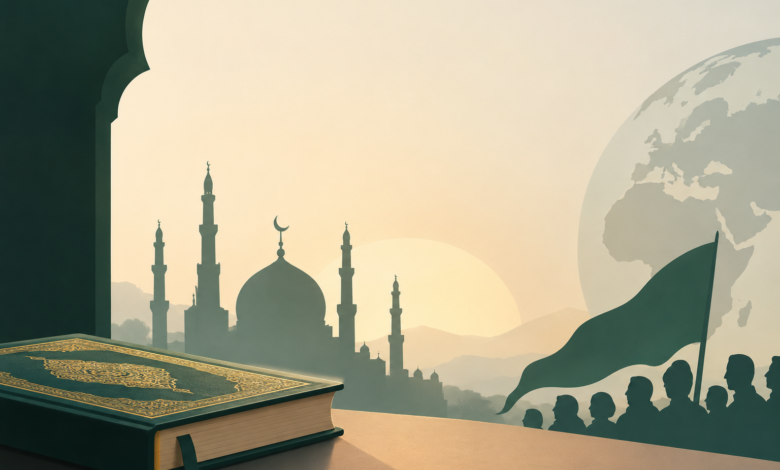
The contemporary Islamic resurgence represents an important phase of the Muslim ummah’s self-awakening and self-expression, which the West has failed to understand.
“Fundamentalism” has deep roots in the theological history of Western Christianity. The minority groups in the US, who have tried to get back to a literalistic understanding of the Bible, have been the products of a uniquely Christian situation. Fundamentalists in the Christian context may be looked upon as a religious and political nuisance. Unfortunately, both old and contemporary Christian writings perceive Islam, the Islamic world and Islamic movements, deliberately or unconsciously, in terms of categories which derive from Christian history and are totally unhelpful for the comprehension of Islam, Islamic history and the Muslim people.
“Fundamentalism” apart, there is also a question whether Islamic resurgence is a ‘single phenomenon ‘, or it comprises different responses to a variety of political situations.
Islamic resurgence is unique as well as universal, because in Islam there is unity with diversity, and variation that leads to unity. Islam is a universal religión. There is nothing like “Arab Islam”, “Pakistani Islam”, “Iranian Islam” or “Turkish Islam”. Within the Islamic universalism there is unity but not uniformity.
There are certain distinct features which are common everywhere, but they never exhaust the richness of the movement. For example, Arabic is the language of the Quran and the Prophet, but not necessarily the language of all Muslims. Although every Muslim learns at least some Arabic, it is not less “Islamic” to speak in other languages and to use them as instrument for developing ideas which conform to Islamic norms.
Three phases
Islamic resurgence has passed through three distinct phases. The first was when the Muslims realised in the 17th and 18th century that they were no longer the centre of the world. In the process of confrontation with the West, the Muslims began to realise that they were a declining power. This was symbolised by the decline of the Ottoman Empire. The Mughals in India had also passed their peak. Muslims began to realise that they had to revitalise their society to face the challenge from the colonial powers. Islam became the rallying point to fight the invader. Although it was primarily a political and economic fight, the religious motive was the real source of strength of the whole process.
Muslims are also self critical. They re-examine the manifestations of social life and go back to the first principles, as expressed in the Quran and the Sunnah of the Prophet. This may involve disregarding some of those symbols which have become a part of the religious tradition: for example, certain customs or even certain details of jurisprudence, and going back to the roots.
This return to the sources acts as a liberating force. Within Islam it initiates an invigorating, dynamic process. Going back to fundamentals does not produce a “fundamentalism” that sticks to anachronisms, it brings a freshness of approach, producing a new commitment, a new dynamism, a new flexibility and a new ability to face challenges.
The second phase arrived when Muslims realised that they had already been colonised and overtaken, and that they must now liberate themselves. Almost everywhere in the Muslim world the techniques of political agitation, dialogue and struggle were taken from the West. However, Islam remained the real inspiration in their fight against imperialism, Mustafa Kemal fought for Anatolia with the Quran in his hand, because this was the only language his people understood. In the Indian subcontinent, we Muslims realised that if we had to accept the British voting system, leading to majority rule, we had to have a place where we were numerically strong enough to defend our values and principles. Hence the movement for Pakistan.
After independence, Muslims found themselves in the hands of leaders who were the products of a colonial educational system. Under the leadership, the Muslim world adopted certain western political and economic institutions, for example, the nation state, sometimes with a more capitalistic character, sometimes a more socialistic one. In Egypt, the Wafdist leadership believed in a secular state of the French type. Nasser leaned towards the East European socialist model Reza Shah of Iran and Mustafa Kemal of Turkey were pioneers of westernisation and secularisation in Muslim lands. They thought that the affairs of society could be conducted by the secular leadership in the light of the western models of modernisation, while Islam would be helpful in keeping the people together, keeping them calm and spiritually satisfied, with a limited and well-defined place in their lives. But this did not work.
People are now rediscovering Islam as a source of civilisation and culture, a factor which ought to be influencing the shape of society.
The contemporary phase involves moving away from a slavish imitation of western models and becoming discriminating in what we use or adapt. In many ways we can benefit from the western experience, but we do not intend to become instruments for the imposition of alien cultures.
Of course, not all Muslim countries have the same attitude towards western culture. Those countries which were pioneers of westernisation are now in the vanguard of Islamic resurgence, while in the countries which seemed to be lagging behind and stuck to their traditions are people who are still the most enthusiastic about western prototypes and models.
Development
There is also confusion on certain choices such as development, technology, and others which are used to build up commercial prosperity and human development. Development and technology-yes. But the real issue is what type of development, in the pursuit of which objectives? Is it going to be more economic development or total human development-economic, social, moral, ideological leading to the establishment of a just social order? We want to go ahead in a much more creative way than our recent predecessors. We can accept the nation state as a starting point, although it is not the Muslim ideal. It constitutes the present day reality and we do not want to dismantle political systems in an arbitrary manner. We want to bring about a greater sense of unity in the Islamic ummah, greater cooperation and increasing integration between the different Muslim states. Under Islamic idealism, every nation state would gradually become an ideological state and these would go to make up the commonwealth of Islam.
Progress has to be made in a phased manner. As such, we are not currently thinking of one Khilafah, one Islamic State superimposed upon all nation states. What we are aiming at is a commonwealth of Muslim nations as a stepping-stone towards greater unity.
Islam says that the human personality is an integrated personality. The ecological problem which exists today is a consequence of the division of life into watertight compartments, based on the assumption that the economy and technology could be allowed to develop independently of the ecological dimension. Man must rediscover the inherent relationship between his values, his faith and the structure of Society.
Once this revolutionary outlook is awakened in man, he would be a different man from the homo- economicus of modern civilisation. He would work for the advent of a new civilisation.
A question is also posed for developing a common Islamic ideology with regard to private property. Contemporary Muslim thinkers have been debating the question of private property for 50 or 60 years. I would not say that we have reached a consensus, but I do believe that we are moving towards one.
Field of economics
An overwhelming majority of Muslim thinkers feel we should have neither private property of the capitalist type private ownership of the means of production, the absolute right of a proprietor to dispose of property as he wishes – not the socialistic system whereby all means of production are nationalised with consequent danger to human freedom and initiative. Islam’s most important contribution in the field of economics lies in changing the concept of ownership.
No one has the right to destroy property. If misused, it can be taken away. If it is not needed it must be passed on to others, or handed to the state as the trustee of society. This limitation on property is, I believe, uniquely Islamic. Apart from this, the general consensus among Muslim economists is that the dominant form of ownership should be private property and enterprise, supplemented by social vigilance, social regulation and, wherever necessary, limited public ownership.
In the contemporary world, choosing the right form of government is amongst the greatest challenges facing the Muslims. This is an area where we can learn, with caution, from the western experience. I see no objection to representative democracy, though in an Islamic system there would have to be significant modifications. The philosophical foundations of western democracy, i.e., the absolute right of the individual to decide his own values, the alleged sovereignty of man, we reject absolutely. Muslims first of all accept Allah as their Lawgiver, beyond that, they enjoy a limited freedom to run the affairs of state in the light of those values, by means of consultation.
About the party system some Muslims purists have argued that there is no party system in Islam. I believe in a multi-party system, but the rules of the game need to be modified. The principle should be that, though a person belongs to a political party, in an Islamic society all the parties should believe in submission to the Quran and the Sunnah.
Politicians would not be bound by party discipline on ideological issues or be obliged to vote with their parties on questions of conscience. Self-candidature would also be prohibited because the idea is that the community in Islam must govern itself according to a system of collective consultation, in which the best people would be chosen for leadership, rather than those who simply put themselves forward. I also believe that proportional representation would be a more suitable voting system in an Islamic society.
With proper modifications, we can adapt certain institutions of western democracy, not as an article of faith, but as its effective instrument. After all technology is the common legacy of mankind, and as long as it is not at variance with our values, it can be drawn from any source.