
Afghanistan & Rushdie Affairs
Pakistan’s Prof. Ahmad
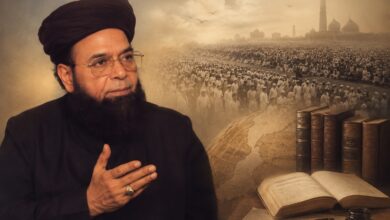
TEHRAN, Oct. 6 (Kayhan Int’l) — Professor Khurshid Ahmad, a well known figure in the international Islamic movement was in Tehran for the Institute of Political and International Studies’ Second Afghanistan Seminar (Oct. 2-4).
He was kind enough to answer at some length four questions put to him by a Kayhan International correspondent, two of which appear below. It is hoped time and circumstances allow us to print the other two replies at a later date.
Professor Ahmad a close collaborator of the late founder of Jamiat Islami, Maulana Abul A’la Maudoodi, is currently a member of the Senate of Pakistan; Chairman Institute of Policy Studies Pakistan, Vice-President Jamiat Islami, Pakistan, responsible for research, policy analysis and international affairs. He is also the founder and current chairman of the Islamic foundation, Leicester, U.K., which is the largest Muslim research institute in Europe.
Kayhan International: To your mind what is the relationship between the Soviet-Iran rapprochement to the future of Afghanistan?
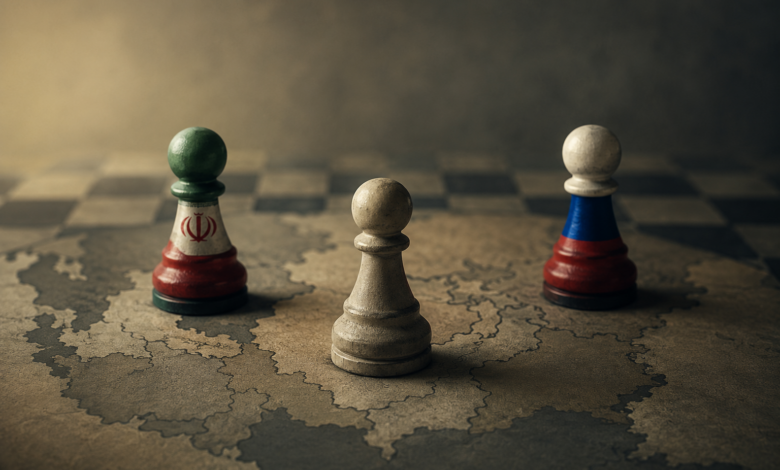
Professor Khurshid Ahmad: I can fully appreciate the need of Iran to have good relations with Russia for strategic reasons, for geo-political reasons and in consequence to the type of enmity that the West has shown to Iran. I have reservations about how far Iran should be somehow directly, or indirectly, influenced by Russian thinking and strategy towards Afghanistan.
In the past I have seen that Iran is capable of resisting such pressures. The Russian interest in Afghanistan now is that Afghanistan should not be a source for the destabilization of the Russian Empire in Central Asia. Russia has realized that the Brezhnev Doctrine, on (the basis of) which the intervention was made in 1979, is obsolete. Not only vis-a-vis Afghanistan but also in Eastern Europe.
After that (intervention) their first choice was to have a government in Afghanistan that could be pro-Russia: that chance has been lost. I am on record from December 1987, suggesting that Russia must not think that the Mujahideen are going to have a pro-American government. But if Russia can act with sagacity, it is possible there can be a direct dialogue between the Russians and the Mujahideen. And if necessary, Pakistan and Iran, as the two deeply concerned states, could also be involved in that.
Or, if there can be an honorable exit for Russia with the emergence in Afghanistan of a government that is really non-aligned, Islamic Afghan and independent; dependent on none of the superpowers, Russia or America, that will be far better for the region including Russia. I had a long discussion with the Russian ambassador in Pakistan, Mr. Wazirof, on this issue. But things could not move ahead and we were unable to have a breakthrough.
Now, as I see it, Russia should be content and as early as possible, with a government which does not regard Russia as unfriendly. Trying to sabotage the Mujahideen’s success by overt and covert action has undone whatever goodwill could have been achieved by the withdrawal of Soviet forces because of the support they are giving to the Kabul regime. Militarily this means $250m per month in sophisticated weaponry which was not even used by Russian soldiers themselves. Logistic support and even military support are coming from Russian soil. In that context I think Russia’s good interest lies in a quick end to the warfare in Afghanistan.
Unfortunately, Russia thinks that some role must be found for the People’s Democratic Party of Afghanistan (PDPA). In my view, the only point of credit is that Russia has concern for its friends, which has never been shown by America or Western countries. But Russia must also realize that the PDPA does not even represent 2% of the population of Afghanistan. Russia should have greater concern for the overwhelming majority of Afghans and ot for just their collaborators.
It is my view that what will happen in Afghanistan is just a question of time. The Mujahideen will have to succeed, Insha’allah. Nobody can hold their march to Kabul. The question is at what price: spilling of blood, innocent blood and the bitterness in relations between the Afghans and Russians.
Russia has to realize that what has happened in Iran and what has happened in Afghanistan is bound to affect Central Asia. I can see very clearly the beginning of the end of the Russian Empire in all of Central Asia and it is not going to be confined there for a number of reasons. After all the Baltic states are now seeking autonomy and the Ukraine is asking for its independence. Armenians have no relationship with Islam but they are also going for their own independence. There are even ripples in Georgia. These realities have to be seen.
In this context I feel somewhat concerned if Iran does not play the historical role that it can play in the region, and for the price of Russian friendship, tries to adopt a policy which might mean some kind of pressure being applied on the Afghans to talk to the PDPA. I feel the same way with regard to Pakistan. Pakistan has done a lot for the Afghans, for ideological reasons, reasons of national security and strategic reasons for the region. The present government would be destroying what has been achieved in these last ten years if they show any weakness in this respect.
It is the sovereign right of the Afghans to decide to whom they should talk and to whom they should not talk. Pakistan, Iran and others must not try to force them to talk to the PDPA. And in my view they have been very open. The Mujahideen have said that while they don’t want to talk to the PDPA, Najib and his collaborators; they will always be prepared to accommodate good Muslims in Afghanistan. There are many people who might have been forced to, or chosen to cooperate with the regimes in the last decade but then they were just functionaries and not decision makers. They would be happy to assist the new forces that come.
One more point that I think Iran and Pakistan must keep in mind is that every revolution has its own dynamics. It was but natural that in the Russian Revolution that Lenin, Stalin and Trotsky should be the heirs to power. It was but natural in China that Mao and Chou-En-Lai, that Deng and Li should take control of the new regime. It was but natural in Algeria that Ben Bella and Boumedienne and the pioneers of the Algerian Revolution should assume the reins of power.
It was but natural that in the case of the Indian sub-continent that Gandhi, Nehru and the Qaid-e-Azam should take precedence. It is the natural logic of a revolutionary situation. Look to Zimbabwe: Mugabe and Nkomo were the right persons, and they were denied it. Bishop Muzowera was also brought in but Bishop Muzowera’s are not allowed in the way; they have to go.
In Afghanistan the situation has changed. It is a revolutionary situation. Its people who have suffered, striven and worked, they have won a place which nobody can deny to them. No one else can overtake this situation. I think the logic of this revolutionary situation should be read and with some vision and perseverance, we should continue.
Just as a footnote, look over into Vietnam. Although there is no parallel between Afghanistan and Vietnam, look to Vietnam where those who were supporting the Ho Chi Minh regime and the Vietcong, i.e. China and Russia. China has a common border. Russia had direct access. America, which was supporting the Saigon regime, was coming from 7,000 miles.
When the Paris agreement was concluded, America stopped all aid, withdrew physically and even then it took two years for the fall of Saigon. Why should we expect miracles in Afghanistan? Why do we think that things should come about in the twinkling of an eye? It was, in my view, a strategic mistake of the West that they tried to create a scenario as if Kabul and other cities would fall with the withdrawal of the Russian forces. This was against the logic of all history and military strategy.
A guerrilla war cannot be easily transformed into a conventional war. It takes time and it has to be supplemented by methods that are not leaves in the book of conventional warfare. But the West tried to make a scene: embassies are being evacuated, families are being air-lifted and the media is rushing in, as if something is going to take place. When it didn’t take place they said, “oh, nothing has happened.” This was a drama not reality.
It is in this context that I think Pakistan and Iran can play a very important role, provided they stick to their original vision, keep up their spirits and perseverance, support the Mujahideen and let things take their natural course. This will take some time.
Q: What has been the net effect of the Salman Rushdie affair on the Muslim community of Great Britain?
A: To me, Salman Rushdie is a non-entity. He is a surrogate. The book is worthless by all literary and academic standards. There has been historical fiction. Who does not know of Sarah Lee Scott’s works? It had some merit even though it was anti-Islam. It focused on the Crusades but it had some literary merit. Rushdie’s has none.
Rushdie is an alienated person. He does not belong to the tradition in which he was born. He rebelled against his own parents. His first novel was in rebellion against his parents; calling them bad names in a very bad spirit. His second novel was against India, his birthplace, again in very bad taste. His fourth one, “The Satanic Verses”, is against so-called religion, as I don’t regard him to be a religious man. I don’t regard him as being a Muslim and I think he never was a Muslim. Nonetheless, in this book he has made Islam, Islamic traditions and Islamic sources the target of his attack.
The problem with the West is that they have tried to attack Islam sometimes directly, sometimes indirectly in a much more crooked manner. I regard the publication of “The Satanic Verses’ as part of a Western conspiracy to reach the Muslim youth and somehow project Islam to them as a force of retrogression, as an anachronism, as an evil system.
I think they made a blunder. But I cannot put any other construction on it because they promoted a worthless book of this type with a design. Even before the book was published the author was assured a royalty of £ 800,000, which is a fortune.
It was planned to have the book translated and published in 20 languages. They had plans to produce it on video, which means it was part of an overall conspiracy and campaign to reach the Muslims, to pollute their minds and to somehow fight, at this particular literary cum-intellectual level, what they see as the spectre of fundamentalism. But God has his own ways. The Qur’an says, “They plan but Allah plans too, and Allah’s plan is far superior and prevails.”
In my view, Rushdie’s book was a malicious, nasty effort to subvert the Muslims’ faith; to alienate Muslim youth from their own culture and traditions; to pollute their minds and emotions. But what has happened is really the reverse of that. The Muslims accepted the challenge and they protested.
British law is a very queer phenomenon because they have a law of blasphemy under which you cannot malign religion but that religion has got to be that of the Anglican Church. Any other religion you can take liberties with. They have a law of libel but for that you have to be dead. If you are living, then your honor is not in any way effected. They cannot revoke both of these laws.
Then there is a big corpus of unwritten law; in reality traditions of suppression of people’s views and this without any qualms of conscience and without any regrets about human rights. For example anti-Semitism is the unwritten law of the country. Any book, any writing, any law about which the Jews would say that it is anti-Semitic, that is the end of it. The book would never be published. If it was published it would be withdrawn. If it was a drama it would never be staged. If it was staged the cast would withdraw.
There are dozens of examples where this has actually happened but nobody has said this is against freedom of expression. Freedom of expression does not mean freedom of expression against Muslims. Freedom of expression should mean freedom for all. But if nobody has the right to express genuine criticism of the Jews without being branded anti-Semitic, then why does not the same principle apply to Islam and Muslims?
We have never said that we want to challenge freedom of expression. We want freedom of expression to be exercised responsibly. There are also some rules of decency which are to be respected. To broadcast lies, to print calumnies against religious leaders, against the wives of the Prophet SAWA, against other prophets is a sacrilege. If is scandalous. No civilized society should tolerate it in the name of freedom of expression.
I think the British have mishandled the whole case, But there is a blessing in disguise and that is the Muslim community, particularly those born and bred in the U.K. and America, they have been able to see the British mind and British hypocrisy in its true colors.
This book has awakened the Muslims, aroused them from their slumber. It has brought them close to each other in unity and given them a sense of identity; something which I think is very necessary for Muslims living in non-Muslim lands. They must have a sense of their ideological being, their cultural entity and this whole episode in my view has made the whole Muslim world more conscious of that.
They also became more and more conscious of what are the European concepts of human rights, of freedom, of impartiality, of the neutrality of the media. From that viewpoint I think Muslims are better equipped to protect themselves and face this challenge.
In this context I do not think the Muslim world has played its role effectively. The Organization of the Islamic Conference has passed a resolution and asked the member countries to take the necessary steps but very few have really acted. Had the Muslim world shown even one forth the unity, vision and courage that the Muslim community in the U.K. has shown, then I can say with confidence that British publishers in future would not dare to publish any book that contains any similar aspersions on Islam and Islamic personalities.
Even though they are scared, if the Muslim countries had boycotted Viking, all their publications, withdrawn from copyright rights and whatever books we really need, have them printed in India and Taiwan, with these economic sanctions the publishers would have been taught a real lesson. The Muslims didn’t do that.