
The US-IRAN Standoff: Options for Pakistan
There is a fundamental issue that relates to principled foreign policy and a value-based global system. It is not just a pipe-dream; it is, in fact, a necessity. The very survival of humanity depends on this. The brinkmanship and unilateralism, therefore, lie at the root of conflict, causing tension and posing threat to the world peace. The entire humanity is passing through a very critical phase. The standoffs, confrontations, and withdrawals are part of the game but this core issue has to be addressed though, ironically, the world leaderships are ignoring it. It is crucial to rethink as to what goes to make the ‘world community’. Does it mean the more powerful countries and governments? Does it mean the teeming humanity which is becoming increasingly vocal and wayward? And what role can they play in bringing sanity in the game of duplicity or double standards where only a few have the right to ignore NPT while others have to comply, and comply in a manner dictated by others.
In the post-colonial world — particularly for this region i.e. middle East, South Asia, Central Asia, West Asia – the plan was to have surrogates as regional powers for promoting the objectives, designs and policies of the United States. In this setting, Iran and Israel were two key players but the Iranian revolution totally altered this design.
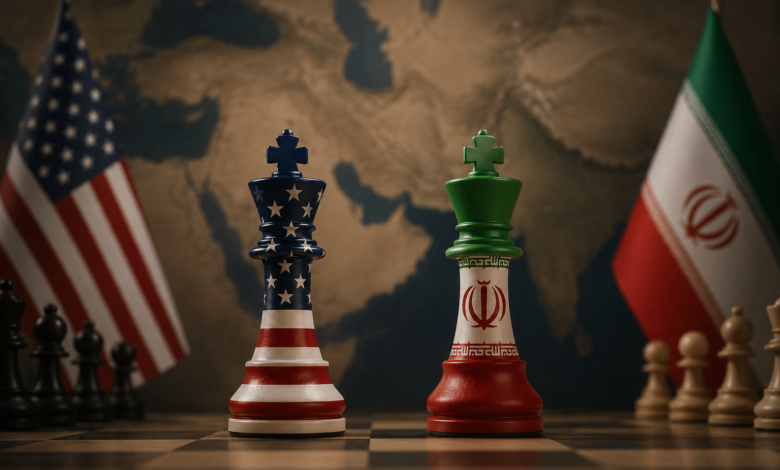
This scheme is faced with another blow with the recent victory of Hamas that has strengthened the realization that even Israel cannot have its way merely through resorting to force on the face of the total asymmetry of power. The limits to power are now becoming clearer in the changing scenario. In the context of the hegemonic global strategy of the United States, and also the challenges to it, it is understandable as to why. America is not ruling out the use of force as an option. This is the usual way super-powers deal with such issues — they do not pursue only one-dimensional strategy. They simultaneously pursue different strategies. Yet, it is becoming clearer that the use of force would be a disastrous option for both the countries.
The overall ideological situation in the contemporary world, Islamic resurgence, Muslim peoples’ concern to have an honorable space for themselves and unwillingness to remain merely at the receiving end of American and European powers permanently, cannot be sidelined. That is an important phenomenon, and if the powerful are not prepared to come to terms with this reality by ruling out the principle-based arrangements, the likelihood of extreme reactions would be looked at as natural product of this state of asymmetry of power.
What they call terrorism is a product of asymmetry of power and the realizations by the weak that if they cannot match power, they have to opt for the methods which can challenge the powerful. Terrorism is a weapon of the weak against the stronger. If the strong is not prepared to respect law, he stands responsible for the promotion of terrorism. This ideological dimension and the political dynamic have to be kept in view. The Muslim people are rising for a just solution of Palestine, Kashmir and other similar causes.
The other point relates to the immediate options before Pakistan and the Muslim world. In a scenario where use of force by America against Iran cannot be ruled out — though it is becoming more and more difficult — Pakistan needs a proactive foreign policy to ensure that America does not walk on the path of madness. There should be a positive policy objective.
It is unfortunate for Pakistan’s foreign secretary to say that if the UN Security Council imposes sanctions, Pakistan will have to enforce them. Despite the common knowledge of the obligations under different international agreements or regimes, the stance against illegitimate decisions — even made by an authority which otherwise is to be respected — cannot be at par with a legitimate decision. No principle-driven state can be expected of making such a statement except for the expression of weakness. There has been a degree of weakness and confusion in Pakistan’s policy. Pakistan, understandably, cannot afford to confront but it should not submit, either.
Iran will not be targeted alone. Any action against Iran would be an action against the region, against the Muslim world and against the global Islamic resurgence. This is about time to develop new coalition within the Muslim Ummah: Arabs, Iran, Pakistan, Turks. It is time to try to have a new coalition. As far as the right of a country for enrichment within the NPT is concerned, excepting a very red line, there is a vast scope. Japan, Brazil and many other countries have done that. If there are genuine threats to its security, a country has a right to have nuclear weapons as deterrence. But, this should be within a legal framework — the IAEA framework. That is a country’s right and no conditions should be put on it. Pakistan was able to acquire nuclear capability for two reasons: regional South Asia-specific situation and the Afghan Jihad – else, there would have been pre-emptive action against it.
It is extremely important to ensure that any action, whether military or otherwise punitive, is not taken against Iran. Iran must not be left alone. That is in the best interest of the region as well as of Pakistan. This is how Pakistan can emerge as a countervailing power in the coming years, or decades. The overall scenario is changing but Pakistan needs to set its own house in order first, without attaining internal strength and stability, address domestic conflicts, ensure good governance, and a clear vision of the future prospects and alliances to play its role effectively.