
President Bush’s Pakistan visit: The Real Agenda
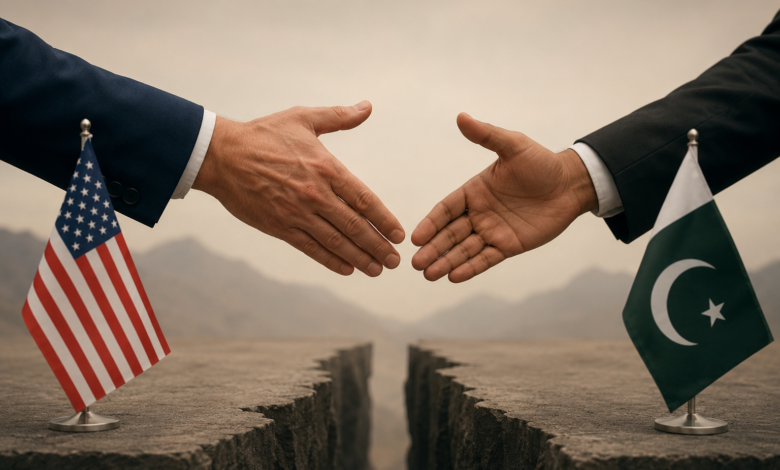
Pakistanis are hospitable people by faith and tradition. Guests are respected and welcomed. President Bush’s visit is taking place in the context of global Muslim outrage, agony and protest against blasphemous and provocative attacks on Islam and the Prophet of Islam (peace be upon him). These attacks and the support extended to their perpetrators and defenders in the name of freedom of expression and the press has not only confused the real issue but also poured fuel on fire. The U.S. President’s telephonic support to the Danish Prime Minister has only led to his identification with what has been described by Mark LeVin, Associate Professor of Modern Middle Eastern History, University of California, as a “dangerous axis of arrogance and ignorance.” The protest strike on 3 March is not this visit-specific. It is part of a global Muslim protest but is relevant as it can enable President Bush to have some idea about the extent and depth of the storm of discontent and anger that has engulfed the Muslim world.
If President Bush is really serious about promoting understanding and building friendship between the peoples of Pakistan, the Muslim World and the United States of America he must be prepared to listen to the people, fathom their feelings and not confine himself to what is doled out to him by the political leaders who unfortunately are not speaking the language of their people. They do not enjoy their own peoples’ trust and support, notwithstanding the entire path they get on their backs from outsiders.
President Bush has made a very correct yet flawed observation in his PTV interview when he said: “The first thing that is really important for people to understand in relations between our countries oftentimes depends on the relations between the leaders. Strategic and lasting relations have always to be based on commonality of objectives, interests and aspirations of the people and not the personal chemistry of the leaders.” The statement is correct as far as the Pak-US relations are concerned from Ayub era to the present, but it underscores the real weakness in Pak-US relations, its uneven course, and to put it bluntly, the trust-deficit that has all along plagued these relationships. If the same individualistic approach continues, future can be no better than the past characterized by short-spells of apparent friendship, followed by periods of acrimony, and serious complaints about betrayals and let-downs. President Bush should try to understand the feelings and aspirations of the Pakistani people and not depend exclusively on official briefings.
The people of Pakistani, an overwhelming majority of them regard America’s friendship unreliable. They think, their leadership has by and large collaborated with America serving its global interests, even at the cost of some vital interests of Pakistan and its people.
General Musharraf’s support for America’s so-called ‘War on Terror’ and humiliating surrenders to American pressures and arm-twisting infringing on Pakistan’s sovereignty, honour and long-perceived interests, are widely disapproved by the people. Every act of submission, which is acclaimed by America as “courageous” brings the Pakistani leadership into greater disrepute and distrust of its own people. It is all the more humiliating that despite all that President Musharraf has done at the US behest, he and Pakistan remain unreliable and subject to further blackmail. The latest insult has come after the US attack on Bajaur involving cold-blooded murder of thirteen civilians and violation of Pakistan’s sovereignty. The US and Afghan rulers are asking for more yet the “compliments” paid to Gen Musharraf by the Washington Post in its editorial on 26th January, 2006, a day after Pakistan PM’s visit to President Bush is an eye-opener. Musharraf was called “meretricious military ruler” and American administration advised to wantonly violate Pakistan’s sovereignty by attacking what U.S. regards as its targets “with or without Gen. Musharraf’s cooperation”, which was described as “feckless cooperation”. “Meretricious”, the word used for the General, deserves to be reflected upon seriously as it is of Greek origin and refers to “harlot, befitting a prostitute, woman of loose character” (Oxford and Webster Dictionaries).
President Bush’s endorsement of Gen. Musharraf’s alleged road to democracy is Pakistani people’s greatest disappointment. This has also expounded the hollowness of the US President’s grandiose “Global Democracy Initiative”. If this is the democracy he wants to promote in Pakistan and the Muslim World, how different is it from America’s post-Second World War support and patronage of despots, dictators and monarchs which have won for America nothing but distrust of the people in the Arab, Muslim and Third World Countries. What type of democracy is it where people are irrelevant and all the shots are called by one person sitting in a military bunker?
We also want President Bush to realize that the Muslim people in general and leading Muslim scholars and leadership of Islamic Movements in particular have unequivocally condemned all acts of real terrorism including the 9/11 outrage against humanity. But they have strong reservations about global game played in the name of “War against Terrorism”. They regard much of what is being done as no less a crime, resulting in the death of innocent men, women and children in hundreds of thousands. They openly ask the question: Can terrorism be fought by a war, as is being done by the present U.S. leadership or does it need a very different and multi-faceted strategy? Is it possible to fight terrorism without clearly defining what constitutes terrorism? One cannot fight terrorism without clearly identifying the object; otherwise we would be chasing shadows and adding to confusion and insecurity. Terrorism and resort to force are not synonymous. If genuine liberation struggles are indiscriminately equated with terrorism, then we have to rewrite all history. Even George Washington and Nelson Mandela, would have to be called by some other appellation!
It is a blunder of Himalayan proportions to target terrorism without addressing the contexts that have led to its emergence, and the injustices and oppression that have forced the weak to rise. The nature of peoples’ agony and revolt cannot be understood without looking into the causes and factors that drive some people to use methods that involve violence to achieve their political objectives.
There is nothing like terrorism per se; terrorism is a complex phenomenon and any one-dimensional strategy to combat it is foredoomed to failure. It may even aggravate the situation, as it seems to be our current predicament.
Terrorism did not begin with 9/11. It has a long history going back to the first century suicide mission of the Zealots and the Sicarii, struggling to liberate Judea from the Roman occupation, the play of the Assassins’ daggers in the eleventh and twentieth centuries, to over three thousand eight hundred suicide missions of the Japanese pilots (Kamikazis) during the final years of the Second World War. Professor Robert A. Pape of the University of Chicago has made a scientific study of all suicide attacks from 1980 to 2003 and had demonstrated that “the presumed connection between suicide terrorism and Islamic fundamentalism is misleading.” The theories of Jihad and concept of martyrdom along with the institutions of mosque and madrasah have always been there. Even some “extremist” or “twisted” interpretations have always surfaced in history as is the case with almost all religions, ideologies and socio-political systems. After all what is it that has led to the emergence and escalation of this phenomenon in the contemporary world? Prof. Pape’s research establishes as follows:
“The data shows that there is little connection between suicide terrorism and Islamic fundamentalism, or any one of the world’s religions. In fact, the leading instigators of suicide attacks are the Tamil Tigers in Sri Lanka – a Marxist-Leninist group whose members are from Hindu families but who are adamantly opposed to religion. This group committed 76 of the 315 incidents, more suicide attacks than Hamas.
Rather, what nearly all suicide terrorist attacks have in common is a specific secular and strategic goal: to compel modern democracies to withdraw military forces from territory that the terrorists consider being their homeland. Religion is rarely the root cause, although it is often used as a tool by terrorist organizations in recruiting and in other efforts in service of the broader strategic objective”
It may be submitted that even “martyrdom” is not an exclusively religious concept – dying for any cause, secular, nationalistic, religious, ethnic, tribal, carries a very similar flavour.
The conceptual, political and humanitarian costs of the present U.S. ‘War on Terrorism’ deserve to be seriously studied and analyzed. How many innocent civilians have been the victims of the terrorist’s attacks and how many have been killed as a result of this war against terrorists? Has the war to eliminate terrorists succeeded in weeding them out or it has actually resulted in the production of larger and larger number of “terrorists”? Has America won the confidence, love and respect of the people of the world, even of countries it has attacked to destroy terrorists? Or, has it only led to increase, even explosive increase in discontent and hatred against America?
More fundamental issues are agitating minds of the people all over the world including America. What is happening to human rights – particularly the right to privacy, freedom from detention save through due process of law, right to be treated innocent till proved guilty, right to defend oneself through lawyers of one’s own choice? How many people have been arrested and detained without trial? What is the percentage of those convicted by a court of law or even formally charged as against those arrested on suspicion? Has this not eroded the whole fabric of the rule of law and constitutionalism? What is happening in the name of patriotism and national security to civil liberties and the values of equality of all human beings and right to be treated according to civilized behaviour? Guantanamo Bay, Abu Ghuraib and Bagram are not the only festering soars. Rendition and “coercive interrogation” have plagued the entire civilized world.
It is also feared that whatever has been achieved in the fields of international law and civilized conduct in war and peace is at stake. Basic precepts of law and international law are being rewritten, at least as far as practice goes, and in an arbitrary manner wherein the powerful are trying to bully and bull-dozen others only because they are weak and powerless. Shadows of imperialism and hegemonism are looming on world horizon. National sovereignty is no longer sacrosanct. Borders can be violated with impunity.’ U.N. is becoming irrelevant. Unilateral interventions and forced or manipulated regime changes are being sanctified. The very concept of self-defense is being redefined to suit the interest of the powerful. Peace and global equilibrium are being increasingly threatened; prospects of greater and more violent confrontations are on the rise.
Minorities in many parts of the world, even in countries where there was no history of tolerance, are being subjected to greater state repression. ‘War on Terrorism’ is being used by many states to suppress their own people. The list of ‘collateral damages’ of this ‘War’ is assuming menacing proportions.
There is one extremely fundamental question that must be squarely faced if the world, particularly the USA, wants to get out of this quagmire. Terrorism has to be fought, but can it be fought without taking care of the causes and the factors that breed terrorism? How long are we going to fight the branches while ignoring the roots of the problem? Resistance to OCCUPATION is not the real problem – the real problem is OCCUPATION itself which cannot help but result in resistance. If we target the resistance without targeting occupation, how can we succeed? Focusing on resistance and ignoring the menace of occupation is an exercise in futility. In fact it is a recipe for promoting terrorism and hatred. It is time to change the focus and address the issue in a realistic manner. Logic and not rhetoric should guide our policies. Only then the world may become a more peaceful place for all of us.
Finally let us hope President Bush lives upto his words and tries to go ‘beyond war on terrorism’ in his relations with Pakistan and the Muslim World. The most critical issue is globalization and the so-called clash of civilizations. Plurality of faiths, ideologies, cultures and civilizations is a reality. It is a reality as old as history. Co-existence, co-operation, and competition between ideas, ideologies and civilizations is natural, even healthy and a major factor at the root of human progress. It becomes a factor for discord, conflict, confrontation and war when plurality is not regarded as authentic and variety as a spice of life and instead, a particular ideology or civilization tries to force its values on others, control 4nd manipulate their resources and establish its hegemony by force. In a situation of asymmetry of power, things degenerate and become explosive when the powerful resort to provocations, humiliations, interventions, change of regimes and redrawing of borders, because of their political muscle, economic strength and media power. This is the primary cause of insecurity, destabilization, confrontation, warfare and consequent terrorism and retaliation. The present “cartoon warfare” is looked upon by the Muslims as part of this catastrophic Crusade. The fact is that freedom of expression or press is not in dispute at all. The issue relates to the abuse of freedom and not its genuine use. If freedom of expression does not mean freedom to preach violence and terrorism, how could it be allowed to be used to promote hatred, inflict insults, shower abuses and provoke people and nations? The issue relates to mutual respect and sense of responsibility, for freedom without genuine limits is a recipe for license and anarchy. Similarly, it is not a question of clash of civilizations, for all civilizations demand respect for the honour of all individuals, protection from libel and slander, for every human being, living or dead, and sensitivity in respect of the beliefs and values of others, whatever is their religion or ideology. What is happening is neither defence of freedom nor clash of civilizations; it is a clash between civilization and barbarity, of civility with intellectual vandalism and of humanity with moral cannibalism. To present it as a result of two different cultures is doing violence to intelligence and morality. In the wider context, all men of goodwill should realize that in the current phase of globalization it is only through honest acceptance of each other, respect for plurality of systems, religions and cultures and safeguarding the world from all hegemonistic and colonial adventures that real peace and security can be established on the globe. Samuel Huntington is credited with the current debate on clash of civilizations.
His book is definitely an invitation to such a clash. Yet, there are a few revealing observations in this study which deserve serious reflection. About terrorism he says that “it is the weapon of the weak against the strong”. If the strong are not prepared to respect rules of law, justice and resolution of conflicts by negotiation and dialogue, terrorism cannot be laid to rest. About the alleged clash between Islam and the “West he claims:
“The underlying problem in the West is not Islamic fundamentalism! It is Islam, a different civilization where people are convinced of the superiority of their culture and are obsessed with the inferiority of their power. The problem for Islam is not the CIA or the US Department of Defense. It is the West, a different civilization whose people are convinced of the universality of their culture and believe; that their superior, if declining, power imposes on them the obligation, to extend that culture throughout the world. These are the basic ingredients that fuel the conflict between Islam and the West” (The Clash of Civilizations and the Remaking of World Order by Samuel Huntington)
Huntington is right. Islam and the West represent two distinct civilizations. He is terribly wrong that the two must clash and annihilate each other. Clash is not the natural demand of being different. The conflict comes because the more powerful believes and wants to use its power to fulfill what they arrogantly deem an “obligation to extend that culture throughout the world”. It is this cultural terrorism that is at the root of current crisis and confusion. If genuine plurality with co-existence, cooperation and competition is adopted as the global paradigm for all, the clouds of clash would disperse and road to peace, security and prosperity for all can be successfully paved.
This is the only way to move towards “Beyond Terrorism”. Are we prepared for that?