
The Jammu and Kashmir Imbroglio: A Way Out
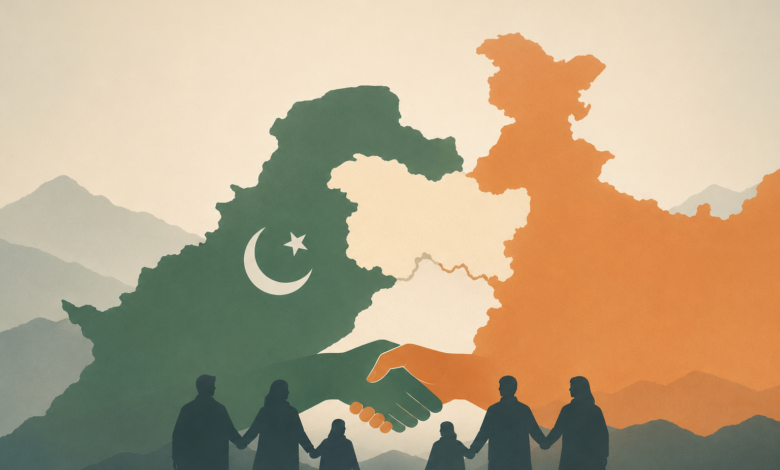
It is a welcome development that India and Pakistan are now inching towards dialogue on Kashmir. To what extent this represents a real change of heart on the part of Indian leadership; its sensitivity to the ground situation in Indian held Jammu and Kashmir and consequent need for search of new strategies remain clouded in uncertainty. Similarly, the extent of US involvement, if not pressure, remains relevant, despite all the hide and seek. On the Pakistani side too, it is problematic whether General Pervaiz Musharraf’s random backtrackings in respect of our National Kashmir Policy are tactical moves or strategic departures. All these questions remain critically significant for the future of dialogue, yet the opening of the dialogue is important because the substance of dialogue lies in talking to each other, and not merely about each other. It is only through meaningful dialogue that some way out of the Kashmir imbroglio may be found.
Recently I have had a number of occasions to talk to the Indian intellectuals and what I have conveyed to them as possible way out of the current imbroglio I am trying to share with the Pakistani intellectuals and policy makers as a humble input to the current debate. It is very different from what General Pervaiz Musharraf has said on 25th October in his characteristic style described by the Economist, London (Oct.30, 2004) as commando diplomacy. My approach is fundamentally different and more in keeping with the principled stand of the Pakistani nation, yet a step towards search for options.
That Kashmir is a flashpoint, even a nuclear flashpoint, is not a mere cliché. The ground situation remains grave and inflamed. The threat is real and undiminished, despite retreat from eye-ball to eye-ball confrontation. The issue relates to security and beyond security. The most important dimension remains human and moral. The leaderships of India and Pakistan and the world community cannot run away from that. We have had enough of legal quibblings, political turn-abouts and linguistic fulminations. If we are serious about finding a real way out (do we have any other option?) – then facts however bitter have to be faced and precise parameters for the solution of the problem based on justice and universal values searched out. I hope my submissions in this respect would be given some serious thought.
- First and foremost we have to accept that the status of the State of Jammu and Kashmir is NOT a settled issue, it is very much disputed.
- Secondly the dispute relates to the status of the State – legal, political and moral. It is impossible to gloss over the historical, constitutional and contractual aspects, but the ground reality of the aspirations of the people of Jammu and Kashmir is the critical factor. That the people of the State are not prepared to accept the status quo, arbitrarily imposed upon them, is a fact however blind those in authority may be. The alienation from Delhi’s rule is universal. The mainstream resistance is indigenous. It has been built over the decades. Even Indian Jurist Mr. Tarkunde publicly acknowledged as early as 1990 that “It would be very difficult to find a Muslim resident of Kashmir valley who does not passionately desire complete independence from India”. The movement has braced all forms of state repression. Carrot and stick both have failed. Kashmir is the most densely militarized territory on the globe. According to reliable estimates the strength of military and para-military forces is over half a million. Even if there are a few thousand “militants”, what strength they carry in the face of this formidable force. Their strength lies in the support and sanctuary they enjoy in the people. Every funeral (with 10,000 to even over 50,000 attendants, as against the dubious 9000 votes supposed to have been bagged by Mr. Mufti the other day) is a mini referendum expressing what the people think and want. Since 1989, when a non-violent political movement entered the phase of “militant resistance”, over 88,000 Kashmiris have laid their lives, more than all the US military fatalities during the Vietnam War! The sacrifices made by the people of Jammu and Kashmir in the form of death, injury, mutilation, imprisonment, disappearance, custodial killings, rape and gange-rape, property demolition, and economic deprivation are an index of people’s resolve not to accept occupation and seek Aazadi, their right of self-determination.
Human rights violations, state terror, custodial killings, political victimization, mass-scale detention, rape and gang-rape as weapons of political subjugation; and the resultant resort to violence and militancy on the part of resistance movement, involving civilian casualties are all relevant dimensions of the problem – but the central issue is legitimacy of the political set-up and the constitutional arrangement.
Pakistan is committed to its historical, political and strategic imperatives. India has its own constitutional, global and domestic concerns. But the issue of Jammu and Kashmir is not a territorial or border dispute between India and Pakistan, despite the claims of the two. The real issue relates to the right of the people of Jammu and Kashmir to decide their destiny freely, in accord with their historic aspirations and political dispensation. The dispute cannot be resolved bilaterally between India and Pakistan. There is a third party, the most important party, and that is the people of the State of Jammu and Kashmir. The six-member European Union Parliamentary Delegation under the leadership of John Cushnahan has focused on this dimension. Cushnahan has succinctly summed it up in one sentence; “The people of Jammu and Kashmir are the most important party to the issue because it is they who are suffering.” It is important that the APHC and other leaders of the Kashmir civil society including the Kashmiri Diaspora organizations agree on one point: it is the people of Jammu and Kashmir who must decide their future freely. The UN Resolutions provide a basis and a framework to come out of the present imbroglio: modalities are not crucial, they can be worked out through negotiations. The principle is important that the people of Jammu and Kashmir alone have the right to decide their future political status and linkages, however long and torturous may be the period of denial of this opportunity. Two things have to be acknowledged in all fairness:
- One: there is no military or militant solution to the problem, whatever be the justifications or compulsions that have led to the militarization of the scene. Sooner or later a political solution has to be worked out. Sooner the better, in view of the human costs and the threats to regional and global security that flow from it.
- Second: it is the people who are the final arbiter and their verdict must be allowed to be pronounced and accepted by all, irrespective of India’s and Pakistan’s concerns and interests. No people can be kept under occupation and subjugation forever however powerful the rulers may be. Neither India nor Pakistan are in a position to militarily impose their will on each other, nor is it possible for India to rule over the people of Jammu and Kashmir against their will for an unlimited period of time.
This is the lesson we all must learn from the bloody history of the rise and fall of colonialism. Age-old disputes, whatever be the historical or legal nuances, had to be finally resolved by recourse to the will of the people. Whether it be the question of Saarland, Quebec, Ulster or East Timor, a time comes when reference to the people becomes the only option. The question is how soon people can see the light, so as to minimize the costs and sufferings that are the natural price of avoiding the right choice.
How to move in that direction? I may take this opportunity to share some thoughts:
- Building on the declarations of the leaderships of India and Pakistan (Islamabad 6th January 2004 and New York, Sept. 2004) that a peaceful and negotiated solution is their agreed path, the next step is a joint declaration that both agree to refer the matter to the people of Jammu and Kashmir and would respect the wishes of the people as to the future status of the state. This statement of principle can open a new chapter, pave the way for cessation of hostilities, and initiate serious work on modalities to give to the people an opportunity to decide their future.
- Immediate involvement of the authentic representatives of the people of Jammu and Kashmir in the negotiation process. It is a moot point who represents the people? In a situation of national political uprising, it is they who suffer are the real spokesmen. After the initial declaration the entire process has to be tripartite.
- Cessation of hostilities in Jammu and Kashmir and effective CBMs within J&K involving withdrawal of military and Para-military forces to barracks in the first instance and then phased withdrawal from the state, de-militarization of both sides of the state, release of political detainees, abrogation of arbitrary and repressive laws, freedom of political activity, free access for world media and national and international relief agencies, opportunities for continuous inter-action between all stake-holders in the whole state of Jammu and Kashmir and negotiated ceasefire by militant groups and their involvement in the peace process.
- Hard work, by working groups comprising of the three parties to prepare details and comprehensive plans for settling all relevant issues and develop a roadmap for their operationalization.
An analysis of the relevant UN Resolutions and other schemes of dispute-resolution in other similar situations shows that it is important to differentiate between the substantive issue i.e. the right of the people and ascertainment of their will and the question of details of modalities for its implementation. It is instructive to reflect on the way the political leadership of Canada has tried to handle the Quebec issue, or the British and Irish leaderships opted for the Good Friday Process on North Ireland. The resolution of the East Timor imbroglio also provides some guidance towards working out mechanism for the solution of the Kashmir problem. Comprehensive solution is the only practical option. Confidence building measures can be a part of it, but the focus has to be on the resolution of the central issue. Piece-meal arrangements are non-starters. We must aim at a comprehensive plan which may be implemented in a phased manner in accordance with an agreed time-frame.
Let me conclude by highlighting three crucial issues about which the leaderships of India and Pakistan must make up their mind.
- India has to shed off its obsession with the “two nation theory” and the alleged communal dimension with adverse repercussions for the Indian Muslims. Partition of the sub-continent did take place on the basis of a social contract that was accepted by the British, the Congress and the Muslim League in the form of the 3rd June Plan. Two nation theory was not invoked by the Muslim League alone. The partition of Bengal, Assam and Punjab took place on the demand of the Congress on the same principle. But that is history. The right of self-determination of the people of Jammu and Kashmir can’t be denied only because their majority is Muslim in the same way as that of the people of East Timor was not brushed aside because their majority was Christians in a Muslim country. It is significant that in some of the recent international conferences on Kashmir held in London, Birmingham and Brussels various Kashmiri Groups such as Hindu Dogras, Kashmiri Pundits and Laddakhi representatives shared the platform to voice their views with their fellow Muslims. These Conferences unanimously demanded the right of all the Kashmiri people to participate in the decision-making process. If India’s democracy is mature enough as is claimed, it should not bring in the canard of communalism, when the issue is that of the fundamental right of a people irrespective of their religion, cast or creed, to decide their future. Religion, culture, political aspirations are integral to any human situation. The issue is political and relates to the universally accepted right of a people for self-determination. You can’t hold 15 million people hostage in the name of alleged communal repercussions. Secularism does not mean dis-enfranchisement of a people only because of their faith or political aspirations.
- Second issue relates to another category of alleged collateral repercussions i.e. integrity of India and implications for other separatist movements. This issue too, is to be faced squarely and realistically. The issue of the status of Jammu and Kashmir is not at par with the claims of other separatist movements. It is a part of the 1947 agenda and even the Indian Constitution originally acknowledged its special and unique position. Respect for the will of the people is a cardinal principle of democracy and the UN Charter. If Saarland opted to be part of Germany, France did not disintegrate. If the people of East Timor decided to have their own independent state, Indonesia did not disintegrate because of that. India is stronger and more integrated than Indonesia with its thousands of islands and regional diversities.
- Thirdly, Pakistan should also be prepared to accept the verdict of the people, whatever it may be. If they opt for India we must accept their wishes whatever be its consequences. If they choose to delink from India, what should be their relationship with Pakistan should be decided in accord with their wishes. Pakistan’s Constitution already lays down the basis for that in its article 257 which reads: “When the people of the State of Jammu and Kashmir decide to accede to Pakistan, the relationship between Pakistan and that state shall be determined in accordance with the wishes of the people of that state.”
Let them define what they mean by Aazadi – the catch word of their national resistance. We should be prepared to accept what they want and decide. They have time and again expressed their solidarity with Pakistan. But it is only through their free choice that they may opt for Pakistan, and on terms and conditions they desire. The state of Jammu and Kashmir is one entity. Let it decide its destiny freely and honourably.