
ALTERNATIVE ECONOMIC STRATEGY
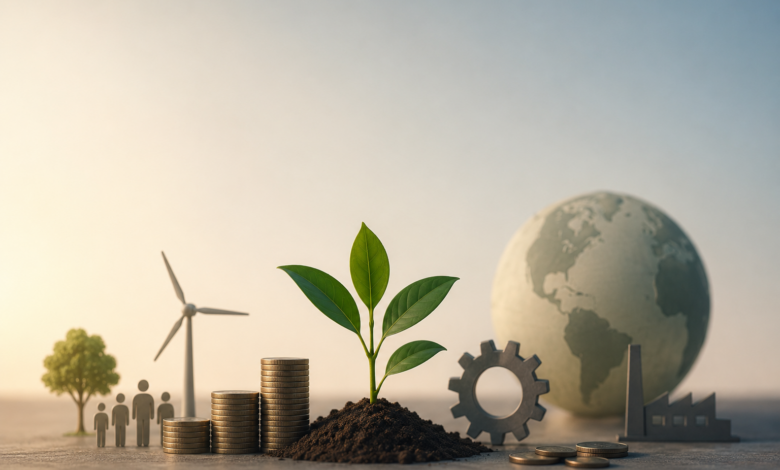
The sorry state of the economy tops the problems facing the country. Seeing the horrible economic distress, some still suggest resorting to the begging bowl and further subjugation as the only alternative. Such an approach cannot provide a way out; it aggravates the situation and amounts to committing suicide. Therefore, the new leadership should realise that there is no option but to reshape the economic strategy altogether.
For the last 13 years there has been no noticeable addition to basic industries and the economic infrastructure of the country. Instead, the number of sick industries increases each year. The public sector is shrinking and suffering losses. Agriculture has helped the nation to survive, but the sector itself is faced with crises. Our food imports are now worth $2 billion. In regard to oil, retrogression has set in after good progress. After attaining one-third self-sufficiency in the country’s oil requirements, advancing steps have been retracted and the annual import of oil costs $1 billion. Exports could not rise despite repeated devaluation of the rupee; rather, they are stalled at the level of $8 billion annually for the last four years, resulting in an increased trade deficit.
External debts are touching new heights, and the irony is that new loans are, since long obtained simply to pay back a portion of the earlier loans. External loans now stand at $52 billion, and if expected loans and other liabilities are added then this touches the figure of $42 billion. The amount that is earmarked for retiring the external and internal loans during the current year exceeds Rs300 billion, which accounts for about 60 per cent of the federal income. If defence expenditure, which is half of this, is added to it, then 90 per cent of the total income goes as interest on debts and defence. What is then left for administrative expenditure and development plans?
Certain ailments add to the injury. On top is corruption, commission, and loan-default. Whatever scant services exist concerning education and social development yield little benefit to people because of inefficiency, nepotism, and irresponsible handling of finances.
Under these circumstances, if we succeed in getting some new loans or extend some special concessions to investors (as has been done in the case of IPPs and Daewoo), then what we gain is simply insignificant.
It is clear that continuation of whatever has been happening till now provides no solution to our problems. There is no room for more of the same. We cannot get out of this whirlpool without basic changes.
Then what is the way out?
It is a fact that 40 per cent of Pakistan’s economy is informal economy which, to a great extent, is not counted in determining gross national product (GNP). This informal economy is our wealth and our precious asset. It is due to this that the country survived absolute ruination and people did not suffer from poverty and hunger. It is the source of our strength. It should not be destroyed in the name of documentation. Instead, we should be thinking in terms of how to strengthen it.
The government’s function is not confined to tax collection only. It has to promote the economic activity in the country that may create opportunities for employment. Utility goods and services should be provided so that people meet their needs. In the industrial sector, the rate of production in large industries has been half or even less than that of small industries for the last 15 years. Interestingly, there is no scientific method for determining the rate of production of small industries as it is ‘assumed’ by and large.
The fact is that it is the small industries that lend life to the economy of the country. If proper incentives are provided to this sector, the country can proceed not only towards self-sufficiency and even exports can be augmented. The share of small industries in total exports is nearly 20 per cent in India, but it is not more than two to four per cent in our case. The growth of small industries and the informal economy should be accorded high priority.
Agriculture has always been neglected. Feudalism is in vogue even today, and about 6,000 families occupy 40 per cent of the total cultivable land. There is no retrieval policy in regard to the agricultural inputs. The cost of seed is four times higher than its production cost. The irrigation system also is all upset. Per acre productivity of Punjab and Haryana in India is four times higher than that in our Punjab and Sindh. The land and the level of human effort are the same, but the difference in policy, facilities, and other factors account for this disparity. We can be self-sufficient in agriculture within two to three years, but today 20 per cent of total imports comprise food cereals. On the one hand, there is the common cultivator who finds it difficult to meet his expenses; on the other, there is a particular class that not only rolls in wealth but also supports the oppressive and unjust system.
The debt burden has reached a point where further payment is becoming impossible. A moratorium on loans and preparation of new schedules for payment after five years can be a rational approach. Several countries of the world took this recourse. Thirteen countries of South America jointly exercised pressure and got their loans rescheduled. According to a recent World Bank analysis, rescheduling was done by the International Monetary Fund, World Bank, IFC, regional banks, and other institutions as many as 132 times. Pakistan has to take a major decision in this respect.
Dependence of our economy on the external world is limited. Pakistan’s total imports and exports, if put together, constitute 15 per cent of the national wealth. Huge amounts are being spent on edible goods and edible oil (nearly $2 billion per annum) and oil and petroleum products ($1 billion per annum). Roughly speaking, this $3 billion is our trade deficit. If our imports and exports are made equal, then we shall be spending that much of foreign exchange that we would earn.
Thus, dependence on external resources can come to an end. The real issue of the country’s economy is not how to procure new loans but how to increase production and achieve higher productivity, and how to strengthen and develop the infrastructure. For this purpose, the foremost need is to restore the confidence of our people, businesses, cultivators, and industrialists and to engage them in productive processes.
Blind privatisation presents no solution to our problems. When the country is faced with a banking crisis and the stock market base is very short, mere avowals for privatisation would not do. Converting the public sector into the private sector is not going to be beneficial for the country. The public sector has a role to play and it cannot be ignored, but the style of its working has to be changed. It needs restructuring, induction of new management teams, and institutional reforms.
With adequate safeguards, the public sector can become a motivator for economic development and can be prudently opened up for internal and external competition. A large institution can be divided into several smaller ones to engender internal competition. The merger of Wapda and KESC is not a good strategy. Wapda itself can be reorganised on regional and functional basis and thus be made more efficient and competitive.
We have already wasted as many as 12 years on privatisation, but neither have we achieved privatisation nor could any effort be made to organise the public sector on fresh lines. It is now essential to get out of this dilemma.
Banking sector reforms, accountability of the central bank and its new role, and an alternative system for small loans to small cultivators, traders, and industrialists are all urgently required. A radical change can come with the abolition of the curse of interest and building up of the financial system on alternative foundations. An entirely new chapter can be opened provided this work is done with honesty, diligence, and with the cooperation of the people.
Elimination of corruption and recovery of the looted wealth should be accorded high priority. The existing state revenues can be augmented from 25 per cent to 50 per cent if corruption is controlled. The real task is not to impose more taxes but to collect them in a proper manner and to create an environment for the payment of taxes. It would be possible only when the taxpayers are invited to participate in decision-making and tax income is spent in a transparent manner to let the taxpayer feel its positive effects. A basic principle of tax is the consent of the people and “no taxation without consent” is a fundamental principle. Therefore, levying taxes is the right of elected representatives of the people and the purpose is to secure consent and cooperation of taxpayers.
As this relationship no longer exists in our society, it needs to be restored. If the tax system is cleansed, there is no reason why it should not be possible to get more income despite a low rate. What is needed is deliverance from the ways and manners of the colonial period and a fresh tax culture so that the tax base could be broadened and the rate of tax should be adequate. State spending should be reasonable and meant for public welfare. All this should be open for people to see for themselves.
Deliberations on economic planning and organisation on a regional basis are essential to safeguard against international economic influences. Pakistan enjoys a very strategic position. Iran, Afghanistan, and Pakistan complement each other in terms of economic activity. There is a great possibility for economic cooperation with Central Asia and West Asia. Economic cooperation between China and Pakistan has not been sought as much as has been done in political and military spheres.
In view of the present trends of the global economy, it would be indispensable for all these countries to check, through regional cooperation, the onslaught of western capitalism and economic imperialism in order to save themselves. The earlier it is planned and negotiated, the better it would be.
These are the few guidelines on which an alternative economic strategy can be formulated, and this is the way through which we can get out of the existing mire. More of the same means that we go further deep into the mire.