
Islam and the West: Partners in Antiquity
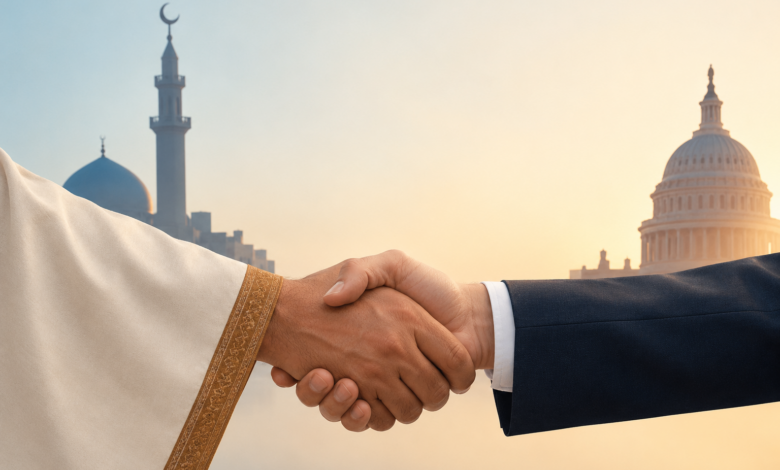
Islam is not new to the West, nor is the West an unknown quantity for the world of Islam. It is significant that the first meaningful contact between Islam and Europe took place, not in the context of the Crusades or of any clash of economic interests, but at the initiative of the Prophet of Islam (PBUH) in the form of letters he sent through his ambassadors toward the end of his life. The letter to Heraclius (610 to 641/AC), the ruler of the Eastern Roman Empire, was sent on May 11, 628 CE (Muharram 1, 7 AH), sharing with him the message of Islam in the wider interest of all human beings. There was a gentle response from Heraclius.
This is how relationships between Islam and the West began, on a moral and ideological plane. It would, however, be incorrect to assume that relations remained non-confrontational for long. Scenarios began to change, yet looking down the long vista of 1400 years, it deserves to be recorded that military confrontation, colonial clashes, and missionary encounters have not been the whole story; there have also been long spells of diplomatic understandings, trade relations, intellectual cross-fertilizations, the sharing of scientific and technological developments, and cultural exchanges. Understandably, there have been periods of rivalry and confrontation, but there have also been eras of peace and tranquility. Islam and the West have not been merely “civilisations at war”; they have also been partners in history.
Islam and the Western world today once again seem to be in a position to approach each other on a moral and ideological plane and, as such, be a source of strength to each other in a common struggle against those forces destined to destroy human civilisation. This is not the only choice. The other path of confrontation and clash is also very much available. It is, therefore, important that a fresh evaluation of the contemporary situation be made not merely in the context of political flashpoints or economic feuds but in the context of the ideological and civilisational challenge of the contemporary world.
The Question of Comparability
Before we survey the contemporary ideological and cultural landscape, it may be worthwhile to reflect on the question of how far Islam and the West are concepts that are comparable! Islam, after all, represents an ethical, ideological, and cultural phenomenon. It is a belief system, a code of conduct based on a hierarchy of values, norms, standards, laws, and institutions. It represents a way of life, a world system, and a social movement for historical change. It also represents a historical tradition spread over the last fourteen centuries, if not more. It is also a global phenomenon. Although the early Islamic state established in Medina and the Arabian Peninsula was Arab in ethos, very soon, with the passage of time, the message, the movement, and the tradition reached all corners of the world, and today, perhaps there is not a single corner of the world where Islam does not have its followers. Despite its Arab origin, Islam is not tied to any geographic entity, Arab or otherwise. It is universal not only in its message but also in its very physical existence. The world of Islam is neither Eastern nor Western, Oriental nor Occidental, Northern nor Southern. It is universal.
The West, on the other hand, primarily represents a geographic entity as well as a politico-economic system, which remains geographically specific. There is no denying the fact that the area of influence of what is looked upon as the West has changed over the years. It is also true that the West is no longer a mere geographic proposition; it has also developed cultural and civilisational dimensions. Yet the West continues to represent the ethos as well as the interests of what can best be described as the Western hemisphere of the world, Europe and America in particular. At the conceptual level, the principles of secularism, individualism, economic liberalism, and nationalism represent the hallmarks of the West’s value system. Yet these values have articulated themselves in the form of economic, political, and cultural institutions and traditions very much characterised by the historical ethos of Europe and America. The global influences achieved by these values and institutions through colonial expansion, missionary outreach, and cultural encounter are an emerging reality, and it deserves to be noted that it is looked upon by people in other parts of the world as a Western intrusion. The general feeling has by and large been that Western civilisation has been and remains the civilisation of the people in Europe and America. Despite its global outreach, its ethnographic character remains undiluted.
In the perception of a large number of people living in the Third World, the two superpowers of the recent past and the ideologies of capitalism and socialism they represented were and continue to be, despite the collapse of the Soviet bloc, aspects of the same Western civilisation. The Cold War may have come to a close, yet the future remains hazy. Whether the expiated new world order emerges in the shadow of a single superpower or things move in the direction of a multipolar scenario, the West does represent, the way things stand today, a distinct civilization.
The political and economic interests of the West have and continue to influence the character of this West-oriented world system. People in other parts of the world do not look towards the Western system as their national destiny; instead, they have a growing sense of their own distinct identity, and in this context they. Are concerned that cultural influences from the West may hamper their own moral, cultural, economic, and political flowering.
While the geographical and political aspects remain relevant in any analysis and appraisal of relations between Islam and the West, the diversity of the relationship is such that comparison remains difficult as well as varied. Islam cannot be described as the ideology or social system of those areas where Muslims presently rule. Islam is primarily a belief system, a religion, a social order, and a universal movement. And there is a Muslim presence in all parts of the world. The civilisation of Europe and America, despite its identification with a certain geographical sphere, also represents a different set of values and traditions. There are also the questions of political power, conflicting economic interests, and the geostrategic context of the world as well as the importance of freedom of movement of goods, men, and capital through land, air, and water routes and other channels of communication. That is why the question of comparison and contrast as well as that of possibilities of confrontation, competition, or cooperation between Islam and the West remain complex, yet difficult to ignore.
Contemporary Worldview
The current analysis dilates upon the relationship between Islam and the West originating in the context of certain far-reaching intellectual, cultural, and geopolitical developments. The disintegration of the Soviet bloc and the near collapse of communism as an alternative political and economic ideology have created a new scenario in a very short period of time. Within a span of less than five years, a superpower has disappeared from the world political map, notwithstanding the fact that the Russian Federation still has a large army and a huge stockpile of conventional and nuclear warheads. Its economic strength and political clout have reached such a low watermark that despite the rise of new monsters of nationalism, its role as a world power remains a thing of the past. In fact, it is becoming more and more dependent on the Western world.
The period of the Cold War that set the political and economic tone during the last 50 years has come to an end. The balance of power has so changed that the world is drifting towards a state of affairs where there may be only one superpower, resulting in a new world order characterised by the political hegemony of that superpower over the rest and giving rise to apprehensions among the smaller countries of the world about the beginning of a new colonial era. This situation cannot go unchallenged. New political and economic alignments may emerge. Reunified Germany, resurgent China, reassertive Japan, and the regrouped Muslim world could be some of the new actors in the arena of world politics, unfolding new power scenarios in the future. The Western world, itself, cannot be looked upon as just one simple monolith. There are frictions and rivalries from within, and there are possibilities of new power centres and alignments.
Also, at the intellectual level there are powerful prophets of doom, deeply concerned about the current crisis of human civilization and fearful of a future that might make life miserable for humans the world over. There are others who are trumpeting the final and irreversible victory of the Western liberal system and as a result predict the end of history. There is also a conspicuous search for new demons, threats, and evil empires that may be made targets of attack so as to keep the political and economic power of the West solidified. In this respect, a more serious emerging ‘Clash of Civilisations’. A number of intellectuals, scholars, journalists, political analysts, statesmen, and lobbyists are, in their own ways, trying to project Islam and the values it stands for as the ‘new threat’ to the West.
Islamic Threat” to West
There are about 1.2 billion Muslims in the world today. Around 800 million of them live in 56 independent Muslim countries, which make up two large clusters of states in Asia, Europe, and Africa. The remaining 400 million, almost one-third of the Muslim people, live in countries where non-Muslims constitute the majority.
The last 300 years have been years of domestic and internal weakness as well as external domination for the Muslims. It is only during the last 50 years that Muslim countries have again emerged as independent states on the world political map. From the 1970s, their relative economic position has improved, yet most Muslim countries remain economically underdeveloped and very much dependent upon the West, particularly for technology, capital, and know-how. Politically, Muslim countries remain divided and unable to achieve a modicum of political unity and economic solidarity. By and large, these countries are passing through a period of transition from colonial to post-colonial status. They are also facing moral and cultural crises. Moreover, the political influence, if not interference, of the West remains at a high watermark. A major concern of the emerging forces of Islamic resurgence relates to the degree of political, economic, and cultural dependence of the Muslims on the Western world.
The sum and substance of the current Islamic revival is represented by the Muslims’ urge to set their own house in order and to build their own societies and states. That is where they hold power, in light of their own beliefs, values, and ideals. This is the ethos of current Muslim idealism. It deserves to be noted that the Muslim world has no territorial claims or dispute with any Western country. There are certain irritants like Palestine, Mindanao (South Philippines), Pattanii’ (South Thailand), Amukan (Burma), Qbris (Cyprus), Kashmir, and recently Besniia. Each represents a trouble spot. Nevertheless, none of them have any direct linkage to the territorial power base of the West. In fact, Muslims are suffering in all these places because they are weak and discriminated against. They are the oppressed and not the oppressors. In all these cases, Muslims have been denied their right to decide their political future through their own free will. The primary concern of the Muslims is to seek security and the right to self-determination in accordance with the charters of the United Nations, the Non-Alignment Movement, and the Universal Declaration of Human Rights, which are accepted by all nations of the world.
As far as the military power and political strength of the Muslim world are concerned, they are weak and dependent on the West. Where is the question of a military threat from the Muslim world? In the economic field, although rich in resources, the Muslim world’s economic power has been marginalised and hardly has any economic leverage worth the name. There is also no reason to be obsessed with economic rivalries and the clash of commercial interests. In fact, there are built complementarities between the economies of the Muslim world and the West. There is every reason to believe that economic and political issues can best be resolved through negotiation and dialogue, not through confrontation. In fact, it is through healthy competition and cooperation that the two can achieve the best economic results. In the fields of science and technology the West is far ahead of the Muslim world. Here again, through cooperation and competition, both stand to gain. In the fields of ideas, thoughts, information, and communications, the West remains the pacesetter. Current revolutions in information technology and communication systems have opened up new possibilities for global cooperation, although the present disparity in control over these technologies also gives rise to certain apprehensions about ‘cultural imperialism,’ as were highlighted on the occasion of the final phase of the GATT negotiations in Geneva (Dec 1993).
This brings us to the most important area of ideas, values, cultures, and civilisations. This is an area where ill-advised policies can lead to bitterness, clashes, and confrontation. A different set of policies, however, can pave the way for a healthy exchange of ideas, opening up new opportunities for dialoguesss and the fertilization of cultures, finally building a new world order where different civilisations can co-exist and even compete in a healthy manner without resort to war and exercises in mutual destruction.