
Dawn of a New Era
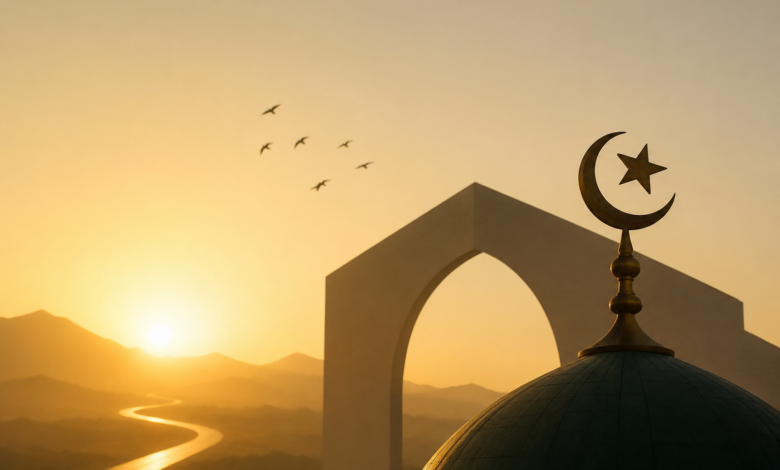
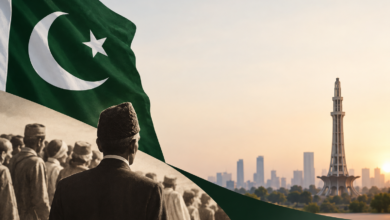
TWENTY THIRD MARCH is an epoch-making day in the history of the Muslims of the world. Today a new republic is born-a republic which has courageously resolved to uphold the ideology of Islam. After centuries of groping about in the dark, Muslims of this sub-continent are today looking ahead to the streak of light which glimmers on the horizon heralding the dawn of a New Era in the recent history of Islam. The Muslim World has for long been striving for the establishment of a truly Islamic State. All through these years of tribulations the forces of good and evil have been engaged in a deadly measure of strength. The upholders of truth had even to water the struggle with their sweat, tears and blood. Their sacrifices have not gone in vain. They have borne fruit. A new star of hope has appeared on the firmament, the star of Islamic Republic of Pakistan.
Pakistan’s declaration to become an Islamic Republic is the realization of a great urge which had its roots very deep in the history of Muslim India. The struggle to establish the Islamic way of life was originally pioneered in India by Shaikh Ahmad of Sirhind who proclaimed the truth undeterred by threats, fought for Islam undaunted by the storms of adversity and even suffered imprisonment in the historic Gwaliar Fort. The torch was kept burning and the movement progressed under the guidance different leaders of thought and action in the ensuing periods.
Shah Waliullah of Delhi reconstructed the Islamic thought and laid the intellectual and philosophical foundations of Islamic Renaissance in the sub-continent. His thoughts became a part and parcel of the air which the coming generations breathed. All the later reform movements drew their inspiration from the ideas of that great tower of learning.
Eighteenth and nineteenth centuries witnessed the contact of the Muslim and the Western civilizations. Shah Ismail Shaheed and Syed Ahmad Shaheed waged a holy war against imperialism. They gallantly fought and won many victories. But, alas, fate had conspired to the contrary, and their great movement could not finally succeed. They and thousands of Mujahids laid down their lives in the way of Allah and it left such indelible impressions upon the minds of the Indian Muslims that no amount of British repression could efface them.
This was followed by the great mutiny, the First War of Independence. Although the Imperialists shamefacedly crushed this heroic struggle, they could not crush the longings of the Muslim India to achieve freedom. half a century of passive existence in which under the guidance of Sir Syed Ahmad Khan they devoted themselves more to education and learning and to preserving what they had than to active politics, Muslims of India again stepped into the political arena. Now they were better equipped. They had drunk deep at the wells of education and knew the tactics of the “democratic imperialism.” They had regained the confidence which sustained terrible shocks at the failure of the First War of Independence. And now their caravan was led by men of great vision and sagacity. Comrade shook the English-speaking world and took it aghast. Al-Hilal inspired the Urdu reading public and infused a new spirit in the youth. Zamindar carried the message to the far-off lands, to the deep interior and the villages. There was a new awakening in the Muslims of the subcontinent. It was a befitting rejoinder to the political challenge of the West.
On the cultural and intellectual front, the new challenge was met by Maulana Shibli, Allama Iqbal and Maulana Maudoodi. These leaders of the Muslim thought rejuvenated the world of ideas and strengthened the intellectual basis of the modern renaissance of Islam.
After the demise of Maulana Muhammad Ali, the mantle of leadership fell on the shoulders of Quaid-e-Azam who ceaselessly fought for the cause of the Muslim India and with his vision, far-sightedness and political acumen succeeded in achieving a homeland for the Muslims was a heroic struggle and a great achievement. But the dream which inspired the establishment of Pakistan would have remained unfulfilled, despite its appearance on the map of the world, if an Islamic Constitution would not have been established. Islamic Constitution was the first step towards the great goal of establishing the Islamic way of life.
And today we have achieved this first step towards our real goal. It is a day of rejoicing and glad-tidings. The souls of those hundreds of thousands of martyrs who laid their noble lives in this great cause, must have been feeling elevated today. Our own heads bow down to Allah in gratitude and respect.
On this day of joy and good cheer, let us be clear about one thing: The declaration of Pakistan as an Islamic Republic is a great achievement; but it is a greater challenge. Now we will have to prove the worth of our mettle. We are on trial. We will have to show the substance in our claims. We will have to recognize the society on the lines envisaged in the glorious document: our Constitution. We are on the threshold of a great future; we will have to march ahead with the courage of our conviction to our rendezvous with destiny. The task ahead is uphill. It calls for sustained effort, ceaseless endeavor and abundant sacrifice. Then alone will we be able to fulfill our tryst with destiny. Oh! the future of our dreams
Thou wilt come, join men, knit nation unto nation,
But not for us who watch today and burn. Thou will come; but after what long years of trial
Weary watching, patient longing, dull denial!
Let us, therefore, turn a leaf in our national life and get prepared to cater to the needs of our new existence. What we need most is a radical change in our attitude and approach. Each one of us-may he belong to any party or group should realize his new role in the making of the great future. Greatest responsibility rests upon the shoulders of the Government and the political parties who must prove themselves up to the task. Last nine years show that we had not been conscious of our real duty. This failure resulted in a widespread frustration and despondency and sapped the springs of creative efforts. It mainly consisted of three things viz:
1. Ideals for which Pakistan was established were betrayed by those who held the reins of political power.
2. People were simply ignored and a reign of oligarchy was imposed upon the country, and it was miscalled “controlled democracy”!
3. Socio-economic problems of the country were not given their proper importance. Politicians got absorbed in a dirty scramble for power and the country was thrown to the devil.
Now, with the adoption of the new constitution this must end. A new chapter in our history should be opened and at least the following four steps should be taken without let or delay. This is the minimum which the new constitution asks us to do:
First of all, democracy should be given full chance to thrive in this country. Basic freedoms of the people must in no way be abridged. Free and impartial general elections should be immediately held. This will inspire a new confidence in the people and will spur them to achieve new heights of glory.
Secondly, the system of education should be changed. The present system has totally failed to produce men of vision and character-in fact it was never made to produce such people. Now the time has come to raze to the ground this out-modded and ram shackled educational order and to rear a new system on the lines envisaged by Islam. If we do not change the system of education, it will lead to the assassination of our younger generations and will sabotage the new constitution. A high-powered committee to suggest the lines of the change should be immediately formed.
Thirdly, the economic problem of the people should be solved. Poverty, squalor and gross inequality are festering sores on our body. These bleeding sores should be immediately attended to. We will ignore them only at their Persil.
Lastly, we should reconsider our foreign policy in all its aspects and try to evolve national foreign policy on a multi-party basis. Our foreign policy, instead of being wedded to the apron strings of any one political party should be based on the corporate thinking of all the parties. Then alone can we have a truly national policy.
This is the call of future. This is the message of Twenty third March. This is the challenge of the hour. We need a mighty response to this challenge; an indomitable will to fight the evil to the last hilt, an unshakable resolve to build a prosperous future and give substance to our dreams of a progressive Islamic society.