
Democracy Our Goal & Not Dictatorship
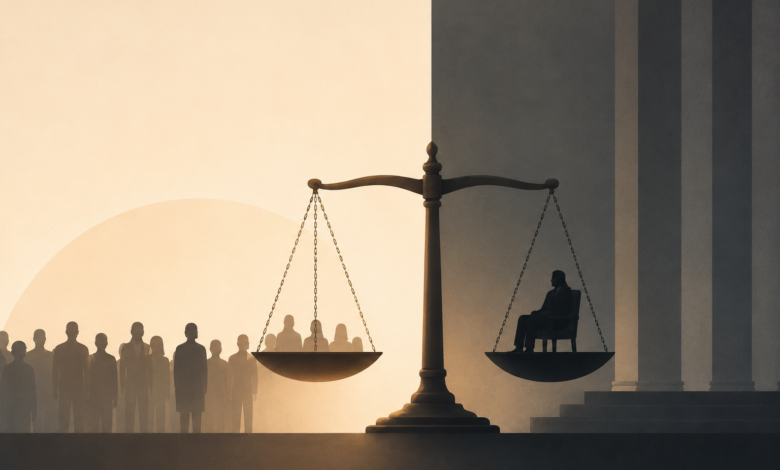
To understand the basic difference between democracy and dictatorship what one needs is a thorough knowledge of the modern day’s political history and a deep insight into its different aspects. One may, however, often get confused and misled by certain political jargons, terms and outward forms of different institutions of democratic system. Another factor which often tends to confuse one is the fact that dictatorship invariably resorts to make itself plausible in the garb of democracy for which it has too many tricks which it goes on playing to mislead others.
The institution of elections is a good example of this phenomenon. The process of elections is apparently common in democracy as well as dictatorship. Be that Hitler’s Germany, Mussolini’s Italy, Stalin’s Russia, Marshall Tito’s Yugoslavia, or Spain of General Franco, Chili of Pinochet, Egypt of Hosni Mubarak and Zimbabwe of Robert Mugabe, elections are held regularly in all these countries and with much fanfare. The average turn-out of voters there has also been more than what one finds in many countries of the West, including UK and US. In spite of all this, everybody knows that these elections have neither resulted in making these countries democratic, nor these have ever been recognized as genuine expressions of the free will of their masses.
What makes elections under a truly democratic set up quite different from those conducted under dictatorship are the following basic factors:
- A democratic polity is marked by the supremacy of the constitution and law. No individual is above the law, nor does he enjoy the right and privilege to interfere, amend or misinterpret the constitution and law of the land.
- The state enjoys freedom of expression, organization, gatherings and rallies and the right of free debate on topics of national significance. The political parties are free to participate in political process and there is a level playing field and equality of opportunity for the people to present their programs and achievements. The country’s media are free to objectively provide the people necessary information about various standpoints and divergent views, thereby serving as the voice of the nation. The media are, thus, capable of playing the role of the watchdog.
- The judiciary is free and equipped with the powers reposed in it by the country’s constitution. It can, thus, play its due role effectively and impartially to protect and enforce the constitution and protect the basic rights of each and every individual, thereby eliminating the possibility of rulers transgressing their limits.
- The Election Commission is independent and free from the administration’s control and is capable of discharging its constitutional duties fairly and impartially. The rules, regulations and administrative measures adopted for elections are transparent and beyond even a figment of doubt. The entire process of elections conducted and supervised by such a Commission is, thus, flawless and acceptable both to the government and the opposition.
- Wherever there is a possibility of intervention and rigging in election process, an impartial caretaker government can be established for the interim period.
Elections organized within the above-mentioned five-point framework are held with respect and confidence. Nobody doubts their credibility legally and morally. In case, however, the above framework is not available, then the entire process loses its credibility and is reduced to nothing more than a gimmick and façade. The people lose interest and are mere spectators in the formation and assumption of office by governments thus inducted. The sanctity of ballot box is lost and it loses its role for a peaceful political change, while those entrusted with power hardly enjoy any respect and credibility.
There is no doubt that the Presidential and Parliamentary elections are of prime importance and occupy pivotal position in a democratic dispensation. The entire political process revolves round them. That is how transfer of power takes place and the country’s leadership is elected with popular consent. Free, fair and transparent elections, held at specific intervals, are the hallmark of a genuine democratic system.
It goes to the credit of the Jamaat-i-Islami Pakistan that of all political and religious parties of the country it has strictly followed the democratic path within its own party set-up as well as in its political conduct. its activities are governed by an unanimously adopted constitution. It holds regular elections to its Shura, which is the supreme decision-making body. Its head, the Ameer, who is elected by the overwhelming majority of Shura Members, is answerable to this body for all his actions. Since the adoption of the ‘Objectives Resolution’ by the Constituent Assembly of Pakistan in March 1949, the Jamaat has followed democratic mode of elections for political change in the country.
It considers it obligatory for the electoral process to be free, fair and transparent that it must be conducted in the light of relevant rules and regulations and according to the provisions of the Constitution. The Jamaat considers elections inevitable for a genuinely democratic system, but it has also resisted all along every attempt by the govt in power to rig or hold them in an unfair and questionable manner through a surrogate Election Commission.
Today, the Pakistani nation is faced with a crucial test. It concerns not as much with elections as with the entire administrative machinery involved in this process. Unless and until the whole set-up is reformed, the process would become meaningless. The projected elections, if held as planned, would help only in lending strength to the dictator ruling the land and his coterie thus elected and would offer legitimacy to a fascist system. The whole facade would be a death knell for the supremacy of the constitution, the rule of law, freedom of judiciary and the cause of basic human rights in the country.
Such a process is bound to throw the country and the nation into the cauldron of autocracy, political servility and lawlessness. Without challenging the rulers and forcing them to reform the whole framework constitutionally, legally and administratively, mere participation in these elections would lead to nothing but negation of the principles of democracy and the rule of law and further strengthening the stranglehold of dictatorship around our necks.
This is the reason why we need to effectively protest against what the rulers are doing and inform the people about their nefarious and dangerous game-plan. The best way for this under the circumstances is the boycott of elections. I may point out here that the boycott is not the goal but just a means to achieve the goal through public protest, and creating awareness among the people about the evil designs of those now in power.