
What the Parliamentary Kashmir Committee Do?
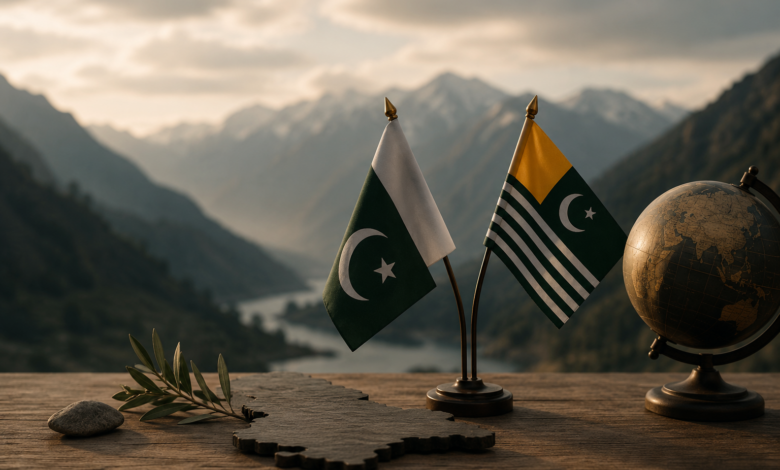
The Parliamentary Kashmir Committee should concentrate on the following
- First and foremost is the need to have a Consensus National Policy on Kashmir. We had such a policy from day one when Quaid-i-Azam declared Kashmir the “jugular vein” of Pakistan and laid down the principle that along with effective diplomatic effort Pakistan cannot ignore the Military Option. The UN Resolutions of August 1948 and January 1949 provide the constitutional and political framework, which became the cornerstone of our policy and the basis for the resolution of Kashmir dispute. There have been discussions on modalities but never on the foundational premise, i.e.:
- The State of Jammu and Kashmir remains a disputed territory whose future is to be decided, whatever be the time this may take.
- The future status of the State is to be decided by reference to the will of the people, to be determined through a plebiscite held under UN/International auspices.
The situation in Jammu and Kashmir has passed through many phases but the principled stand of Pakistan has never been compromised. The people of Jammu and Kashmir have also continued their struggle to seek their right of self-determination, their right to decide their future in keeping with the commitments of Pakistan, India and the World Community. A major sea change took place in 1989 when the peaceful political resistance, in view of the frustrating experiences with the ballot box, took a turn towards militant resistance to pay back in the same coin to the ever-increasing state repression and terrorism in the State of Indian Held Jammu and Kashmir. Pakistan has always said that the people of Jammu and Kashmir have legitimate right to resist occupation in whatever form they can afford, as has been the case with all anti-colonial movements in recent history.
The post 9/11 scenario has created a situation where in Pakistan had to develop a new strategy to face the challenge. The need was for a change of strategy and tactics, NOT of objectives and goals. Instead of developing a new strategy based on research, intra-nation dialogues and national consensus, the present leadership has, in the name of flexibility, taken initiatives and made concession and retreats which have compromised the objectives, led to the dilution of erstwhile consensus and created a babel of confusion. The other tragic consequence relates to some very disturbing and disheartening messages such show of flexibility sends to the national resistance within occupied Jammu and Kashmir. Confusion is snow-balling. There is therefore an urgent need to sit together, discuss all issues threadbare and make serious and concerted efforts to evolve national consensus as to our objectives, strategy and tactics to achieve the national goals in respect of Jammu and Kashmir. I think the Parliamentary Kashmir Committee can play a pivotal role in removing the confusion and restoring consensus in this respect.
- The second area relates to mobilizing support within the country for the pursuit of a National Consensus Policy. The Nation and the Government must not be arrayed against each other on a sensitive and strategic issue like Kashmir. This can have far-reaching consequences for the very sovereignty, solidarity and economic sustainability of the country along with dire implications for our moral and ideological position. In this respect I suggest that a National Consultative Committee may be formed representing a cross-section of intellectuals, journalists and retired Ambassadors and civil and military bureaucrats, including some leading professionals to provide adequate input to policy making and policy implementation from those who are not in the Parliament but have a role both in policy making and influencing people’s thinking. This Group can also act as a bridge for mutual communication between the Government, the Parliamentary Kashmir Committee, the opinion-makers and the people of Pakistan.
- I think there is an urgent need to qualitatively improve the intellectual input to policy making on Kashmir. We have had enough of off-the-cuff observations and stale propaganda outbursts. There is a need to have a group of concerned scholars and experienced diplomats to work on whole time basis, if possible, on this issue and enrich the policy debate and analysis through this process. I suggest that the Institute of Strategic Studies, Islamabad may be invited to immediately constitute a cell for this purpose, which could act as a think-tank for the Parliamentary Kashmir Committee. I am suggesting this because the Parliament unfortunately does not have a strong and competent Research Wing of its own.
- Foreign Office and other institutions/organizations, which have been playing an important role in the formulation and implementation of Kashmir Policy, would have to be involved in discussions as well as for developing an effective Kashmir Policy and its proper projection.
- We have to work out an elaborate plan for the projection of our Kashmir Policy and for achieving support for the same in different parts of the World. I suggest that we should identify the following five areas to launch a diplomatic offensive to project our policy to win friends and supporters:
• USA and Canada
• Europe
• Arab and Muslim World
• East Asia particularly, Japan, China and Russia
• India
Clear targets, ways and means and resources for effective projection of our policy in these five areas have to be worked out. Our plan should be formulated on the pattern of a business plan focusing of (i) Product/ Brand (ii) Packaging and (iii) Marketing. Decorative conferences and ineffective visits by politicians to different parts of the world are of no use. Instead, we should have a clearly thought-out programme, which should be target-oriented and cost-effective. The focus should be on the indigenous resistance movement, the barbarity of Indian occupation and oppression, and the peoples’ right of self-determination. We should also arrange targeted visits to Indian held Kashmir by important foreign journalists, scholars and opinion- makers so that they have exposure to real conditions. World should be awakened to the conditions prevailing in Occupied Kashmir and the indigenous character of national resistance. Instead of projecting Pakistan’s case, a more effective strategy would be to project the case of the people of Jammu and Kashmir. The focus has to shift from any territorial dispute to the human and political dimensions of the issue: the right of the people to decide their future and seek liberation from occupation and state oppression. The world should be able to see the Indian repression in Kashmir, human rights violations, custodian killings, the repressive laws, rape and vandalism and consequent people’s resistance to this occupation and oppression.
- Finally, it is to be realized that involvement of the Kashmiri people both from Azad Kashmir and Occupied Jammu and Kashmir would be crucial to any diplomatic and political effort for the projection of the issue and also their involvement in the resolution of the conflict. As such their participation at all levels has to be planned and incorporated. Any road-map has to be developed with their participation and concurrence. It must be realized that it is only through supporting, sustaining and further increasing effective national resistance movement within Occupied Jammu and Kashmir and enhanced international pressure that India can be forced/persuaded to negotiate and agree to any way out of the Kashmir imbroglio. All else would be wishful thinking. Militancy has played an important, even decisive role in making Kashmir a flashpoint. Militancy must not be marginalized. However, time has come to expand and accelerate the political movement. The fact is that it is only through increased political resistance that militancy can be channeled into peaceful political agitation. Denial of that is the root cause of militancy, of course along with state repression. If this leverage ends without space for political agitation, India would never proceed along the path of a negotiated solution. This is the most important ground reality. Anything that weakens this resistance would be detrimental to our cause.
These are some initial thoughts and the more details can be developed through discussions and consultations with other intellectuals, policy makers and scholars.
(Prof. Khurshid Ahmad)
Member of the Senate of Pakistan