

CTBT- foreign pressure and national interests
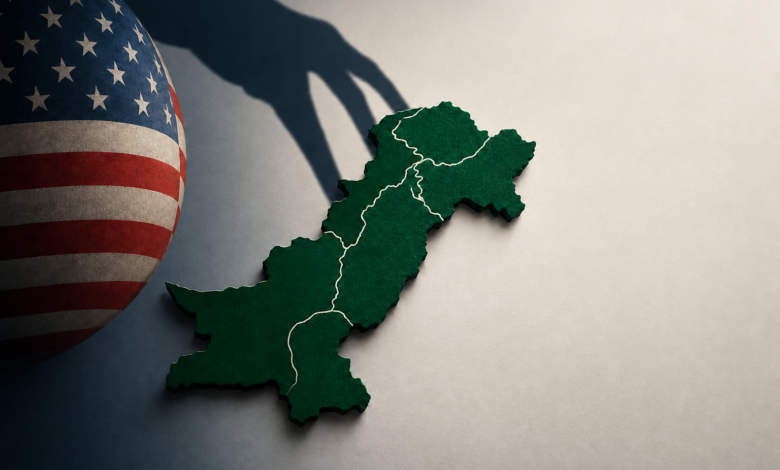
For the last few weeks several indicators have been pointing towards an impending compromise on Pakistan’s nuclear policy. President Clinton’s expected visit to South Asia seems to be the Trojan horse. Now the Foreign Minister briefing to the National Security Council and the Cabinet has brought the cat out of the bag. It has become quite clear that all promises of “national consensus” and “never surrendering to outside pressure” have crumbled to dust. Pakistan’s present regime is preparing to do what the Nawaz Government had agreed to do under US pressure.
It is all the more alarming that Army leadership is becoming instrumental in this abject surrender and unpardonable compromise on national security. The indications are that Pakistan is ready to sign CTBT even before India signs it and before any concrete and just solution to the Kashmir issue is worked out. If the people of Pakistan and its religious and political leadership do not promptly challenge this volte-face, Pakistan’s nuclear capability would be in jeopardy and its sovereignty at stake.
CTBT is not an independence treaty. It is a part of a four-dimensional nuclear doctrine whose cornerstone is NPT, a treaty based on discrimination between the five nuclear weapon states and the rest. Pakistan, like India and Israel, is a nuclear state, and entering into CTBT without an acknowledgement of this fact would be self-contradictory as well as a recipe for ultimate de-nuclearization.
America is on the verge of accepting India’s right to “minimum nuclear deterrence”. Nine rounds of negotiations between Jaswant Singh and Strobe Talbott have led the US to understand not only “India’s minimum nuclear deterrent” but also “the level of minimum deterrent will change according to India’s own perception of its changing security environment”. (Reuter report, The News International, London, Dec 23, 1999). This amounts to virtual acceptance of India as a nuclear power. What are the conditions on which Pakistan is negotiating the signing of the CTBT? All talk of national consensus is turning to meaningless prattle. The National Security Council does not represent the people of Pakistan and has no mandate to compromise such vital national matters. No fresh national debate has taken place. During the last few years, people belonging to all shades of opinion have rejected the signing of the CTBT, and the former government was censured for apprehensions of surrender on this count. The debate in the now suspended National Assembly was inclusive, and a majority of members had opposed it. All parties’ conferences, held from time to time, have categorically opposed the signing of this treaty. Even the incumbent Foreign Minister in his earlier writings, criticized moves that could weaken Pakistan’s minimum nuclear deterrence. What has happened in the first two months to change the position?
To think that the treaty stops only from conducting new tests and would not affect our nuclear capability is, to say the least, an illusion. Tests are necessary for the maintenance of deterrence because deterrence is not a static phenomenon. Fresh tests are necessary for any upgrading, weaponization, miniaturization and movement towards thermonuclear deterrence. Therefore, regular upgrading of minimum deterrence is crucial to the security of the country. This fact has been accepted by experts and acknowledged in an article in the daily ‘The News’ of October 5 by the Foreign Minister (with Agha Shahi and Zulfiqar Ali Khan, Islamabad).
In the article, they said:
Obviously, our defense forces will have to be upgraded in proportion to the heightened threat of pre-emption and interception. Minimum deterrence has been and should continue to be the guiding principle of Pakistan’s nuclear pursuit. Of course, the minimum cannot be defined in static numbers. Without an agreement on mutual restraints, the size of Pakistan’s arsenal and its deployment pattern have to be adjusted to ward off dangers of pre-emption and interception. Only then can deterrence remain efficacious.
Minimum deterrence cannot be effectively maintained without the capacity and the opportunity to upgrade our capabilities in response to changing security environments. That is why the American Senate has refused to ratify CTBT. America has no moral or legal position to pressurize us. Moreover, CTBT also opens the door of physical inspection and intrusive monitoring by a West-controlled team.
Without making the world accept our nuclear status and our right to upgrade our minimum deterrence and without forcing India to resolve the Kashmir dispute in accordance with the UN resolutions and the wishes of the Kashmir people. It would be suicidal to abdicate our right to upgrade our deterrence by signing the CTBT.
Surrendering to the CTBT would foreclose all possibilities of upgrading and relative positioning. It will open up our nuclear facilities to direct inspection besides the non-intensive monitoring that is already taking place. It would be the first step towards ultimate de-nuclearisation and constant blackmail. If nuclear capability is to be defended, as it must be, this is high time to resist all external pressures and say ‘No’ to the USA and its President.
If Clinton does not come to Pakistan during his forthcoming visit to South Asia, it would be a failure of his foreign policy and not of Pakistan. Let him face his predicament. Pakistan must not surrender its vital security interests. If the present leadership succumbs to this US pressure, it will not only compromise on matters of national sovereignty. It will also drive a wedge between the army leadership and the people. Public confidence and trust in the army on security matters would be badly shaken. May Allah guide our leadership and keep it away from inflicting this ignominy on the nation. Signing the CTBT would be worse than the Kargil debacle, and the consequences would be disastrous.