
On The Course of Ethnicity
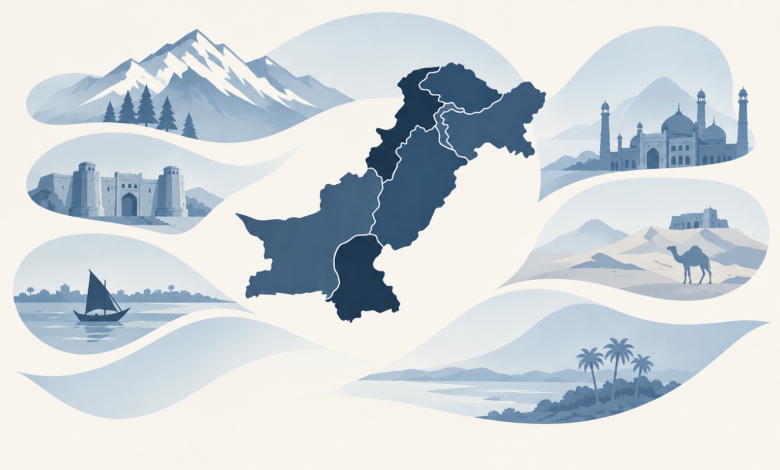
There can hardly be two opinions that the question of ethno-nationalism has moved to the centre stage of Pakistani polity in the recent years. The news about ethnic conflicts among various groups frequently dominate the national media: several regional leaders openly talk of their secessionist or near-secessionist designs; organisations with regionalist causes continue to proliferate in the provinces and an increasing spiral of ethnic violence to have engulfed appears the Pakistani society, at least in certain parts of the country. Are we moving towards a Hobbesian ‘state of nature’, where a ‘war of all against all’ is in the offing with disastrous consequences for the country? What has gone wrong? Why have the ethnic groups be to demand a nationality status? What is the nature of their ideologies? What strategies do they pursue? What is the nature of their organisations? Where does their leadership come from? What strata of society do they mobilise? What role do the international factors play in this situation? In short, what domestic and international factors are important in of ethno-nationalism in Pakistan Penetrating analysis of literature on ethno-nationalism and the strategies pursued in the past are, therefore, necessary to understand problem whose significance is not merely theoretical. These questions deserve to be probed in depth, both from ideological and conceptual as well as pragmatic and historical perspectives.
Historical Perspective
“What is common to all men”, surmises a political historian, “is not more important but infinitely more important are the accidents by which they differ.” Yet human history remains a history of humanity’s desperate oscillations between seeking identification in the universal or the particular, between what units and what divides. Nationalism, symbolising the feeling of belonging distinct from a group other because of some common racial, linguistic, ethnic and/or historical ties and usually identified with a particular territory, has been a powerful force for consolidation as well as disintegration, particularly during the last two centuries. The break-up of the Hapsburg and Ottoman empires in the 19th century and the liquidation of British, French, Italian and Spanish colonial empires in the 20th century bear wit- ness to the ‘consolidating’ as well as the ‘disintegrating’ roles of the principle of nationality.
A contemporary historian sums up the dilemma saying, “the rise of nationalism has stimulated the crystallisation of ethnicity in many parts of the world. Nationalism is the claim of ethnic groups to self-determination. When an ethnic group achieves sovereignty in a certain state, it becomes a nation which then excludes other ethnic groups. The excluded ethnic groups are then forced to get and seek a national y status and an ethnic autonomy.”
The process of consolidation and disintegration keeps on multiplying, like the ever-emerging heads of the hydra. Political maps are made and re-made to suit this ever-changing scenario. Political stability remains an illusion, though there may be interludes of calm between a series of storms, or a kind of a breathing space of truce between spells of wars.
Timely Resolve
A closer look at the political history of mankind reveals that a number of ‘pragmatic’ strategies have been pursued to ‘solve’ the ethnic problem. Four such strategies deserve special mention.
First, there has been the strategy of systematic liquidation of other ethnic or nationalist groups. Whether one looks to cold-blooded extermination of the Muslims from Spain after the victory of the crusaders in the 15th century or the systematic liquidation of the Jews in Nazi Germany in the 20th, or the annihilation of the natives and their cultures of in America, Canada and parts of Africa during the hey-day colonialism, one cannot but concede that history is replete with experiments in this strategy. However, human conscience may refuse to accept it as a ‘desirable strategy’ and, however, futile it may look with hindsight even as a viable solution to the problem, there has never been shortage of people who have resorted to this strategy time and again.
Second is the strategy of what may be described as structured dominance, where one group so institutionalises its control and authority that its supremacy is established on other groups, who are condemned to live in perpetual dependence. The subjugated people live under unmitigated tension and wait for their opportunity to strike back. The caste system India, colonialism in Africa and Asia, apartheid in South Africa, Israeli hegemony on Arabs in Palestine, are but a few instances in view. But if his- tory is any guide, the strategy of dominance and subjugation can have only a limited span of life. It is impossible to continue it forever. It contains seeds of its own destruction.
Third is the strategy of assimilation, which consists in conscious policies to seek the dissolution of distinct cultures into some common cultural resulting over time in dissing the distinctiveness of the composing units. Secular democracy and socialist dictatorships both have degrees of failure. This strategy pursued this strategy with vary has been hedged around I with assurance of equality and con- situational guarantees for the protection of minorities. In fact, the strategy of assimilation had aimed at effective ‘denationalisation’ of national minorities and their gradual absorption in the political culture of the majority. This ultimate objective’ is but another form of liquidation, however, beautifully presented in the glamour of politics, shorn of all political niceties and terminological ingenuities, the real objective remains denial of plurality. This came in sharp focus in discussions on the status of rights of minorities in the Council of the League of Nations. In the 37th meeting of the Leagues’ Council (February 1926) the representative of Brazil on the Council, M DeMello-Franco, said: “It seems to me obvious that those who conceived this system of protection, did not dream creating within certain states of groups of inhabitants who would regard themselves as permanently foreign to the general organisation of the country…(they wanted) gradually to prepare the way for the conditions necessary for the establishment of a complete national unity.”
The British representative to the Council, none other than, Sir Austen Chamberlain, endorsed the same view saying, ‘the object of the Minorities Treaties and the Council in discharging its duties under them, was, as M de Mello-Franco has said, to secure for the minorities that measure of protection and justice which would gradually prepare them to be merged in the national community to which they belonged.’
Finally, there has been another strategy adopted by multi-national states like Switzerland, Belgium, Austria, Yugoslavia, Canada, Nigeria, etc. The experiment of ‘state of nationalities’ wherein ethnic groups, while remaining distinct, were tied to at state machinery by a network of interests and institutions hoping to represent an ‘association be- tween equals’, after working for some time, is again in trouble.
Unity in Diversity—Islamic Perspective
Islam has adopted a unique approach to the solution of this problem. It provides a new basis for the organisation of human society and an equity-based frame- work for the flourishing of a united yet diversified and genuinely pluralistic society. It establishes its social organisation of a faith and ideology that is universal and open to all, ensuring equal opportunities for attaining the most sublime, morally, spiritually and materially and is also tolerant enough to accept those who refuse to join its ideological fold. Within the Islamic community and between the Islamic community and other communities, and nationalities, it refuses to impose a strategy of forced similarity. Instead it pursues the path of unity in diversity, equality alongside acceptance of the differences as genuine and authentic.
Tawhid (the principle of Oneness of God), is the bedrock of the Islamic social order. If affirms that all I men are creatures of One God—they are all equal and subject to the same laws of spiritual and social development. Distinctions of colour, class, race, language and territory, real as they are, for knowing each other and not as the basis for social identification or the criteria for excellence, moral or material. Humanity is one single family of God-consciousness and service to mankind in a framework of freedom and completion where all have equal opportunities for seeking the most sublimes. The Quran says in categorical terms that “O men! Behold, we have created you all out of a male and a female, and have made you into nations and tribes, so that you might the noblest of you in the sight come to know one another. Verily of God is the one who is the most deeply conscious and heedful of Him. Behold, God is all- Knowing, all-Aware.”
All human beings are like one family, without any inherent superiority of one over another based race, blood, colour, ethnicity or otherwise. Islam emphasises of essential oneness of human beings underlying their apparent differentiations, with the result that while differences are not ignored, racial, tribal, national or linguistic prejudice is avoided.
In fact, boasting and claims of superiority based on national or tribal prejudice (asabiyyah) have been condemned by the Prophet (Peace Be Upon Him) as ‘Pagan ignorance’ (Jahiliyyah). The Prophet (Peace Be Upon Him) said: “Man is but a God-conscious believer or an unfortunate sinner. All people are children of Adam and Adam was made out of clay”. The Prophet (PBUH) is also reported to have said: “He is not of us who proclaims the cause tribal partisanship (asabiyyah). When asked to explain ‘tribal partisanship’, the Prophet (PBUH) answered, “It means helping their own people in an unjust cause.” On the occasion of his last pilgrimage, the Prophet (PBUH) declared: “Your blood and property are sacrosanct until you meet your Lord and He will ask you of your deeds…. Know every Muslim is another Muslim’s brother, and that the Muslims are brethren up to each other. It is only lawful to take from a brother what he gives you willingly, wring not yourselves.
Framework of Fraternity
Islam does not deny differences based on language, ethnicity, culture, race or colour. Instead, it accepts and accommodates them under the umbrella of a higher principle of identification and social organisation based on faith and moral excellence; with the result that a universal basis is provided for societal organisation and a moral path opened up for human evolution. Islam does not stand for an artificial uniformity. It affirms the principle of unity in diversity—a unity based on a common ideal, an agreed criterion for moral excellence, a mission that harnesses all and sundry in the service of virtue and equity, a law that ensures equality and justice and a social organisation that admits of variety within the framework of a common fraternity.
Iqbal sums up this strategy of Islam when he says: “Islam is not earth-bound. It aims at shaping a human society by the comingling of races and nationalities so that an Ummah with a specific self-consciousness may emerge.”
Ismail al-Faruqi, highlighting the spirit of the Islamic culture and its historical ethos says: “On the front of social ethics, Islam rejected the tribe as the limit of security and social cohesion, Makkan inequality and class distinctions. …It upheld a universal pax-Islamica based on the equal rights of all persons and races and expanded the tribalist cohesiveness to include the universal community. … The life of society was no more dependent upon inter-tribal treaties or a strategic balance of power but upon public law, both within the Muslim community and the Islamic state and without. Islam gave the state, as it did the person, a new sense of mission and a new dignity. Islam protected the citizen, Muslim and non-Muslim, the latter by granting him the freedom to govern his life by his own Jewish or Christian law as exercised by his peers and the former by making heretication virtually impossible, there being no acclesiastic megisterium to pronounce on Islamicity except the consensus of the Ummah across the generations. Islam sought and made a society in which ideas could travel and contend without hindrance and in which best argument could and did win.”
Wilfred C Smith while discussing the worldly success of Islam says: “The Muslim achievement was seen as intrinsic to their faith. They were not only victorious on the battlefields and effective in many diverse departments of living, but they succeeded also, and again in a relatively short period of time, in integrating life into that wholeness that constitutes a culture. … The achievement of the Muslims was that they wedded diverse cultures into a homogeneous way of life and also carried it forward into new developments. And it was Islam that provided the integration, as it provided too the drive and power to sustain it. …And it was an Islamic pattern that gave the society cohesion as well as vitality. The centre of this unifying force was religious law, which regulated within its powerful and precise sweep everything from prayer rites to property rights. The law gave unity to Islamic society, from Cordoba to Multan. It gave unity also to the individual Muslim, his entire life activity being organised into a meaningful whole by this divine pattern. It gave unity also in time, providing the community with continuity, as dynasties rose and fell and could be regarded as episodes in the persisting enterprise of Islamic endeavour to build on earth the kind of social order that the divine importance prescribes.”
G E Von Grunebaum looks upon the phenomenon of Islam slightly differently, yet succinctly highlighting the spiritual unity emerging from the mosaic of Islamic civilisation, giving new meaning to the diversity of colours, forms and patterns. “The casual onlooker is struck by the picturesque uniformity of Islamic civilisation. Individual objects as well as entire cities appear to speak of the same Formensprache, most clearly symbolised by the sineous intricacies of the Arabic script, the foreignness of it also being emphasised and protected by a difficult and puzzling language. Gradually, the student becomes aware of the inexhaustible diversity hiding behind the colourful veil and he perceives the national and the regional elements.