
JI Rejects the IMF’s Bailout Package
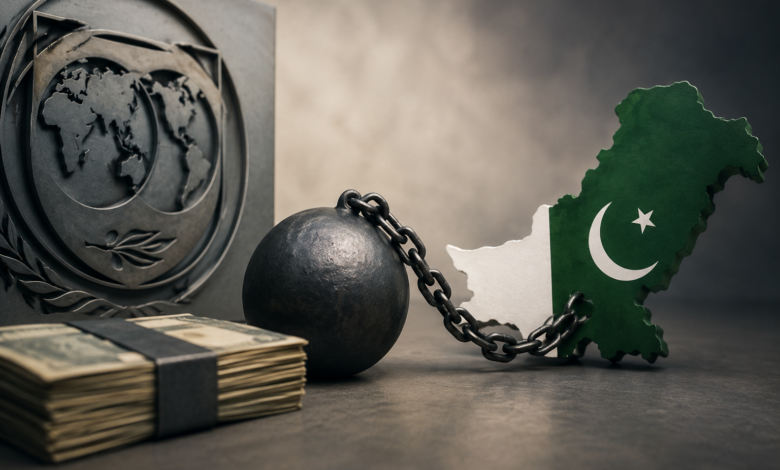
The Jamaat-e-Islami has rejected the IMF’s US$5.5 billion bailout package for Pakistan.
Expressing disappointment with the whole deal and also on the way the government is trying to project it, the JI said the government was guilty of failure to come up with an appropriate strategy to face the economic challenges and of deceiving the people by gimmicks and false expectations.
Prof Khurshid Ahmad, Naib Ameer of the Jamaat, said in a statement issued here on Friday that the government was trying to hoodwink the people and was neither itself facing the reality nor preparing the nation to face it.
“The real IMF conditionalities are very much there; only their enforcement has been delayed by a few days as the finance minister has admitted in his statement that the increase in utility prices and devaluation are not being insisted on ‘ at this stage’,” said Mr. Khurshid.
He said it deserved to be noted that for the first time, Pakistan-IMF negotiations have not produced a joint communique. The IMF delegation left before the final announcement and two separate announcements were issued.
He said the IMF communique did not give any details nor even the figure of $5.5 billion. He added the finance minister had chosen to camouflage the facts by giving the impression that $5.5 billion would be coming to Pakistan.
The fact, the JI leader said, was that $3.5 billion would be in the form of restructuring of loans and not fresh resources; $1.6 billion represents renewal of earlier commitments made under ESAF and 3-year programme in Oct 1997, which were illegally suspended under US pressure after May nuclear tests.
More rests on Paris and London clubs scheduled for the next two months.
He maintained that the said package was yet to be finally approved by the IMF executive board, which was expected to meet in mid-December, after prime minister’s visit to Washington (when all the generalities sought by the US about CTBT/FMCT and nuclear deterrence would be personally given, in violation of the national consensus).
Prof Khurshid said that the real issue was not the package but Pakistan’s huge burden of debts and how to disengage from the whole debt-based strategy and move towards real self-reliance.
“What the so-called ‘package’ means is that our external indebtedness, which stood at $32 billion with the world bodies and $11 billion with the FCA depositors, would increase from $43 billion to around $48 billion. But where is the capacity to pay back? And what would be the impact of this on real productivity in the country?”.