
ArticleEconomicsIslamic EconomicsMedia Article
Talking Points – Debate on Economic Situation
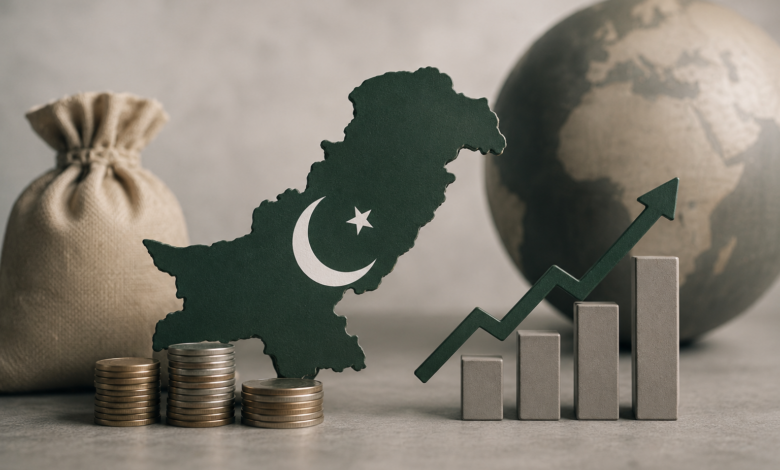
Senator Prof. Khurshid Ahmad has raised the following points in the debate held on the economic situation in the Senate on October 29, 2008:
- Surrendering to external pressure and rushing to the IMF in panic is not a good policy. The US has not paid around $800 million due since March 08 for the “services” rendered by the Pakistan Armed Forces at America’s behest. The IMF has gone out of its way to pressurize the World Bank not to give Pakistan Dollars 300 million facility that was expected. All this is to pressurize Pakistan to get back into the IMF trap. Pakistan must not surrender to these pressures and show courage and prudence to develop a policy package which could not only salvage the economy from its present financial crunch, but more importantly, address the real issue of the economy and set it along the road to sustained growth, resulting in poverty-reduction, employment-generation and equitable distribution.
- We have experienced different IMF programmes in the past including Standby Arrangements (SBA) and Poverty Reduction and Growth Facility (PRGF). They caused more harm to Pakistan economy. They have also led to the erosion of our sovereignty. Even the expected economic benefits never appeared. IMF Programmes have unfortunately failed in Pakistan and also in around sixty countries of the world, over the last 5 decades. To blindly follow failed strategies cannot be called prudent.
- The real issue is not simply borrowing a few hundred billion dollars for a temporary bail-out but giving the economy a new direction and developing an integrated economic, financial and fiscal policy to undo the wrongs inflicted during Musharraf-Shaukat Aziz rule. They pursued a policy of consumption-based growth, show-piece development and deceptive achievements. Sustained growth was impossible in that framework. It is time to come out of the grip of that disastrous policy.
- The most important issue faced by Pakistan today relates to the folly of pursuing a Development Model in the shadow of the liberal capitalist paradigm, where it is assumed that the market is the most efficient mechanism for all economic decision-making and that liberalization of trade and free capital movements are the best recipe for growth. It is assumed that poverty-reduction and people’s well-being are to be taken care of by “trickle down effects”. This is the greatest deception perpetrated by this exploitative colonial strategy. The role of the government has been marginalized in the model. This has failed in Pakistan and other developing countries, and it is now failing even in the highly developed countries of the USA and Europe. It is time to discuss this policy and formulate our own policy in which while the private sector has an important role to play within market mechanisms as a key institution, the government and public sector must play positive roles to redress the weaknesses of the market and ensure achievement of the socio-economic goals as set in Pakistan’s constitution. Unless the Government is prepared to negotiate this decisive policy change, we may continue to move from one crisis to another. Immediate borrowing of a few billion dollars is not the solution. They would be lost in a bottomless sink.
- The other major issue is the curse of living beyond means, particularly by the government and the elite classes. We have to cut our coat according to the cloth and unless this is done, there is no way out of the crisis. The present government is following the same care-free expenditure policy which was pursued by its predecessor that has landed the country in this crisis. We have to restructure the entire Expenditure Policy and mobilize domestic resources and resources from Pakistani expatriates in order to pursue a policy of self-reliance. There is no other way. We have the resources and the potential. What we lack is clear vision, proper economic planning, a mechanism of scrupulous implementation and accountable, honest and competent leadership. Corruption is causing losses to the country to the tune of 10 to 15 percent of the GDP. Our national saving ratio is less than half of the savings rate in India and other developing countries. Agricultural and productive sectors of the economy have been ignored. Heavy industry and infrastructural developments have been criminally neglected. Lack of proper long term energy policy, development of apparent technologies and mechanisms for capacity development are at the roots of our problems. It is only an increase in production and productivity that we can come out of our present plight. Unless they are addressed seriously and assiduously, we cannot turn the corner.
- Following broad outlines for an Integrated Development and Policy are suggested:
- Immediate review of the expenditure policy of the government in all sectors including administration, defence and development. 20-30 per cent pruning is needed to bring the budgetary deficit into manageable limits. Leadership will have to set an example. The entire nation has to be taken into confidence, and all stakeholders have to be involved in a new programme almost on a rather war footing. All wasteful expenditure had to be cut with a firm hand.
- New policies are needed to provide incentives to agriculture and industry, making their inputs cheaper. We must concentrate on increasing the savings rate and investment rate and also to mobilize resources through taxation and other means within the country. The trade deficit has to be cut drastically by reducing imports and boosting exports. Monetary and fiscal policies have to be harmonized to achieve growth and equity objectives. The rate of interest would have to be reduced and not increased if the productive sectors have to be revitalized.
- Pakistan’s political leadership, bureaucracy and business elite have to be invited, persuaded and if necessary, pressurized to bring back their foreign exchange deposits to Pakistan. It is the political leadership which should set an example. Pakistan’s expatriates have between 150-200 billion dollars in their savings outside Pakistan. Concentrated efforts should be made to involve them in projects and persuade them to help Pakistan by at least making available to the country 10-15 percent of their savings not merely for foreign exchange support but also for productive investments in the country.
- Instead of moving around with a begging bowl we should set our own house in order, restructure the Planning Commission, establish forums on the basis of public-private partnership, come out with viable projects and undertake their aggressive marketing in the world to attract capital into Pakistan both from expatriates and get our share of surplus capital that is searching for investments because of the global financial crisis and loss of opportunities in America and Europe.
- Only through a Pakistani-grown strategy and a viable and sustainable economic programme can our country come out of the present crisis. Won’t go for short terms palliatives. That is like chasing shadows. It is time to learn from our own experiences and those of other developing countries and pursue a path that leads to self-reliance, national dignity and economic and political sovereignty.