

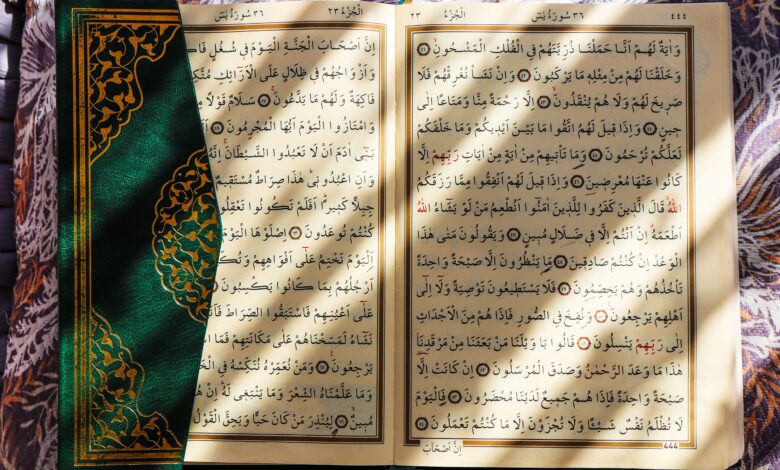
Islam and economics are inseparable, as Islam provides guidance for all aspects of human life. The Quran and Sunnah have laid down in clear terms the objectives, values and principles that fashion Islamic life, individual and collective. Fiqh, the science of Islamic living, provides a comprehensive code of conduct to regulate all dimensions of human life, from ibadat (worship) to Mu‘amlat (inter-personal relations), from Munakihat (family life) to Ta‘zirat (criminal law) and Siyar (international law). The Quranic teachings and Sunnah commandments about economic and financial matters have always guided the Muslims and laid down the parameters within which Muslims have tried to operate. For over a thousand years our legal and economic system was based on these injunctions and guidelines. This system was, however, disrupted to its roots during the colonial period. With the emergence of independent Muslim states and societies a concerted effort is being made at the intellectual as well as operational levels to reconstruct Muslim economic and financial life and institutions, on the basis of Islamic values, principles and injunctions. It was as a part of this global movement of Islamic resurgence that Islamic economies emerged as a social discipline.
It would not be an exaggeration to suggest that mid-1970’s represent the larval stage for the new discipline. Over the years it has grown into a healthy fledgling. It is yet to attain majority and maturity but is set along that path. The discipline is gaining more and more sophistication and rigour. This is a very promising situation. But for the healthy growth of Islamic economies it is very important that its strong and sustained link with the Shariah, the source of Islamic paradigm, must remain ever fresh. It is an aspect of the I‘jaz of the Quran that it reveals to the seeking souls in every age and context the relevance to its teachings to changing situations and new challenges. That is why the need for constant reference to the principles and values of the Quran and Sunnah constitute the life-spring for the science of Islamic economies and its applications in the realms of policy-formation. The Quran and Sunnah are and would always remain the permanent source of light, guidance and inspiration.
The Institute of Policy Studies, Islamabad in cooperation with the International Institute of Islamic Economics, International Islamic University, Islamabad produced in 1989 a very valuable anthology of Hadith literature on economics, first of its kind in contemporary times. This handbook, Economic Teachings of Prophet Muhammad (PBUH) was compiled by our brother and colleague Muhammad Akram Khan and remains a major work of reference in this respect. Alongwith Dr. S.M. Hasan Zaman’s compilation Economic Guidelines in the Quran, these two works constitute an indispensable source and reference point for any researcher or student of Islamic economics and banking.
The Institute of Policy Studies is now presenting second edition of this anthology of Hadith literature on economics and finance. An effort has been made to remove printing mistakes, which had unfortunately crept into the earlier edition. I am sure the publication of this work will meet the current needs of researchers and students in the English-speaking world.
Prof. Khurshid Ahmad