

Pakistan Energy Budget 1983-84
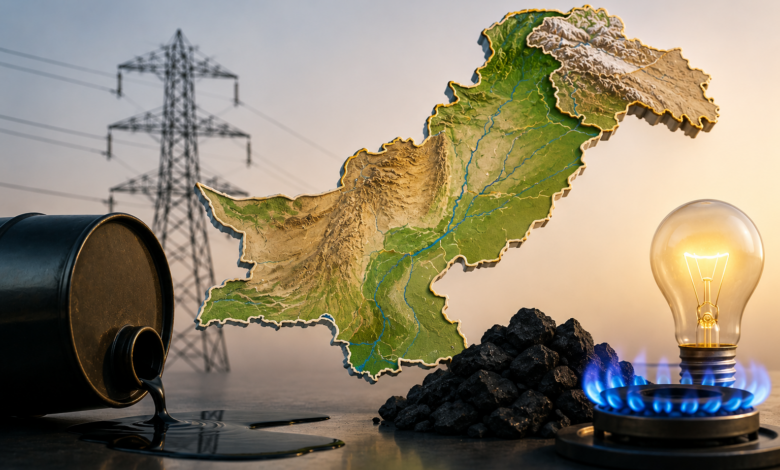
1. It would be more naive to move into the next financial year without an energy budget, than it would be without a financial budget. At least in the case of the financial budget, as a last resort, there is always the facility of deficit financing using additional paper currency, if there is a crisis. No such facility is available in the case of energy. Energy is harder to come by than hard gold and there are no substitutes.
2. It is necessary to appraise our energy needs carefully, sector by sector, and activity by activity. There are cases where less than half a dozen activities or industries which may be consuming more than half of the total consumption of a sector. These cases have to be examined in an appropriate perspective. Examples are given in the study. It is possible to optimize the utilization of available energy sources, using some of the suggestions discussed, during the course of 1983-84.
3. The way energy resource use was expanded left no scope for inter-fuel substitution. We raced ahead enthusiastically expanding the use of gas and electricity. There must be a pause to think about this process. The rate structure should be such that all the sources whether, whether oil, gas, coal or electricity should get a fair chance to compete in the market.
4. Inter-fuel substitution policies have to be worked out carefully and implemented with caution. The analysis given in this study shows that heavier inputs of some of the energy sources, in the hope of reducing pressure on another, in the household sector may actually increase the pressure on the already hard pressed source. This may happen in some other case also.
5. If it is intended to protect the area under principal crops, it would be necessary to increase energy inputs in the Agriculture sector in case there is a failure of rains. Since in recent years we have permitted electric tube wells to ease out the oil tube wells, the energy form to be supplied is electricity, if necessary from thermal sources, particularly for initial operations, to ensure sowing to the maximum extent. Subsidy on oil/diesel tube wells may be maintained and its allocation increased. Subsidy on light diesel oil for tube wells may be considered.
6. Energy supplies to the Industries Sector are critical for the health of the total economy. If the rate of growth of GNP has to be assured, then supplies of energy should be available to sustain industrial activity. Out of about 6 million TOE (tonnes oil equivalent) demand of this sector about half is from Cement, Brick Kilns and Steel. These three industries should be isolated from the public utilities and put exclusively on coal, if necessary on imported coal. The source of coal supplies must be stable under stress. The sugar industry produces about 4 million TOE of bagasse, not even half of which could be consumed by the paper and board industry, and not half of it is needed for operating sugar mills. The sugar industry must switch to bagasse. Besides, it is strongly recommended that the Government undertake a quick survey of the energy requirements of industries sector, before the end of July, 1983, to determine exact requirements as for example in the case of textiles, for the reasons given in the text of the study.
7. “Next to industries, the commerce sector gives the most positive returns in the shape of increment to GNP, for the given energy input. There should be no question of reducing supplies to this sector because the total demand of this sector is not large. It is the smallest energy consuming sector of the economy.
8. Two scenarios on supplies of energy are presented, one short of the other by 4 per cent of the total requirements. The 4 per cent additional deficit could mean a lot of hardship. Where the shortfall is in internationally traded items, oil and coal, some arrangement for import must be programmed beforehand. In the case of failure of the hydro system or a shortfall of gas supplies, more oil may be needed for priming power generation.
9. If there is an absolute shortfall/ which cannot be made up by importing oil or coal, as for example in the case of a major failure of rains in the catchment area, it would be necessary to introduce some radical modifications in the energy supply operations for the productive sectors. It may be necessary to introduce some system of rotation or rationing to minimize the impact of the shortfall on gross domestic product. The firms, industrial establishments, and even farms could cooperate in this operation to even out the peak loads. In the case of a single or double shift in the industries, the management and trade unions could agree to a change in the shift hours. The farmers could agree on some warabandi system as for irrigation water from canals. This policy recommendation calls for an effort which goes beyond appeals on the media. It requires some face to face discussion between ALL the parties concerned at the local level.
10. It appears necessary to warn that ad-hoc changes in the distribution of energy among the productive sectors may result in a decline of gross domestic product.