
Why President Musharraf Must Go? Also The Religous Factor
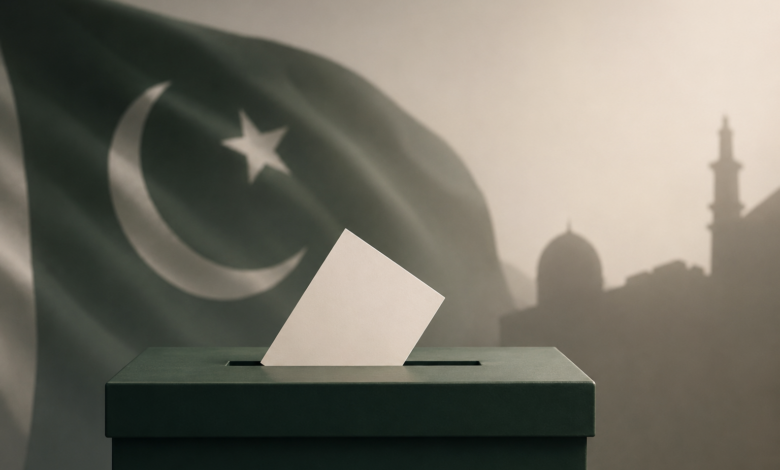
There is little doubt that the General Elections held on February 18, 2008, have turned out to be a referendum against President Pervaiz Musharraf and the policies he has been pursuing over the last eight years. Most of the political parties and persons who supported him or even provided limited support to the continuation of his regime and policies, have also been thrown out of power by the people.
Despite ever increasing popular discontent, Musharraf’s hold on power looked firm until the beginning of the year 2007. But winds of change started blowing fast from March 2007 when Musharraf arbitrarily dismissed the Chief Justice of Pakistan to consolidate his hold on power and give a message to the judiciary to behave. This, however, proved to be a turning point. His hold on power loosened. Waves of popular protest led by the legal community mounted up by leaps and bounds. Alarmed of the writings on the wall Musharraf panicked and resorted to an attack on the Constitution and the Judiciary. Emergency was imposed on November 3, 2007 and since then it has become growingly manifest that Pakistan’s problems cannot be solved as long as he sticks to his elevated chair.
The people’s verdict of 18th February, 2008 has now totally upset his cards. This is clearly a verdict against Ms Person that had already lost whatever shred of legitimacy existed to his so-called election as President for a second term. His President ship is in dispute and illegal at least for the following two reasons.
First, under the Constitution of the Islamic Republic of Pakistan he could not have become a candidate for Presidentship while being in uniform and also within the two years’ limit laid down for those who retire from government service. While the Election Commission buckled under his pressure, the Supreme Court was showing signs of independence. Pervaiz Musharraf knew his candidature was illegal and staged a coup-de-ta against his own regime, suspended the Constitution, purged the Supreme and Higher Courts of 53 judges, which constituted 60 percent of the higher judiciary. He created a hand-picked judiciary to seek a new lease of life for his Presidency.
Secondly, his election by the dying National and Provincial Assemblies, which had exhausted their capacities as an electoral college by validating his Presidency earlier in 2003, and hence had no right to elect him President for the next five years. Now the popular vote has confirmed that these assemblies did not represent the will of the people and as such his election was no more than a fraud.
The popular verdict of the 18th February also constitutes a referendum against the policies he has pursued over the last eight years. In these elections the people were offered with a choice between pro-Musharraf and anti-Musharraf political forces. The electorate had no personal enmity with him. It is because of his policies that the people voted against him. On the other hand the resounding success of the parties in opposition was due mainly to their anti-Musharraf stance and commitment to restore judiciary to the November 2007 position, an independent judiciary he dismissed illegally. The popular mandate also means that the people rejected Musharraf’s economic policies that have created budgetary imbalances, balance of payments’ and trade deficits, inflation, power shortage, and unemployment and food crisis. The people, through their verdict, have also rejected his role in America’s war on terror, the massacre of Lai Masjid and Jamia Hafsah and the brutal operations in Waziristan, Swat and Baluchistan.
Musharraf regime’s plans to engineer the whole election process and resort to mass rigging under a subservient and pliable Election Commission were made difficult thanks to the effective and timely boycott by the APDM and threats from PML-N and PPP to launch popular movement on February in case of rigging. The most vibrant and vigilant Pakistani media also played a very decisive role. Then, the presence of election observers on a large scale and finally the declaration of the Chief of Army to keep army away from any role in elections had also its healthy impact. This is why, despite serious lapses in Karachi, Baluchistan and some reselected constituencies, February Elections on the whole remained peaceful and transparent.
While there is general agreement on the above two dimensions of the peoples’ verdict there are some wrong signals as well that some vested quarters within the country and abroad are trying to project their own narrow groups interests. They allege that February 2008 Elections have routed the religious forces and the MMA has been swept into oblivion. While it is a fact that the number of seats won by JUI(F), using the symbol of MMA, has been reduced drastically in the National Assembly as well as the Provincial Assemblies of NWFP and Baluchistan, how can one ignore the so evident factor of the boycott by the JI that lead the MMA? It was also supported in this peaceful public mobilization movement by other parties from the platform of APDM. The lacklustre performance of the JUI-F in its solo flight cannot obviously be termed as a defeat of the country’s religious mainstream.
The role of religion in politics, the volume of religious vote, and the votes secured by one or even a few religious parties in a given elections are different political entities all together. Islam has never been in dispute in any election in Pakistan. The Constitution lays down in clear terms that Pakistan is an Islamic Republic and there is a complete consensus on the role of Islam in the Pakistani society. That within the framework of Islam there can be many political and economic positions, is a different matter. Preference for one and rejection of the other is part of the game. Many fluxes are bound to bloom within this arrangement. Any inference about the role of religion in politics on the basis of electoral votes or seats secured by one particular party in one election is, therefore, absolutely illogical and fraught with danger. All the important opinion polls before the elections clearly showed anti-Musharraf and anti-US feelings of the people which were the real issues in present elections. At the same time, they also showed that Muslims of Pakistan are committed to Islam and the Islamic Shariah as the guiding force for their collective as well as individual lives. Gallup Survey, published in 2006, showed that 41% of the Pakistani population said that they wanted Shariah to be the only source of legislation, and another 27% wanted it as one of the sources. Only 6% had said that they do not want Shariah as a source of law. The report further acknowledged that “What is more, Muslim women clearly tend to agree that Islamic principles should guide public policy”, [SA: Gallop World Poll Special Report: The Muslim world. Gallup Organization, Princeton, 2006].
The other important survey that was sponsored by the US Institute of Peace and conducted by World Public Opinion Organization between 12 to 18 September 2007 reported that while 80% people were opposed to Musharraf, those who favoured the country to be governed according to Islamic principles were 90% of the population. This survey also showed in unambiguous terms that “Pakistanis want larger role for both Islam and democracy”. Those who specifically demanded that Shariah should play a larger role were 60%, while 15% were happy with the role Shariah is playing presently and only 11% wanted a smaller role for Shariah (Question No. 8, Pakistan public opinion on democracy). Significantly 44% of the population considered that Musharraf’s operation in Tribal Areas was benefiting the US and on the question of American military presence in the region 72% regarded it to be threat to Pakistan’s security. (Question No. 24). On the issue of the Lai Masjid Operation, 56% disapproved Pakistan Government’s handling of the issue and regarded it a mistake (Question No. 6). It is also important to note that 86% of the Pakistanis, according to this survey, stressed that ultimate goal of the US is to divide the Islamic World [Question No. 30(d)], while 78% were of the view that the main objective of the USA is to maintain control over the oil resources of Middle East. [Question No. 30(c)].
These independent survey reports make it very clear that as far as the role of religion in politics and the attitude of the Pakistani voters on religious issues are concerned their vision of Pakistan as an Islamic State is unmistaken. It is above the vagaries of changes in votes received by different parties. Also their attitude towards the US designs and in respect of Islam and the Muslim world is totally at variance with the policies pursued by Musharraf. Hence, rejection of Musharraf is actually a vote for Islam and Islamic solidarity and not otherwise.